
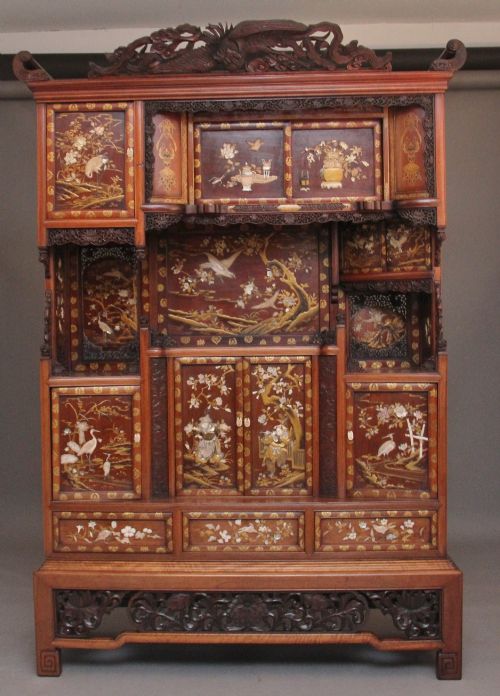


Meiji Period Cabinet
A meiji period cabinet brings intricate Japanese craftsmanship into your home, offering compact display space through tiered shelving and delicate doors.

Identifying a meiji period cabinet
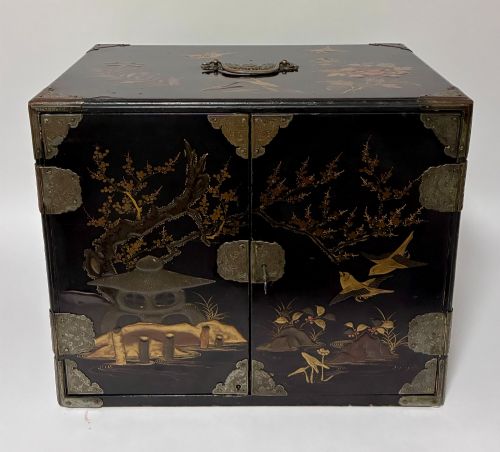
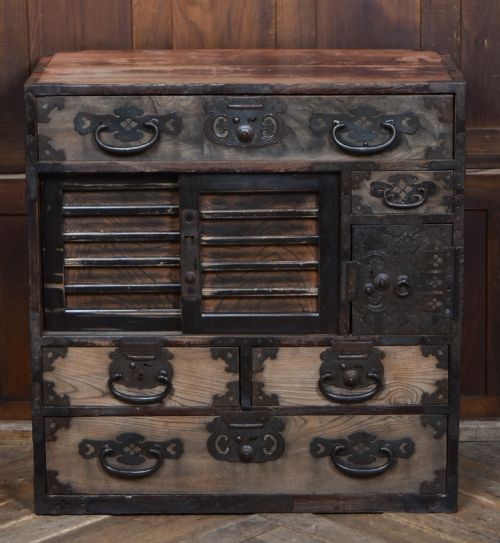
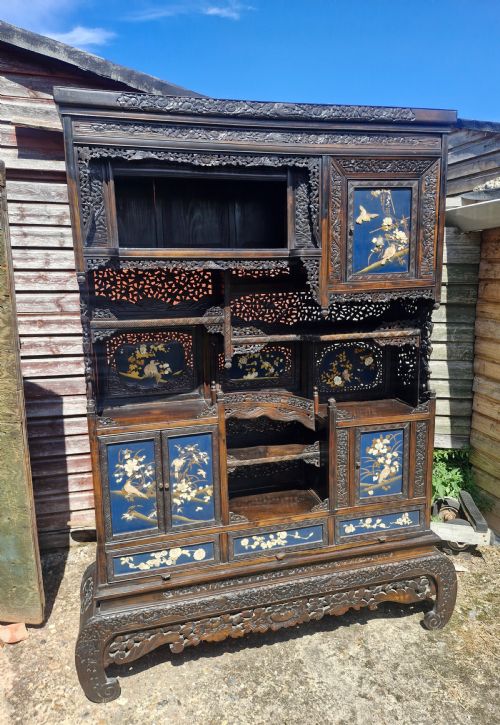
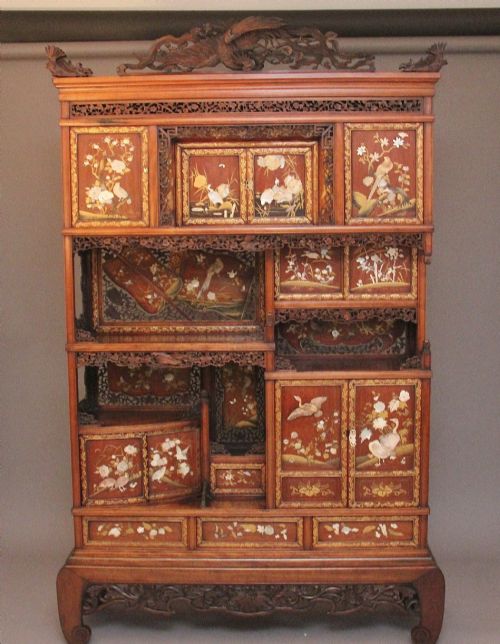
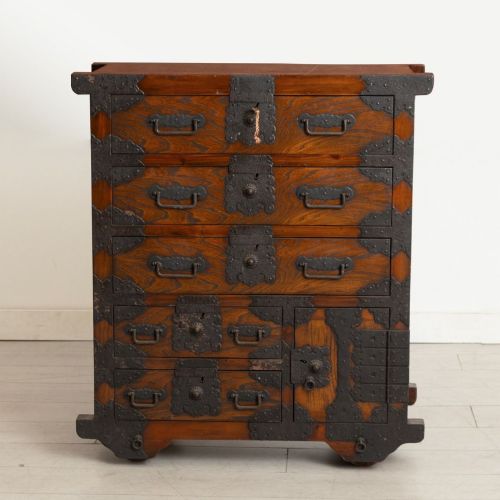
A meiji period cabinet is a storage piece originating from late nineteenth and early twentieth century Japan, encompassing table top units, hanging display pieces, and freestanding shodana cabinets. These pieces often feature asymmetrical shelving arrangements designed for the display of ornaments and art objects.
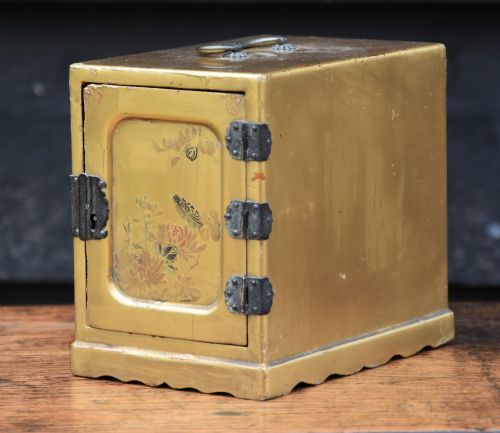
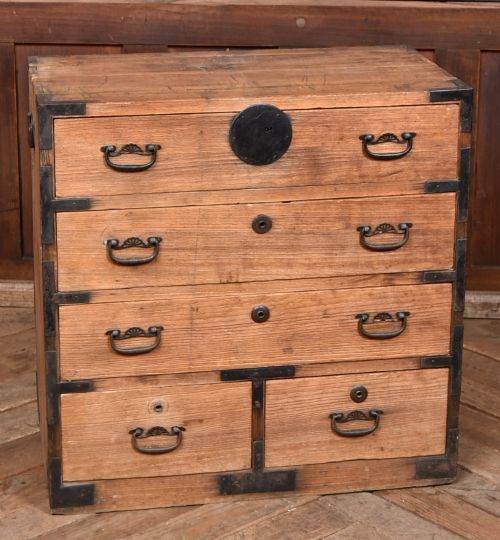
You are most likely to encounter table cabinets and shodana cabinets on this page, which frequently appear in lacquer or hardwood finishes. The form ranges from small tabletop boxes with multiple drawers to large cabinets on stands incorporating intricate panels.
Origins span export items made for Western markets alongside domestic forms, united by the distinct aesthetic of the Meiji era. The evidence records periods from eighteen ninety up to nineteen hundred, alongside Victorian and nineteenth century designations.
Judging quality in Japanese cabinets
Quality rests in the depth and precision of the surface decoration, particularly where lacquer work and inlay meet the wood structure. Finely executed Shibayama panels and crisp bone inlay separate standard storage boxes from exceptional decorative works.
The architectural complexity of the shodana interior dictates the tier of the piece, with multi-tiered shelving and integrated stands requiring superior joinery. Harmony between the bronze or brass mounts and the primary wood or lacquer finish completes the assessment.
Retail Price Guide 2026
Typical UK retail prices for meiji period cabinet, calculated from the Sellingantiques database of over a million retail prices indexed since 2003. This retail price guide relies exclusively on Sellingantiques data; no external sources or auction records are used, so the figures do not describe the wider market.
Some miniature cabinets pack more tiny secret drawers than a domestic accountant knows what to do with.
The Meiji Period Cabinet Glossary
- Shodana
- A traditional Japanese display cabinet featuring asymmetrical shelving and small cupboards. These pieces were built to hold porcelain, incense gear, and curiosities.
- Shibayama
- A style of Japanese inlay utilising materials such as mother of pearl, ivory, bone, and tortoiseshell set into wood or lacquer grounds. The technique creates raised pictorial scenes of flora and fauna.
- Cinnabar
- A carved red lacquer technique where numerous layers of pigment are built up before being carved with intricate motifs. It provides a dense, tactile surface texture.
- Yosegi
- A form of Japanese marquetry using natural coloured woods assembled in geometric mosaic patterns. This technique decorates smaller cabinet surfaces and panels.
- Table Cabinet
- A compact storage unit designed to sit upon a desk or surface rather than stand on the floor. They typically include small drawers and hinged doors.
Frequently Asked Questions
What is a shodana cabinet?
A shodana is a traditional Japanese multi-tiered display cabinet designed for presenting small art objects and curiosities. They feature varied shelving arrangements and enclosed cupboards.
These pieces reflect the refined interior aesthetic of late nineteenth century Japan, serving both decorative and functional storage roles.
How do I use a table cabinet today?
Table cabinets provide practical storage for jewellery, stationery, and small collections while adding distinct focal points to tabletops or desks. Their numerous compartments keep delicate items organised.
Position them away from direct sunlight and extreme heat fluctuations to protect the antique lacquer and delicate inlays from damage.
What materials are typical for Meiji cabinets?
Construction relies primarily on wood and hardwood, frequently finished with deep black or coloured lacquer. Decoration incorporates bone, mother of pearl, and bronze.
Many examples also integrate brass hardware and specialised Shibayama panels to create highly textured pictorial surfaces.
How do I date a Meiji cabinet?
Dating relies on stylistic markers associated with the Meiji period between eighteen sixty-eight and nineteen twelve, alongside nineteenth century structural traits. Surviving pieces often date from the eighteen nineties up to nineteen hundred.
Examine the construction of the drawers, the formulation of the lacquer, and the style of export documentation to confirm the era.