
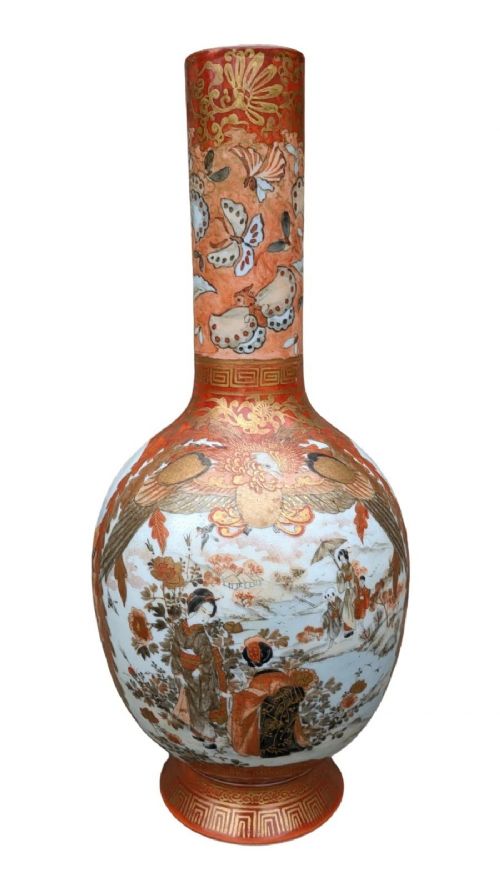


Meiji Kutani Urns
Meiji kutani urns are heavy porcelain vessels decorated with rich enamel and gold leaf.
Meiji Kutani Urns
Meiji kutani urns comprise Japanese porcelain vases, ginger jars and vessels originating from the nineteenth century. These items include large floor vases, bulbous shapes with geometric inset panels and pairs fitted with lion handles or carved wood stands. Most pieces date from the Meiji period, spanning the 1870s to 1900.
Buyers encounter various forms such as flare neck vases and table lamps converted from porcelain bodies. The selection ranges from small hand-painted vessels to tall decorative pieces. Each item reflects the distinctive ceramic output of the Kaga region during Japanese export periods.
How they were made
Makers shaped these vessels from porcelain, applying glaze and intricate enamel work across the surface. Artisans integrated gold leaf and heavy gilding to highlight specific decorative motifs. Certain pieces incorporate moriage technique, building up raised enamel designs to create tactile relief on the porcelain body.
Wood stands occasionally accompany these vessels, providing a fitted base for display. The combination of hand-painted polychrome enamel and gold leaf defines the visual character of the porcelain. Production methods relied on skilled workshop execution during the late nineteenth century.
Materials recorded across current listings include porcelain, enamel, gold leaf, wood, gilt, and glaze.
What varies in quality
The distinction between standard output and finer examples rests on the precision of the hand-painted enamel and the application of gold leaf. Superior pieces display complex geometric inset panels or detailed figurative scenes rather than repetitive patterns. The crispness of moriage relief work and the balance of the porcelain form also differentiate the work.
Scale influences the character of the piece, with large floor vases and paired sets demanding greater technical control in firing and decoration. The presence of original carved wood stands adds to the completeness of an object. Workshop origin, such as the Kinrin workshop, indicates specific artistic standards.
Kinrin Workshop
The Meiji Kutani Urns Glossary
- Kutani
- Japanese porcelain traditionally produced in Kaga province, known for colourful enamel decoration. Pieces often utilise rich gold leaf alongside iron red and green pigments.
- Moriage
- A ceramic technique where enamel is applied in raised dots or lines to create a textured, three-dimensional surface. This method appears on select nineteenth-century vessels.
- Meiji Period
- The era in Japanese history running from 1868 to 1912, characterised by increased export of decorative arts to Western markets. Many ceramic pieces found today date from this period.
- Ginger Jar
- A high-shouldered ceramic vessel with a rounded body, originally designed for storing spices but frequently produced for export as a decorative ornament.
Meiji Kutani Urns: Frequently Asked Questions
What are meiji kutani urns?
Meiji kutani urns are Japanese porcelain vases and ginger jars produced during the late nineteenth century. They are heavily decorated with polychrome enamel and gold leaf.
These pieces were made for export during the Meiji period and survive in various forms including large floor vases and table lamps.
How do I date meiji kutani urns?
Dating relies on stylistic markers associated with Japanese export porcelain from the 1870s to 1900. Many pieces correspond directly to the Meiji period.
Examinations of the enamel palette and mounting styles help establish the manufacturing decade within the nineteenth century.
Where were kutani pieces made?
Kutani ceramics originated in the Kaga province of Japan. Workshops in this region specialised in painted porcelain using distinct glaze and enamel combinations.
Export wares from this area reached international markets in large quantities during the late nineteenth century.
How should I display a large vase?
Large nineteenth-century vases often require stable placement on the floor or on sturdy furniture due to their weight. Many items include carved wood stands designed to support the porcelain base.
Placing them away from high traffic areas protects the hand-painted enamel and gilding from accidental impact.