




Meiji Hardwood Cabinet
A meiji hardwood cabinet brings intricate Japanese craftsmanship into a room, offering compartments and shelves designed for display and storage.
Meiji Hardwood Cabinet
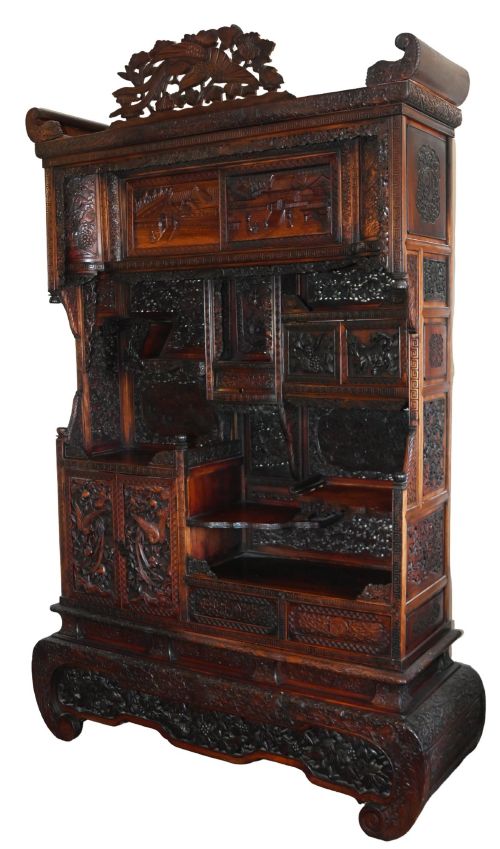
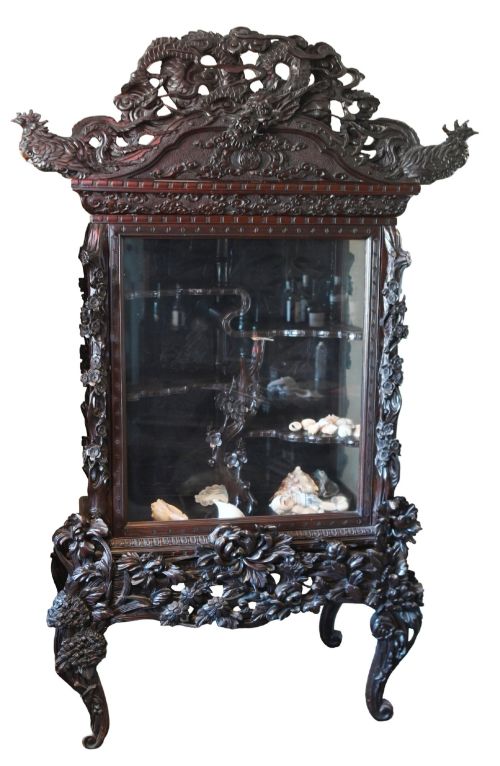
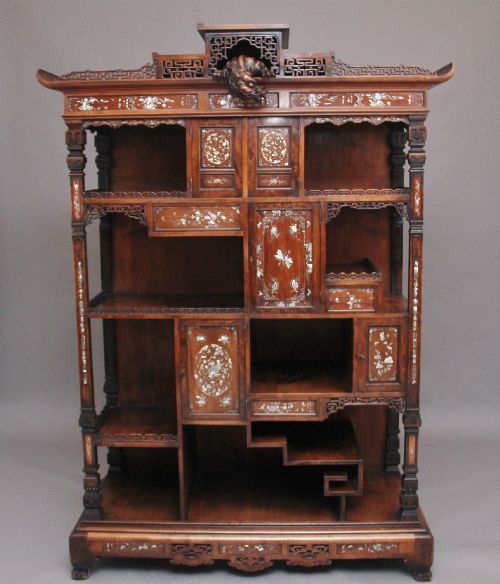
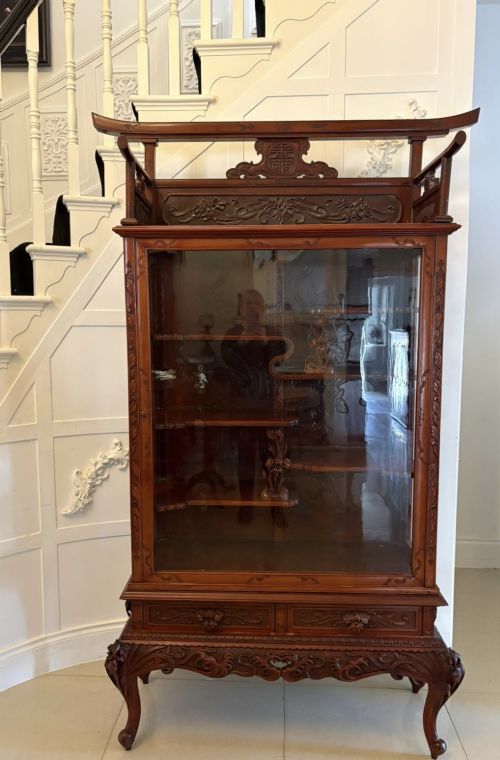
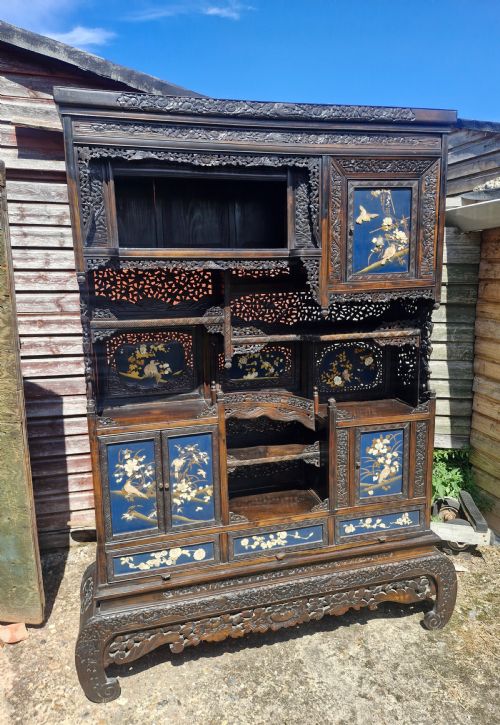
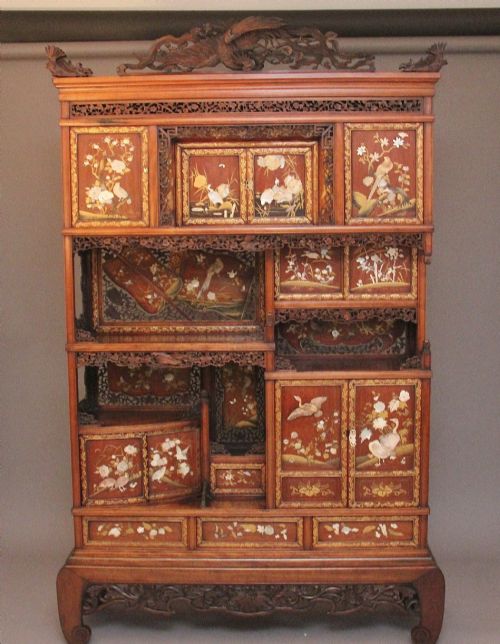
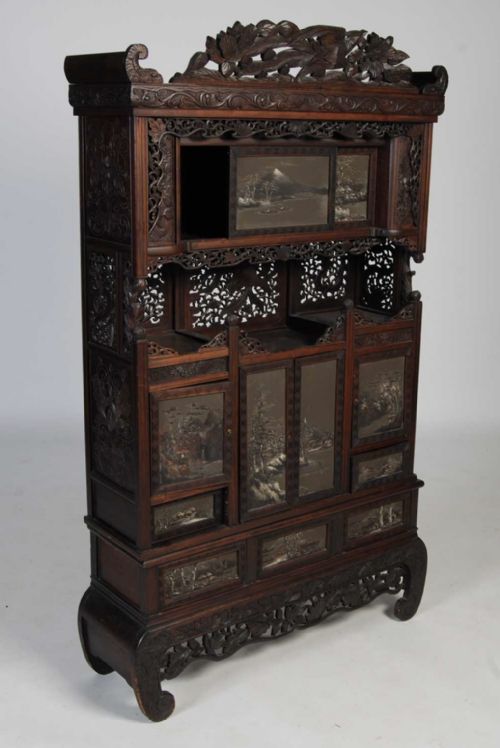
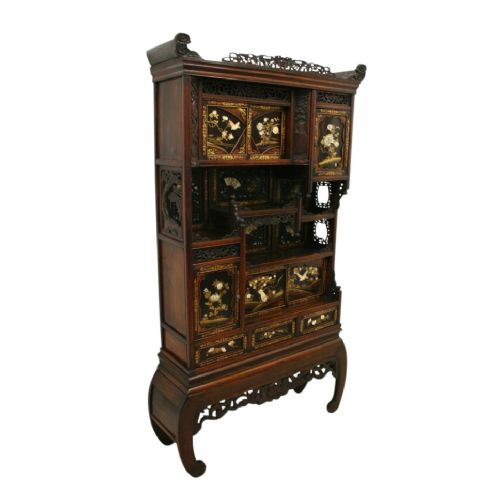
A meiji hardwood cabinet encompasses pieces originating from the late nineteenth century, including the Meiji period and Victorian eras. These items predominantly take the form of shodana display cabinets, tabletop cabinets, and cylinder desks designed for organisation and presentation.
The pieces appearing on this page range from large decorative storage units to smaller tabletop examples. They reflect Asian export traditions alongside Japanese Meiji aesthetics, intended to showcase decorative objects within an interior.
Buyers frequently encounter complex tiering and open shelving integrated within the carcass of the furniture. Such layouts facilitate the arrangement of small collectibles, porcelain, or curios.
How they were made
Construction relies heavily on dense hardwoods combined with surface treatments such as red lacquer. Artisans frequently integrated inlaid elements of bone, mother of pearl, and mother-of-pearl to create pictorial or geometric motifs.
Metal mounts and bronze animal decoration often accent the wooden structures. Glazed doors and intricate carving complete the fabrication process, uniting structural timberwork with decorative detail.
Materials recorded across the inventory include hardwood, lacquer, bone, and mother of pearl.
What varies in quality
Quality depends upon the precision of the carving and the intricacy of the inlay work executed across the surface. Cabinets featuring detailed bone or mother of pearl embellishments demonstrate greater artisanal effort than plainer examples.
The structural complexity of the internal arrangement distinguishes exhibition pieces from standard storage. A shodana with varied tiers and balanced proportions reflects superior design intent.
The Meiji Hardwood Cabinet Glossary
- Shodana
- A Japanese tiered display cabinet featuring staggered shelves and cupboards. These pieces were built for displaying ornaments and scholarly objects.
- Yosegi
- Japanese marquetry involving geometrically arranged wood veneers of various natural colours. This technique creates intricate mosaic patterns without painting.
- Meiji Period
- The era in Japanese history spanning from 1868 to 1912, characterised by opening trade with the West. Furniture from this time often merged traditional craftsmanship with export designs.
- Shibayama
- A style of inlay using shell, ivory, bone, and metal set into a lacquered or wooden ground. It depicts figures, flora, and fauna in high relief.
- Hardwood
- Dense timber selected for structural durability and fine grain. It provides a stable foundation for intricate carving and polished finishes.
Meiji Hardwood Cabinet: Frequently Asked Questions
What is a shodana?
A shodana is a traditional Japanese display cabinet featuring asymmetrical shelving and small cupboards.
These pieces were constructed to hold and exhibit small ornamental items and precious objects.
How do I date a Meiji cabinet?
Dating relies on stylistic markers, construction methods, and materials associated with late nineteenth-century production.
Pieces often align with the Meiji period or Victorian era through documented export trends and workshop practices.
Where should I place a tabletop cabinet?
Tabletop cabinets suit sturdy surfaces such as sideboards, desks, or chests where their detailed work remains visible.
Their scale allows them to function as focal points without overwhelming a room's layout.
What materials are used in these cabinets?
Construction utilises dense hardwoods often enhanced with red lacquer, glass, and metal accents.
Inlay work incorporates bone, mother of pearl, and mother-of-pearl to articulate decorative scenes.