




Bronze Mounted Wood Chest
A bronze mounted wood chest unites timber and metalwork, offering substantial storage scaled for formal rooms and grand interiors.
Bronze Mounted Wood Chest
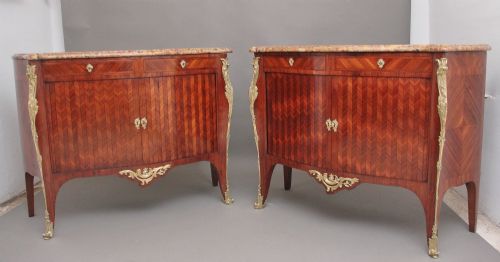
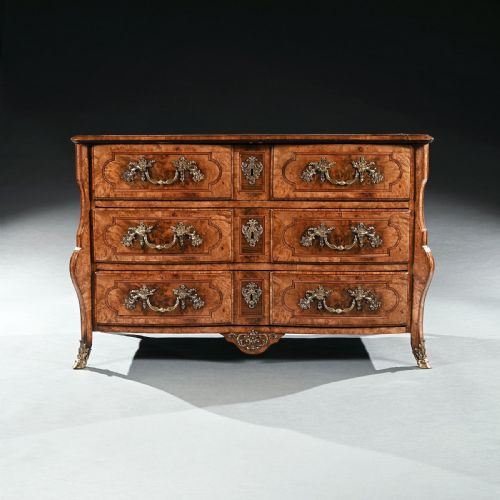
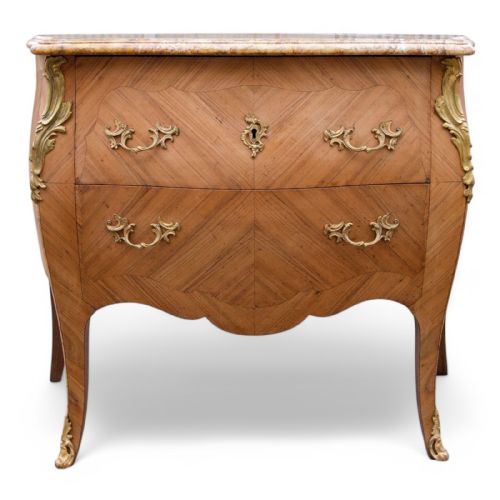
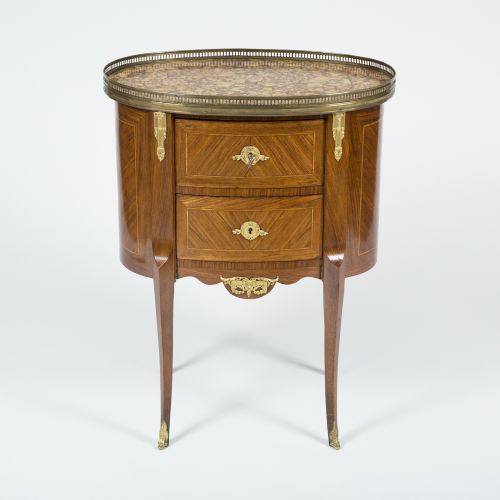
A bronze mounted wood chest encompasses storage forms including commodes, secretaire desks, tabletops and larger cabinets. These pieces combine timber carcasses with metal mounts to accentuate the structural lines and decorative contours.
The selections span centuries from pre-sixteenth century examples through the eighteenth and nineteenth centuries, alongside revival interpretations. French and Italian influences dominate the origins, ranging from Regence and Louis XV styles to Japanese Meiji aesthetics.
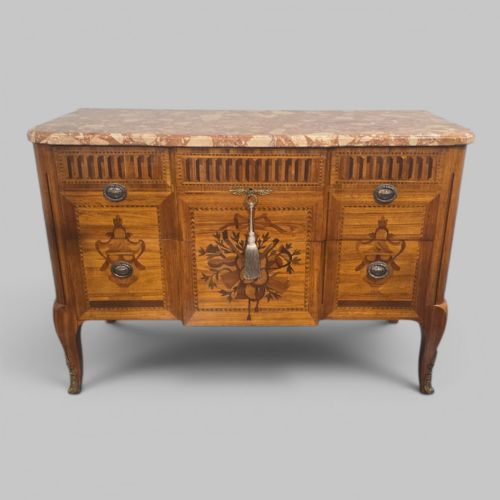
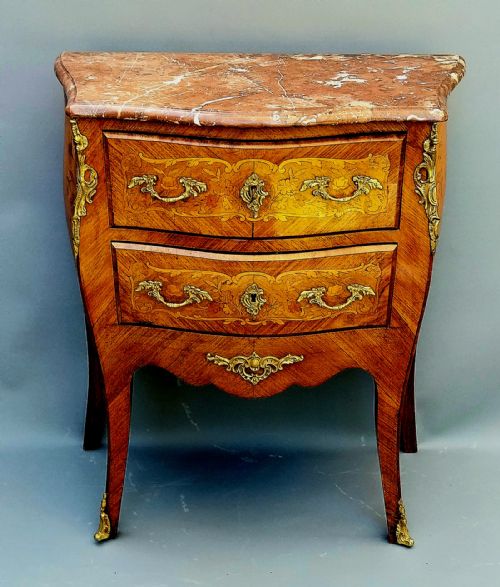
Buyers encounter commodes and chests of drawers most frequently on this page. These pieces often feature shaped marble tops and marquetry inlay alongside their metal mounts.
How they were made
Carcasses employ dense hardwoods such as kingwood, rosewood, walnut, burr maple and general hardwoods. Artisans applied complex marquetry inlay to these timber surfaces, creating intricate geometric or pictorial patterns.
Mounts utilise ormolu, gilt bronze, brass and bronze, applied extensively to corners, feet and drawer edges. Marble slabs in varieties such as breche d'alep form the upper surfaces on many commodes and cabinets.
Some tabletop cabinets feature bronze animal decoration, bringing menagerie creatures to the desk.
What varies in quality
The precision of the cabinetmaker determines the integrity of the timber joints and the crispness of the marquetry inlay. Superior execution ensures veneers align seamlessly across complex curved surfaces like bombe forms.
The refinement of the bronze or ormolu mounts separates standard production from finer examples. Hand chasing and heavy gilding on the metalwork provide depth and definition that inferior cast mounts lack.
Maison Krieger·Thomas Hache of Grenoble
The Bronze Mounted Wood Chest Glossary
- Ormolu
- Gilt bronze applied to furniture mounts and decorative objects. This technique involves coating cast bronze with a mercury and gold amalgam before heating.
- Marquetry
- Veneering technique arranging pieces of wood, shell or ivory into pictorial or geometric patterns on a timber surface. It defines the decorative panels of many eighteenth and nineteenth century pieces.
- Bombe
- Swelling or convex curved furniture form popular in French and Italian pieces. This shape requires advanced woodworking skill to maintain structural stability.
- Commodes
- Low chests of drawers developed in France during the seventeenth century. They frequently feature marble tops and elaborate metal mounts.
- Breche d'alep
- A type of quarried marble characterised by a variegated brecciated pattern. It appears on the upper surfaces of various commodes.
Bronze Mounted Wood Chest: Frequently Asked Questions
What is a bronze mounted wood chest?
A bronze mounted wood chest is a storage piece combining a timber frame with decorative metal mounts. These items range from commodes and cabinets to tabletop storage.
Craftsmen utilised various woods paired with ormolu, brass or bronze to reinforce corners and embellish drawer fronts.
How do I identify Louis XV style?
Louis XV style pieces display asymmetrical curves, cabriole legs and organic scrolling motifs. The influence prioritises flowing lines over rigid symmetry.
Furniture from this design vocabulary often incorporates bombe shapes and elaborate marquetry alongside bronze mounts.
Where were these chests made?
The pieces originate primarily from European workshops, with strong representation from French and Italian makers. Regional aesthetics dictate the choice of timber and the complexity of the metal mounts.
Examples span from early Italian cabinets to nineteenth century French revival commodes.
How do I care for a marble top?
Marble tops on commodes and cabinets require gentle cleaning with a damp cloth and mild soap. Avoid acidic liquids that can etch the polished stone surface.
Protective felt pads beneath objects placed on the marble help prevent scratching over time.