




Meiji Enamelware
Meiji enamelware brings together meticulous metalwork and coloured glass pastes, offering intricate vases and chargers from late nineteenth and early twentieth century Japan.
Meiji Enamelware
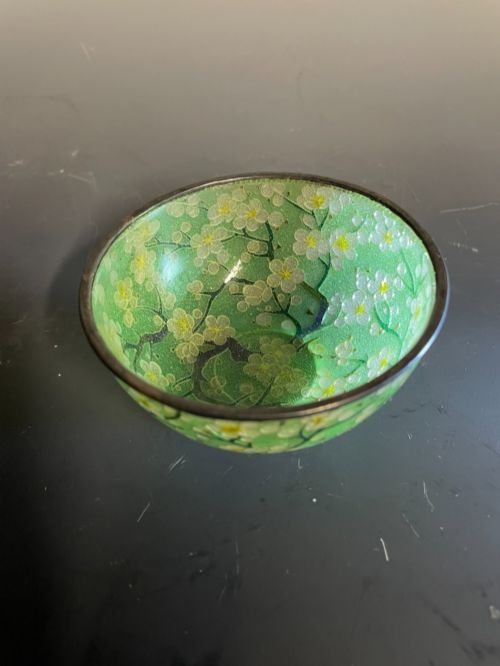
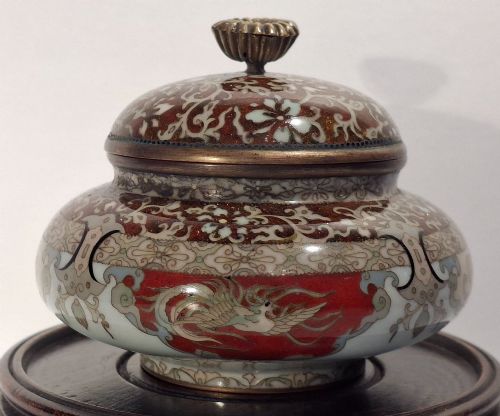
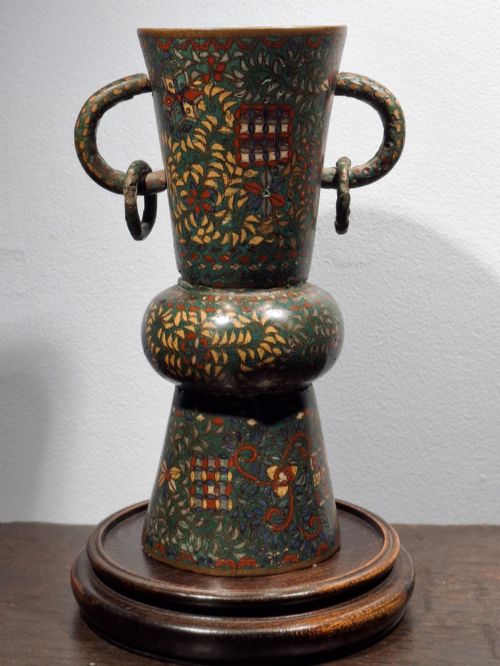
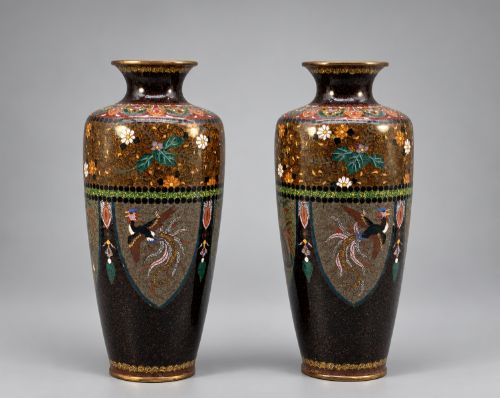
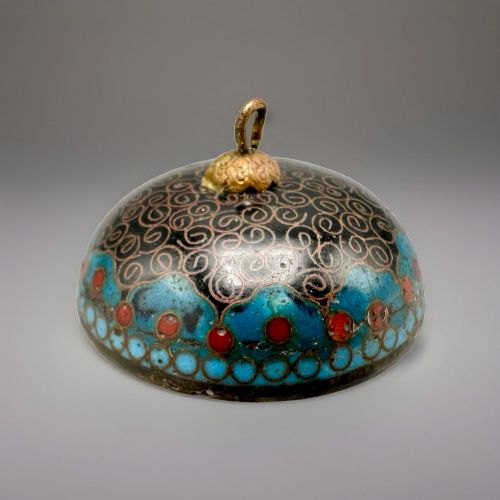
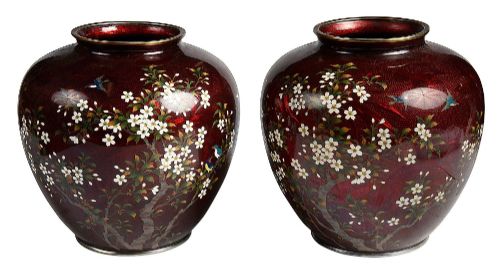
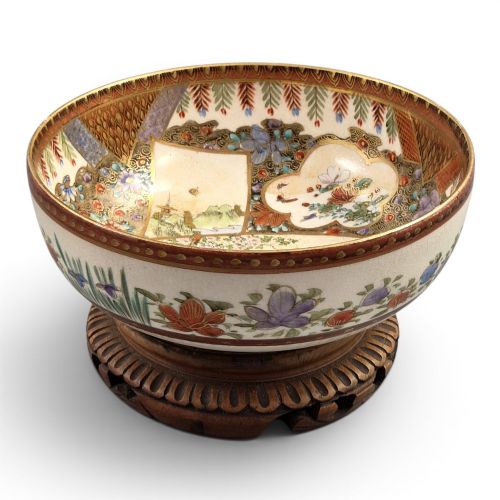
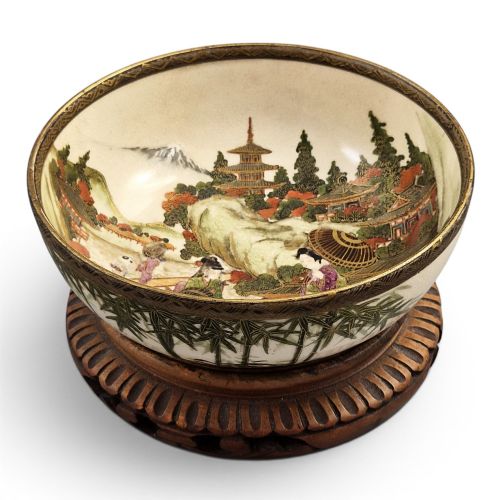
Meiji enamelware encompasses decorative objects created during the Japanese Meiji period and subsequent early decades, spanning vases, chargers, bowls, jars, and incense burners. A buyer on this page will most frequently encounter Japanese cloisonne enamel vessels and plates, alongside select earthenware pieces.
The forms range from miniature ritual vases and ashtrays to large chargers and lidded gourd pots, often decorated with birds, dragons, chrysanthemums, and landscapes. These items reflect the high technical standards of Asian antique metalwork from the late nineteenth century.
Materials and Technique
The creation of these works relies on copper, brass, and bronze foundations combined with enamel, gold leaf, and earthenware. Metal wires are soldered to the base to form compartments, which are then filled with coloured enamel pastes before firing.
Champleve enamel techniques also appear alongside standard cloisonne methods, embedding glass pastes into recessed metal channels. Artisans polish the finished surfaces to achieve a smooth texture across the metal and hardened glass.
Meiji Enamelware Retail Price Guide 2026
Typical asking prices for meiji enamelware among the pieces listed under this phrase on Sellingantiques today, from the lower quarter to the upper quarter. They describe what is for sale here now, not the wider market.
The listings span from eighteen sixty-five through the Edwardian era, featuring copper, brass, and bronze foundations beneath the enamel.
Judging Quality
Quality rests upon the precision of the wirework and the complexity of the pictorial design, separating standard production pieces from masterwork examples. Finer items exhibit exceptionally uniform cell division and delicate control over shading within the enamel pastes.
The depth of the ground metal and the integration of decorative elements like gold leaf or specific animal and landscape motifs dictate the standing of an individual vessel or charger.
Tsukamoto Hikokichi·Kozan
The Meiji Enamelware Glossary
- Cloisonne
- A decorative metalwork technique where thin metal wires form raised barriers on a base, creating cells that hold coloured enamel paste.
- Champleve
- A method where troughs or cells are carved directly into the surface of a bronze or metal base to receive enamel before firing.
- Koro
- A traditional Japanese incense burner, often supported on legs and fitted with a pierced lid.
- Charger
- A large decorative plate intended for display rather than dining use.
- Satsuma
- A type of Japanese earthenware featuring a crackled glaze and polychrome enamel decoration.
Meiji Enamelware: Frequently Asked Questions
What is Meiji enamelware?
Meiji enamelware refers to decorative metal and glass objects produced in Japan during the Meiji period and the years immediately following. These items include vases, bowls, and chargers ornamented with coloured enamel pastes.
Craftsmen utilised techniques like cloisonne and champleve to create intricate surface patterns depicting birds, dragons, and landscapes on copper, brass, or bronze bodies.
How were these pieces used?
Most of these objects served decorative purposes within interiors, displayed on tables, shelves, or hanging mountings. Certain forms, such as koro, functioned as incense burners for ritual or domestic scenting.
Large chargers and plates were designed specifically for visual appreciation rather than utilitarian service, often showcased on stands or walls.
How do I date Meiji enamelware?
Dating relies on stylistic markers, materials, and signatures associated with late nineteenth and early twentieth century Japanese production. The Meiji period itself ran from eighteen sixty-eight to nineteen twelve, though related pieces extend slightly beyond these dates into the Edwardian era.
Examining the complexity of the wirework and the type of metal base helps narrow the period of origin.
How should I display Meiji enamelware at home?
These pieces require stable placement away from direct sunlight and areas of high humidity to protect the delicate enamel surfaces and metal bases. Positioning them on secure flat surfaces or dedicated stands allows the intricate wirework to catch ambient light.
Pairing matching vases or displaying chargers individually creates a strong focal point in a traditional or modern interior setting.