







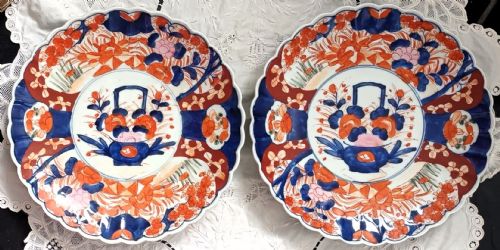
Meiji Ceramic Display Dish
A meiji ceramic display dish brings intricate hand-painted detail and rich palette work into a room.
Meiji Ceramic Display Dish
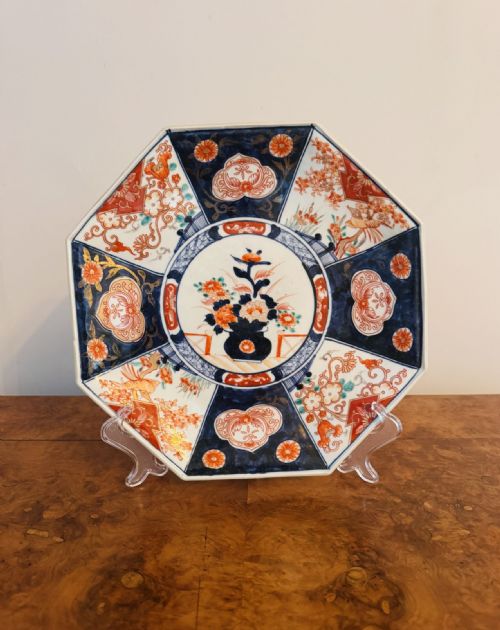
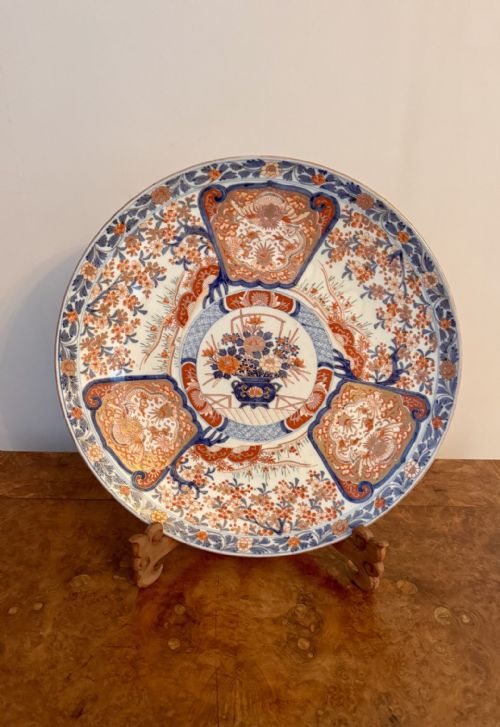
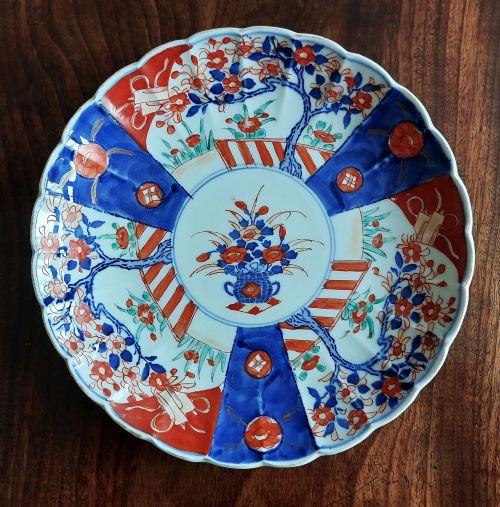
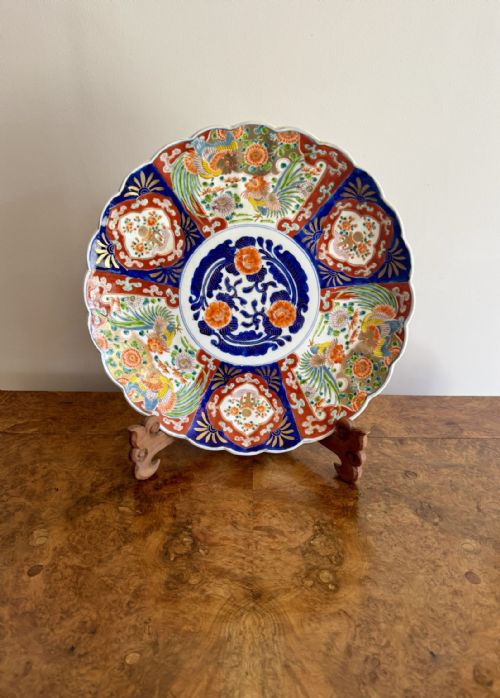
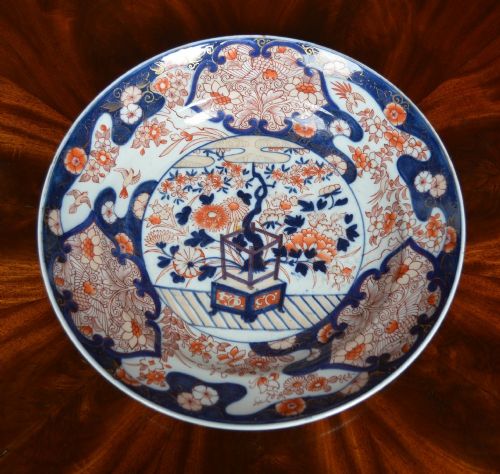
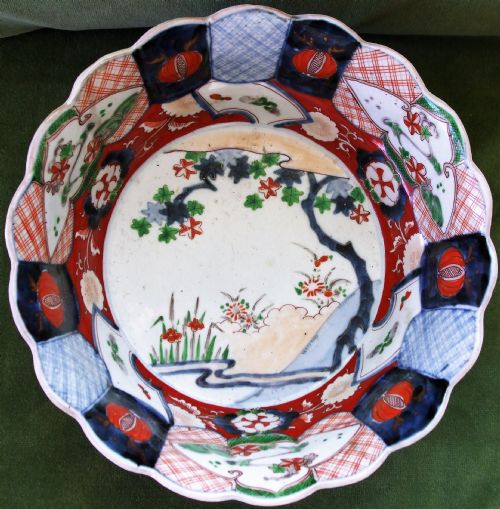
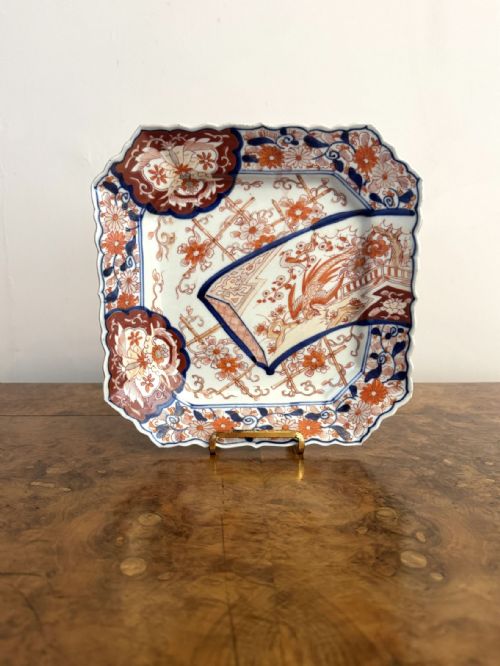
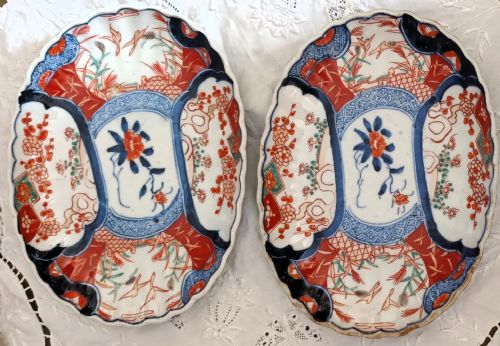
A meiji ceramic display dish encompasses decorative plates, bowls, and large chargers originating from the Meiji period and surrounding late nineteenth and early twentieth-century dates. These pieces showcase traditional Japanese aesthetics designed for presentation, often featuring scalloped edges, square shapes, or hexagonal forms.
The selection on this page leans heavily towards Japanese Imari porcelain alongside Satsuma ware. Buyers encounter single decorative plates as well as matched pairs and larger sets, depicting motifs such as exotic birds, floral patterns, and figures like the Seven Lucky Gods.
Materials and technique
Potters utilised porcelain and earthenware as the foundational bodies for these items, shaping them into plates, bowls, and chargers. Artisans then applied hand-painted designs using enamel, glaze, and occasionally gold leaf or gilding to accent the surface details.
Techniques relied on precise hand decoration over fired ceramic bases, combining underglaze blue with overglaze red and gold pigments, or intricate polychrome enamel work associated with Satsuma ware.
Several plates depict the Seven Lucky Gods, ensuring your wall display comes heavily staffed by deities of fortune.
Distinctions in craftsmanship
Quality separates through the precision and delicacy of the hand-painted brushwork across the porcelain surface. Finer examples display meticulous control in intricate floral and avian motifs, whereas simpler items show broader, more repetitive execution.
The presence of artist signatures, such as those found on Satsuma bowls by named makers, elevates a piece alongside unusual structural forms like square or hexagonal plates rather than standard circular dishes.
Koshida·Kozan
The Meiji Ceramic Display Dish Glossary
- Imari
- A style of Japanese porcelain decorated in underglaze blue, iron red, and gold. This tradition originated in the town of Arita and became widely exported during the Meiji period.
- Satsuma ware
- A type of Japanese earthenware featuring a crackle glaze and elaborate polychrome enamel painting often heightened with gold. It typically depicts figural scenes or nature.
- Charger
- A large decorative plate intended primarily for display on a wall or sideboard rather than for practical dining use. These pieces measure larger than standard dinner plates.
- Enamel
- Opaque glass-like substance applied to the ceramic surface to add colour and design before subsequent firing. It provides the vibrant hues seen on Satsuma and Imari pieces.
- Scallop edge
- A decorative border shaped into a series of curves resembling the edge of a scallop shell. This moulding technique appears frequently on Japanese display bowls and plates.
Meiji Ceramic Display Dish: Frequently Asked Questions
How do I hang a heavy charger?
Display chargers require specialised wall brackets or spring-loaded plate hangers designed to distribute weight securely across the rim.
Ensure the wall fixture fastens directly into solid masonry or studwork rather than relying on standard plaster hooks.
Were these dishes used for food?
Most large chargers and decorated display dishes served an ornamental purpose rather than practical dining functions.
Fine enamel and gold leaf detailing on Meiji ceramics remain vulnerable to scratching and wear from cutlery.
How do I clean antique porcelain?
Dust these items gently with a dry, soft brush to prevent accumulation in textured glaze crevices.
Avoid immersing pieces with delicate gilding or enamel in water, as harsh cleaning agents damage historic pigments.
What defines the Meiji period?
The Meiji period spans from eighteen sixty-eight to nineteen twelve, marking an era of significant artistic output and international trade in Japan.
Ceramics from this time often combine traditional motifs with techniques developed for Western export markets.