



Meiji Bronze Flower Vase
These meiji bronze flower vase pieces bring Japanese metalwork into the home, prized for their patinated surfaces and raised detail.
Meiji Bronze Flower Vase
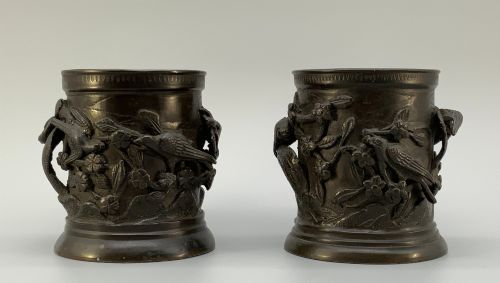
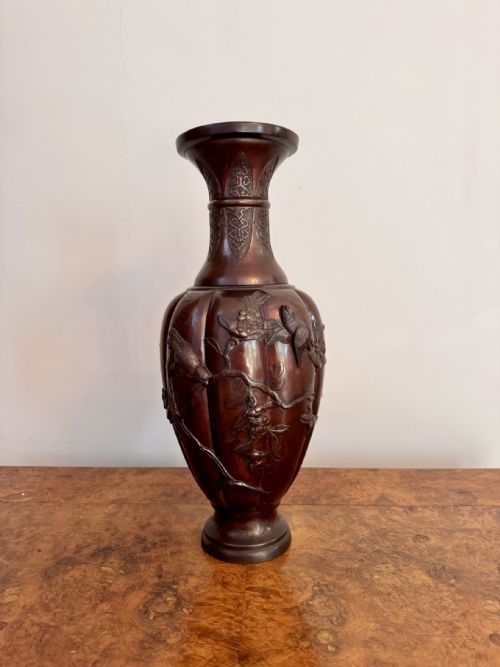
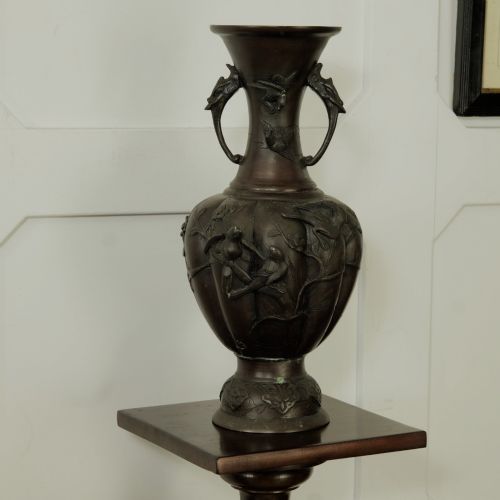
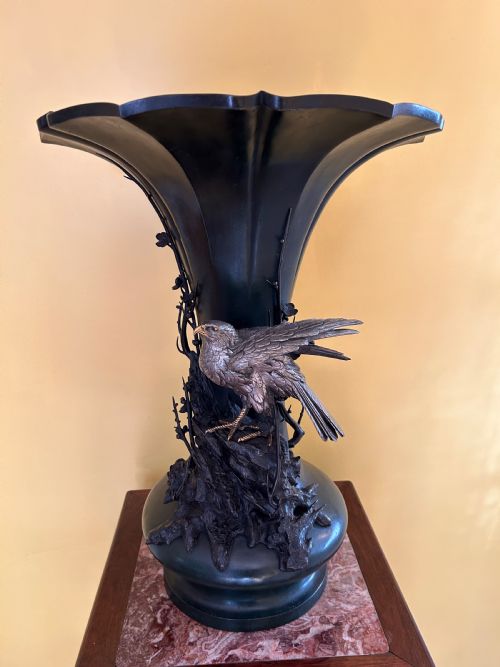
A meiji bronze flower vase is a vessel produced in Japan during the Meiji period, appearing here in forms such as baluster urns, stem vases and large jardinieres.
Most examples date from the late nineteenth century and the early twentieth century, spanning decades from the eighteen-eighties through to the nineteen-twenties.
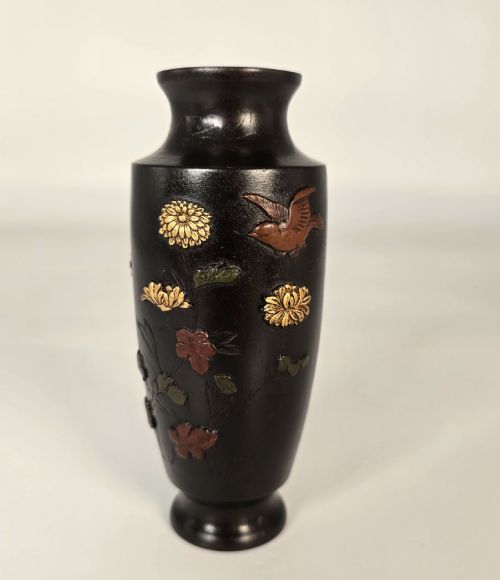
Buyers encounter single vessels as well as matched pairs, often decorated with birds, blossom and floral motifs.
How they were made
Metalworkers cast these vessels in bronze, utilising copper and mixed metal alloys to create substantial bodies with patinated finishes.
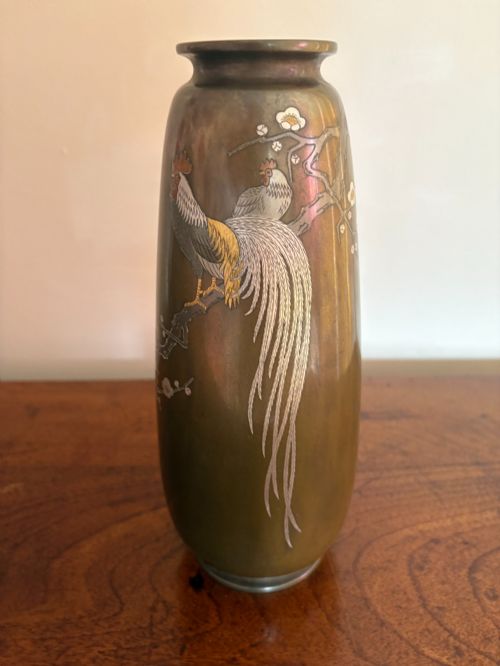
Many surfaces incorporate raised detail alongside inlay work in silver and gold, occasionally augmented with enamel highlights.
Listings span the nineteenth century to nineteen twenty, featuring bronze, copper, enamel, silver and gold inlay.
What varies in quality
The standard of a meiji bronze flower vase rests upon the crispness of the casting and the depth of the chased or raised decoration.
Subtlety in the patination and the precision of any gold and silver inlay distinguish finer workshops from more standard production.
KANASAWA
The Meiji Bronze Flower Vase Glossary
- Meiji Period
- The era in Japanese history spanning from eighteen sixty-eight to nineteen twelve, noted for the opening of trade with the West and mastery of metal arts.
- Patinated Bronze
- Metal treated with chemicals or heat to produce a stable surface colour, ranging from deep brown to dark green.
- Mixed Metal
- An alloy combination where different metals such as copper, silver and gold contrast visually across the surface.
- Baluster Urn
- A vase form featuring a rounded body tapering to a narrow neck and flared rim, frequently seen in this metalwork.
- Cloisonné
- A technique where enamel paste is applied within wire compartments on a metal base before firing.
Meiji Bronze Flower Vase: Frequently Asked Questions
Are these vases waterproof?
Many antique bronze vessels have porous joins or liners that can leak over time. It is safer to use a small inner glass tube or display them dry.
Using them for dried stems preserves the interior metal from moisture damage and corrosion.
How do I clean a bronze vase?
Dust gently with a soft dry cloth to protect the historical patina. Avoid polishes, abrasives and chemical cleaners entirely.
Harsh cleaning strips the original surface finish and permanently reduces the value of the piece.
What is mixed metal decoration?
Mixed metal work involves fusing contrasting metals like silver, gold and copper into the bronze body. Craftsmen use this method to highlight natural scenes such as birds and blossom.
This technique requires advanced metallurgical skill and signifies finer production.
How do I date a meiji vase?
Dating relies on stylistic clues, signatures, and material combinations recorded across the period. Pieces from the nineteenth century often feature heavier casting and deeper patination.
Later works from the nineteen-tens and nineteen-twenties sometimes incorporate refined mixed metal inlays.