
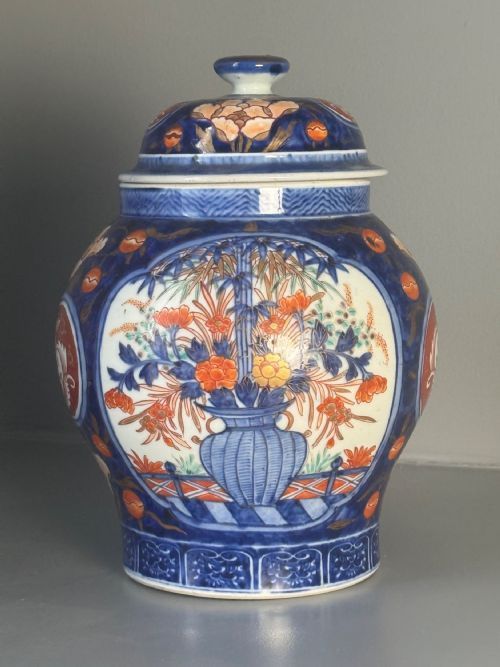


Meiji Blue White Vase
These meiji blue white vase examples bring together porcelain, glaze and traditional Japanese styles from the nineteenth century for any room.
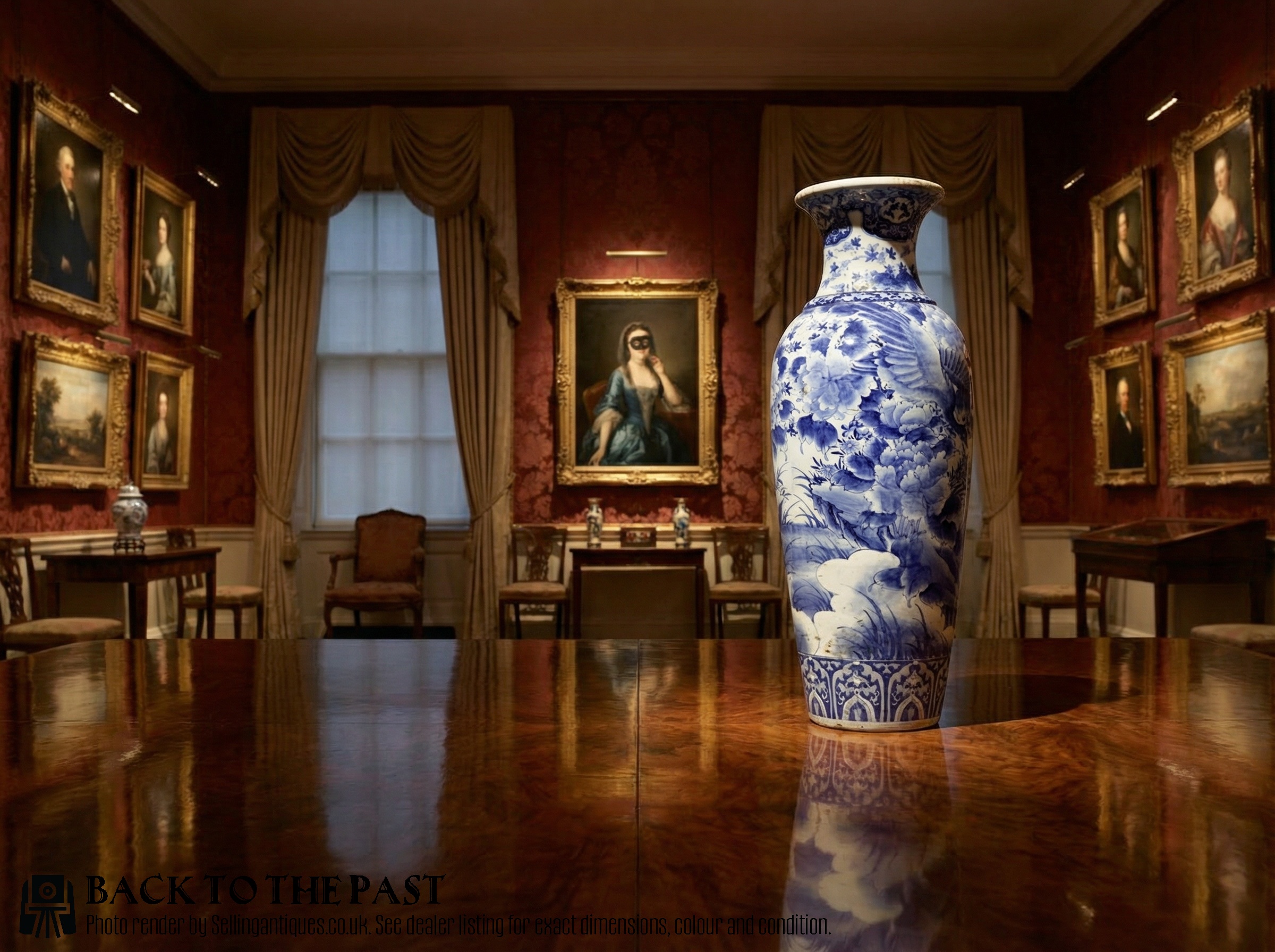
Meiji Blue White Vase
When you search for a meiji blue white vase, you are looking at nineteenth-century Japanese porcelain objects created during the Meiji period and around nineteen hundred. These pieces range from large floor vases and pairs of decorative vessels to lidded forms and umbrella stands.
You will most commonly meet blue and white porcelain items, alongside Imari patterns and lacquer panel details, shaped as flare neck vases or converted lamps. The selections span smaller decorative items up to monumental heights.
How they were made
These works rely on porcelain shaped and finished with glaze, sometimes incorporating enamel, gold leaf, and lacquer panels. Artisans shaped ceramic bodies into tall vessels, flare neck vases, and lidded jars.
Makers utilised traditional firing and glazing techniques to achieve the distinctive blue and white palette seen across nineteenth-century Japanese output.
Some nineteenth-century Japanese vases doubled as stick stands and umbrella holders before finding new life as lamps.
What varies in quality
The standard of a piece rests on the precision of the porcelain body, the depth of the glaze, and the clarity of the painted blue and white decoration. Scale and proportion also separate monumental floor vases from standard table examples.
The presence of supplementary materials like lacquer panels or gold leaf alters the character of individual vessels, distinguishing simpler functional items from highly decorative works.
Makuzu Kozan·Fukagawa
The Meiji Blue White Vase Glossary
- Meiji Period
- The era in Japanese history spanning from eighteen sixty-eight to nineteen twelve, known for opening trade and distinct ceramic artistry. Pieces from this time often show traditional motifs combined with new scale.
- Imari
- A style of Japanese porcelain featuring underglaze blue and overglaze red, gold, and other colours. It remains one of the most recognisable decorative traditions.
- Porcelain
- A ceramic material made by heating materials, generally including clay in the form of kaolin, in a kiln. It is prized for its white body and vitrified strength.
- Glaze
- A impervious layer or coating of a vitreous substance which has been fused to a ceramic body by firing. It protects the vessel and adds colour or shine.
- Lacquer
- A clear or coloured synthetic or natural wood coating that dries to form a hard and durable surface. In these pieces, it sometimes appears in accompanying panels.
Meiji Blue White Vase: Frequently Asked Questions
How old is a meiji blue white vase?
These pieces originate primarily from the nineteenth century and around nineteen hundred, coinciding with the Meiji period in Japan.
Exact dates vary by maker and form, spanning the late nineteenth century up to nineteen twenty.
Can I use these vases for fresh flowers?
Many of these pieces function primarily as decorative objects, large floor vases, or stick stands rather than vessels for water.
Checking the interior condition of each specific porcelain or glazed item helps determine its suitability for holding plants.
How do I style a large Japanese vase?
Large nineteenth-century floor vases and monumental Imari pieces work well as standalone focal points in a hallway or reception room.
Pairs can be placed symmetrically, while single large vessels suit corners or entrance spaces where their height is visible.