
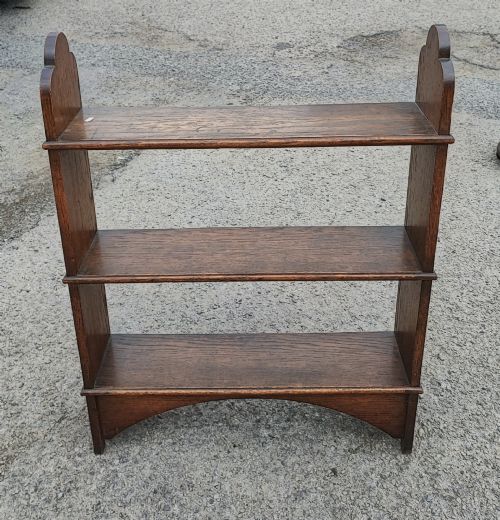
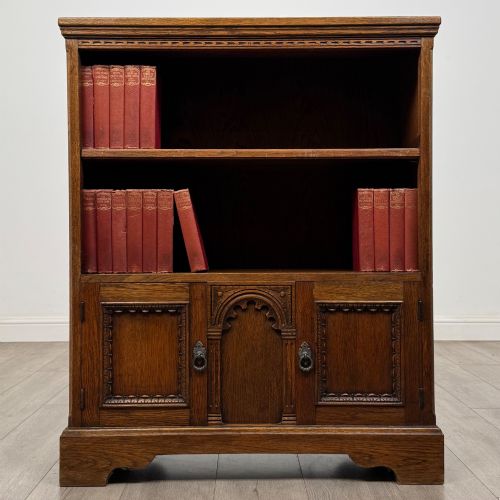
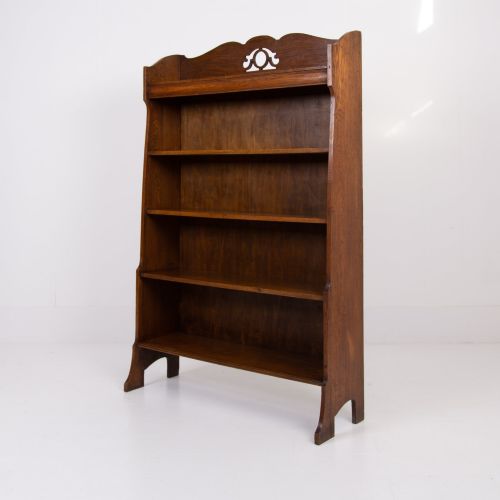
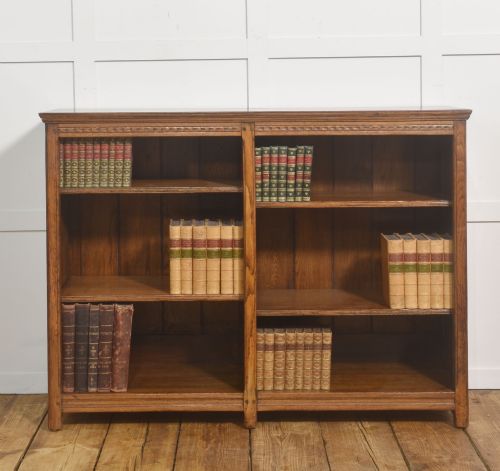
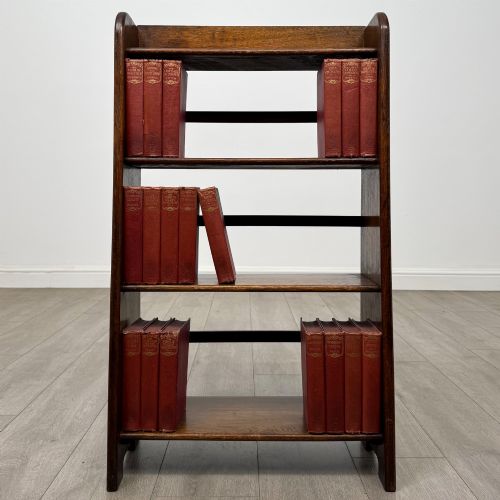

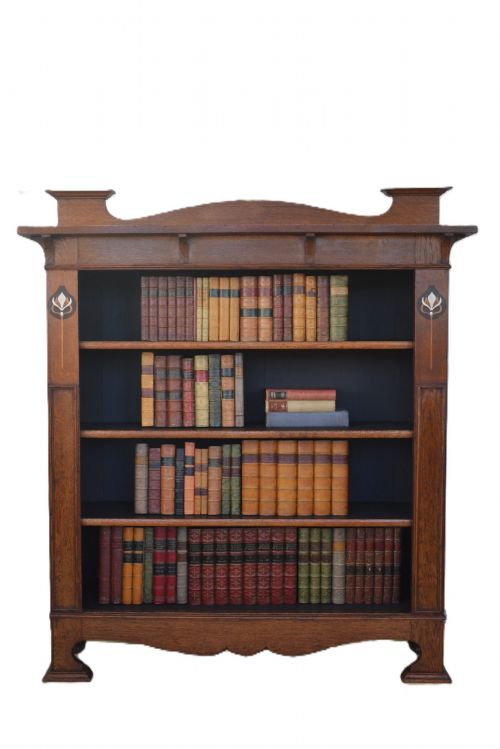


Medium Oak Shelving
Medium oak shelving brings warmth and utility to any room, offering robust open storage crafted from honest timber.
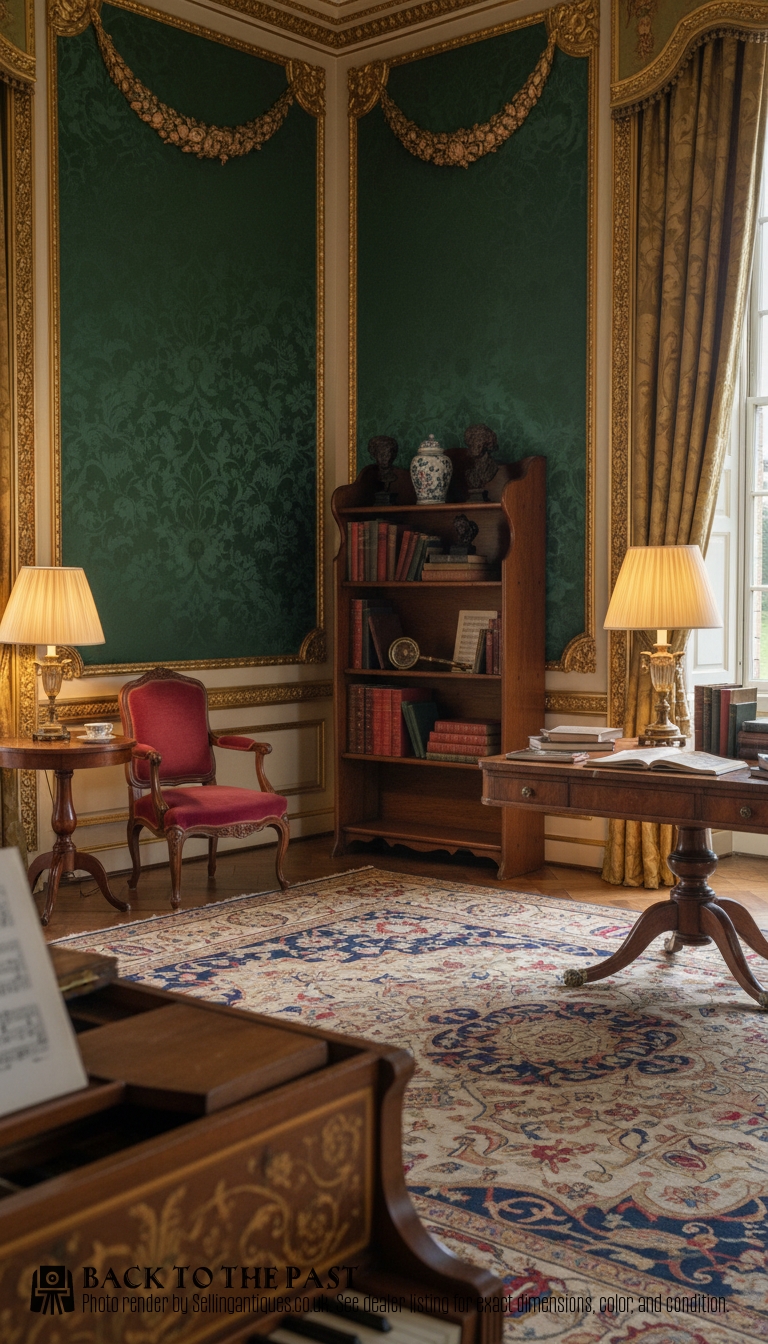
Medium Oak Shelving
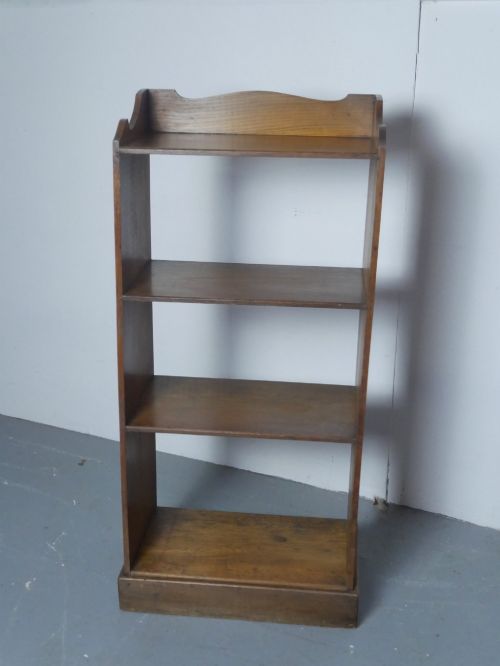
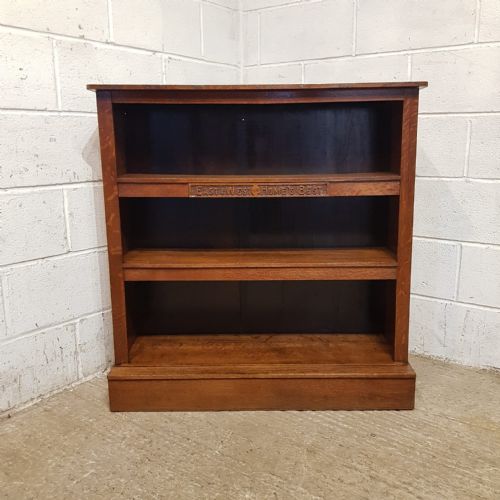
Medium oak shelving principally comprises open bookcases and standing units designed for practical book storage and display. These pieces span the early twentieth century, taking shape across Edwardian, Arts and Crafts, and Art Deco movements.
The most common form on this page is the open bookcase, often featuring adjustable shelves for versatility. Pieces range from straightforward utilitarian shelving units to refined designs attributed to notable makers.
Origins cluster around the first three decades of the twentieth century, alongside specific examples from the nineteen-thirties. Buyers encounter solid oak construction frequently, sometimes enriched with marquetry, inlay, or brass details.
How medium oak shelving was made
Construction relies heavily on solid oak timber selected for durability and pronounced grain patterns. Workshops utilised traditional joinery methods to build stable frameworks capable of supporting heavy volumes.
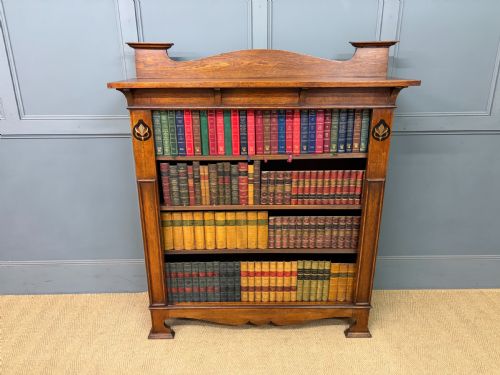
Decorative elements occasionally include subtle marquetry, inlay work, and brass hardware, particularly on pieces associated with Arts and Crafts or Art Deco styles. Shelves were frequently engineered with adjustable mechanisms for everyday utility.
Listings feature oak material predominantly, spanning Edwardian, Arts and Crafts, and Art Deco periods from nineteen hundred to nineteen thirty-five.
What varies in quality
Quality separates through the purity of the timber selection, distinguishing standard solid oak from pieces enhanced by careful inlay or attributed to specific workshops. Construction fidelity also marks the difference, seen in the precision of adjustable shelf mechanisms and joinery.
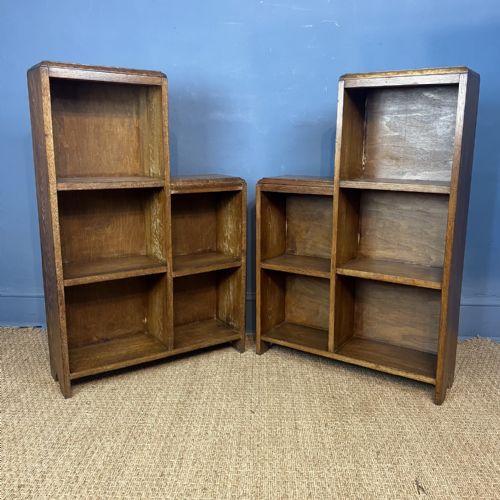
Stylistic cohesion defines the upper tier, where proportions and movement characteristics, such as clean Arts and Crafts lines or distinct Art Deco stepped forms, remain harmonious.
Heal s·Betty Joel
The Medium Oak Shelving Glossary
- Arts and Crafts
- A design movement prioritising traditional craftsmanship and simple forms. It often highlights the natural grain of oak without excessive ornamentation.
- Art Deco
- A style emerging in the interwar period characterised by sleek lines and geometric forms. Stepped shelving profiles frequently define pieces from this era.
- Edwardian
- A period spanning the early twentieth century prior to the First World War. Furniture from this time often balances domestic utility with refined proportions.
- Adjustable shelves
- Internal boards mounted on movable supports allowing customisable shelf heights. This feature enhances the practical storage capacity of bookcases.
- Solid oak
- Timber cut directly from the oak tree rather than veneered onto a secondary wood. This material provides structural integrity and weight to shelving units.
Medium Oak Shelving: Frequently Asked Questions
What periods do these pieces date from?
The selections date primarily from the early twentieth century, spanning Edwardian, Arts and Crafts, and Art Deco movements.
Most examples originate between nineteen hundred and nineteen thirty-five, reflecting the prevalent furniture styles of those decades.
Are the shelves adjustable?
Many of the open bookcases feature height adjustable shelves to accommodate books of varying sizes.
This practical adjustment mechanism appears across several Arts and Crafts and Edwardian iterations.
What materials are typically used?
Oak is the primary timber, appearing as solid oak across the majority of standing bookcases and shelving units.
Secondary materials include brass fixtures, marquetry, and inlay details found on specific stylistic pieces.
How do I identify an Arts and Crafts piece?
Arts and Crafts shelving focuses on honest construction, visible joinery, and the natural grain of solid oak.
These pieces usually eschew heavy ornamentation in favour of functional, clean proportions.