

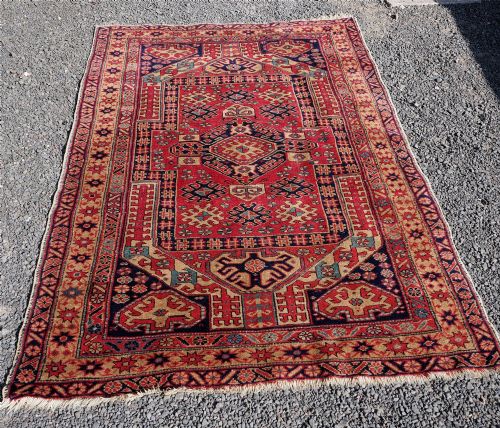
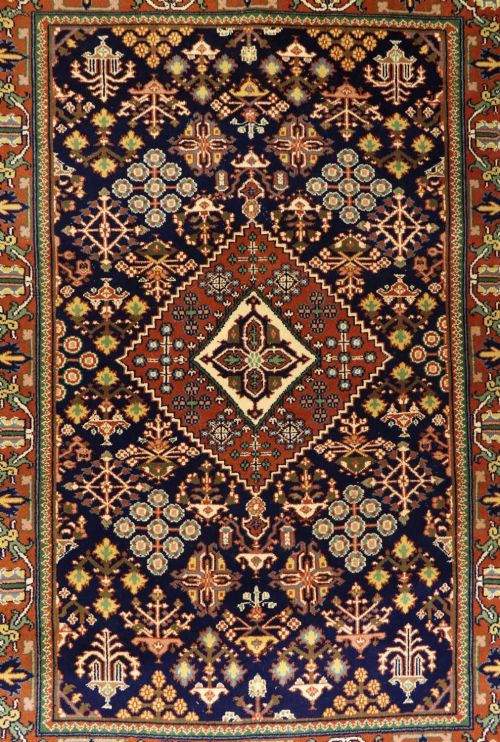


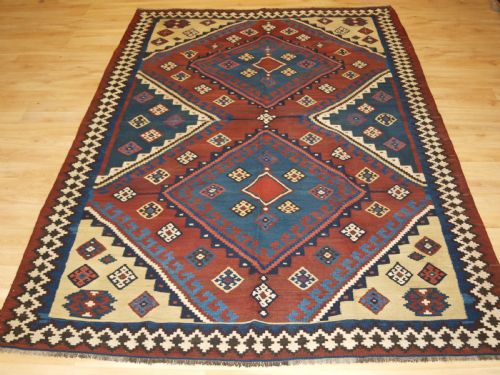


Medallion Design Rug
A medallion design rug anchors a room with a central geometric or floral focal point crafted by weavers across Persia, the Caucasus, and Anatolia.
Medallion Design Rug
The format appears across various regional traditions including Persian, Caucasian, and Turkish workshops and tribal weaves. Common variations include single central motifs, repeat medallion patterns, and triple medallion arrangements.
Buyers encounter formats ranging from small scatter rugs and long runners to large room-size carpets and kilims. Regional attributes dictate whether the central motif takes a geometric, hooked, or floral form.
Materials and construction methods
Weavers relied primarily on wool and cotton foundations, utilising hand-knotted wool pile and flatwoven flatweaves. Certain pieces incorporate camel hair grounds or silk highlights alongside natural dyes.
Regional workshops and nomadic groups knotted dense piles onto warps and wefts to create durable floor coverings. Artisans also employed embroidery techniques on specific textile formats like Suzanis.
Medallion Design Rug Retail Price Guide 2026
Typical asking prices for medallion design rug among the pieces listed under this phrase on Sellingantiques today, from the lower quarter to the upper quarter. They describe what is for sale here now, not the wider market.
Watch closely for stray animals and figures woven unexpectedly into the geometric fields of select Caucasian and Afghan pieces.
Factors determining quality
Knot density and the precision of the weave dictate the structural integrity and definition of the central medallion. Finer execution allows complex geometric and floral curves to appear sharp and legible.
The depth and harmony of the palette depend on the quality of the dyes used by the weaver. Natural dyes yield softer, more complex tones that age with character compared to flat synthetic alternatives.
The Medallion Design Rug Glossary
- Medallion
- The central ornamental motif dominating the field of the rug. It serves as the primary focal point of the composition.
- Kilim
- A flatwoven textile produced without a pile. These pieces offer lightweight versatility and sharp geometric patterning.
- Spandrel
- The triangular corner area situated between the central medallion field and the outer borders. It frames the main design element.
- Latch hook
- A hooked geometric motif commonly found along the edges of medallions in Caucasian and tribal weaves. This detail adds linear definition to the pattern.
- Boteh
- A Paisley-like almond or pear-shaped motif representing a floral shoot or cypress tree. It appears frequently in regional Persian and tribal designs.
Medallion Design Rug: Frequently Asked Questions
How do I place a medallion rug?
Position the central medallion in the middle of a seating area or beneath a dining table so the focal point remains unobstructed.
Allow enough surrounding floor space to frame the outer borders and display the regional field pattern properly.
Are these rugs durable enough for hallways?
Sturdy wool piles and tight hand-knotted constructions handle regular foot traffic well in corridors and entryways.
Runners and long formats distribute wear evenly across the length of the weave over decades of use.
How do I distinguish regional styles?
Examine the geometry of the central motif and the colour palette to separate Caucasian geometric designs from curvilinear Persian patterns.
Border structures and the presence of camel hair or silk highlights also point toward specific weaving traditions.
Can I use a flatweave in a living room?
Flatwoven kilims provide a lower profile that works well beneath furniture without creating uneven surfaces.
Their lightweight structure makes them simple to lift and reposition during room reorganisations.