
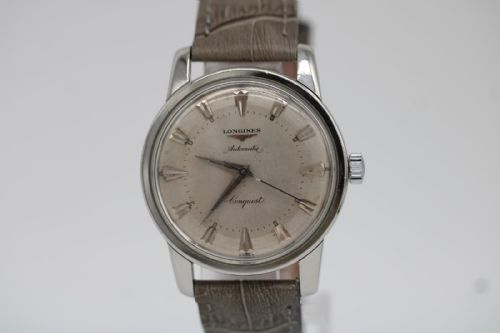


Mechanical Longines Wristwatch
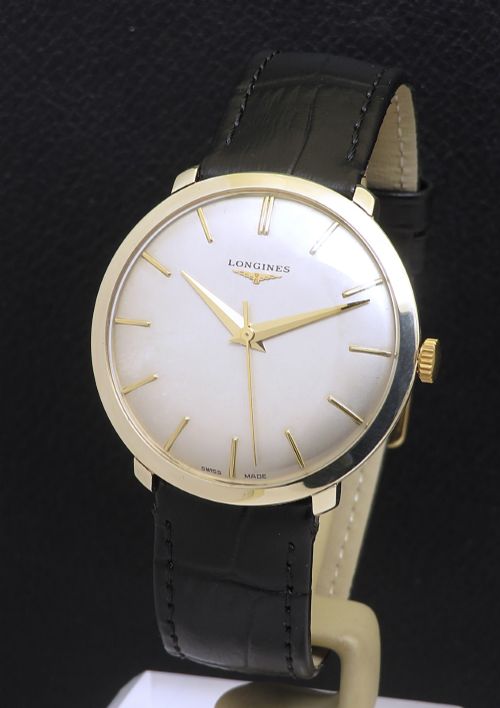
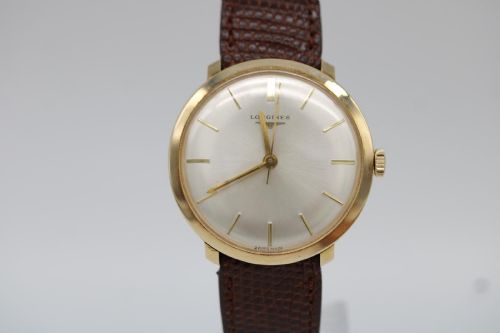
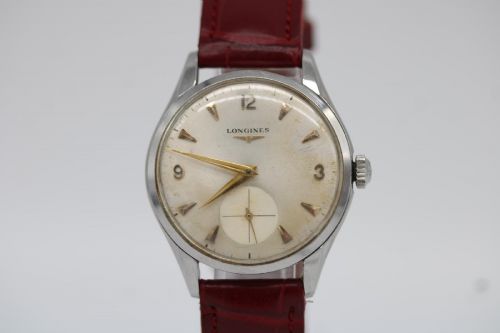
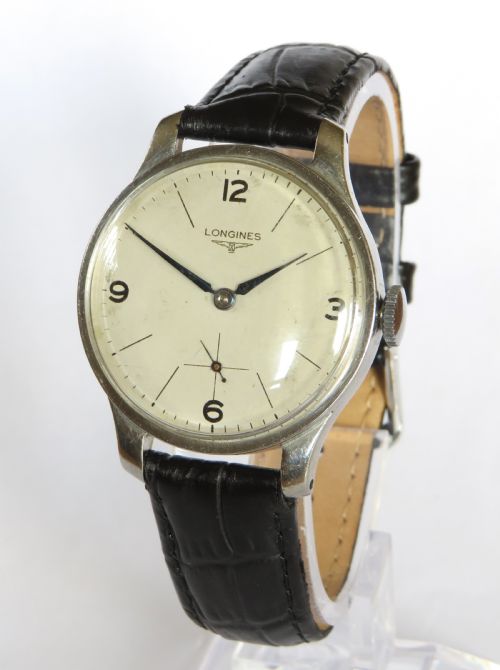
These mechanical longines wristwatch items are mid-century horological pieces driven by manual wind and automatic movements, prized for classic design and precision engineering.
Mechanical Longines Wristwatch
When you search for a mechanical longines wristwatch, you encounter timepieces predominantly spanning the 1940s, 1950s, and 1960s. These pieces represent mid-century Swiss horology, originating from an era when mechanical movements were standard.
The versions you are most likely to meet on this page include gents dress watches and signature models such as the Conquest and the Flagship. These objects showcase mid-century modern styling and traditional manual wind or automatic calibres.
Forms typically feature round or shaped cases measuring around thirty-five millimetres, paired with leather straps and metallic dials. The overarching aesthetic adheres strictly to mid-century design principles without superfluous ornamentation.
How they were made
Makers constructed these watches using durable metals including stainless steel, solid 9ct gold, 9K gold, and gold plate for the cases. The internal mechanisms relied on precise Swiss movements like the calibre 280 and calibre 12.68Z.
Protective elements incorporated acrylic or glass over the dials, while straps utilised leather. Assembly involved seventeen jewels or more within the movements to reduce friction and ensure mechanical reliability.
Several pieces arrive safely preserved inside their original vintage presentation boxes, waiting to tick once more.
What varies in quality
The distinction between tiers rests in the casing material, moving from gold plate and stainless steel up to solid 9ct gold. Calibre complexity and overall preservation status further separate standard examples from finer specimens.
Inclusion of original boxes and the extent of mechanical restoration dictate the standing of a piece within the range. The pedigree of specific lines like the Flagship or Conquest influences horological desirability.
Longines Baume·Longines Wittnauer
The Mechanical Longines Wristwatch Glossary
- Calibre
- The specific internal movement of a watch. Manufacturers assign numbers to designate distinct mechanical designs.
- Manual wind
- A movement requiring daily hand rotation of the crown to tension the mainspring. This represents the traditional method of powering vintage timepieces.
- Automatic
- A self-winding movement driven by the natural motion of the wearer's wrist. An internal weighted rotor tensions the mainspring continuously.
- Denisteel
- A proprietary stainless steel alloy used for robust watch case construction. It provides enhanced durability against daily wear.
- Jewels
- Synthetic rubies placed at pivot points within the movement. They minimise friction and wear among moving metal components.
Mechanical Longines Wristwatch: Frequently Asked Questions
How do I wind a mechanical longines wristwatch?
Rotate the crown clockwise between your thumb and forefinger until you feel gentle resistance. Stop immediately to avoid damaging the mainspring.
Perform this action at roughly the same time each day to maintain consistent tension and accurate timekeeping.
Are these watches waterproof?
Vintage pieces from the 1940s to 1960s lack modern rubber gaskets and modern water resistance standards. Exposure to moisture can corrode the internal movement.
Keep the watch away from water, rain, and humidity to preserve the dial and mechanical components.
How often does a mechanical watch need service?
A mechanical movement requires professional oil cleaning and adjustment every few years. Old lubricants dry out, increasing friction on the gear train.
Regular servicing prevents premature wear on the jewels and metal pivots inside the calibre.
Can I replace the leather strap?
Straps experience wear and tear over decades and replacement is standard practice. Ensure the lug width matches the replacement strap dimensions.
Choosing leather maintains the period-appropriate aesthetic of mid-century dress watches.