


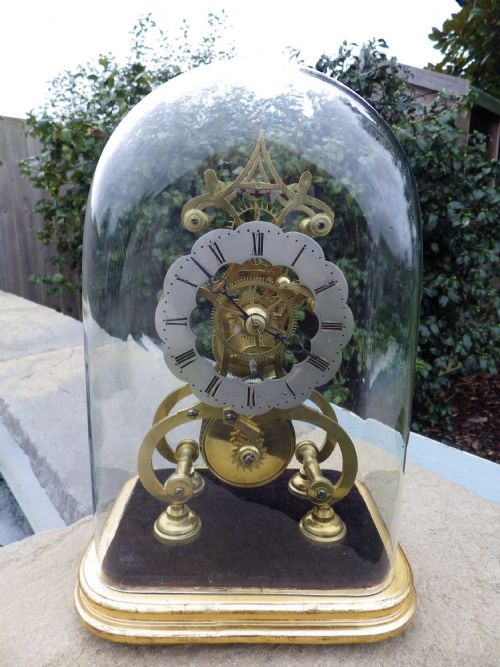
Mechanical Fusee Timepiece
A mechanical fusee timepiece delivers precise horology through a cone-shaped pulley that equalises the mainspring's declining power as it unwinds.
Mechanical Fusee Timepiece
A mechanical fusee timepiece represents a pinnacle of traditional horological engineering, designed to maintain steady force throughout the operational cycle of the movement. Buyers seeking a mechanical fusee timepiece encounter a diverse array of forms spanning the Georgian, Regency, Victorian, and Edwardian eras.
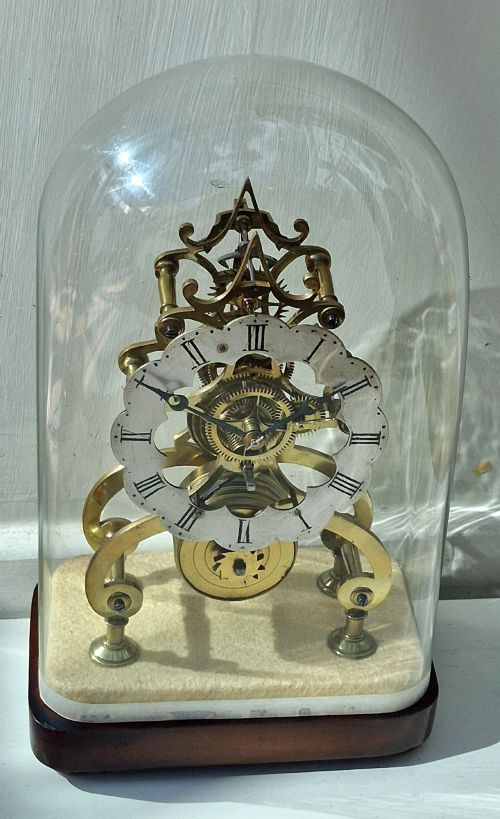
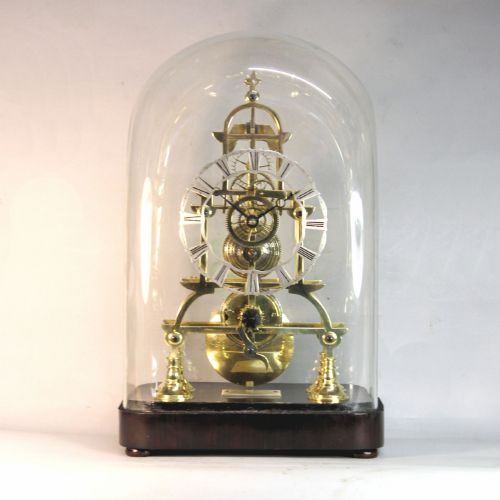
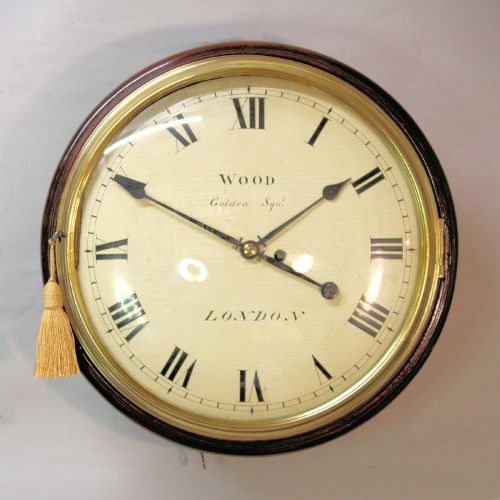
The selections available here most commonly take the shape of wall-mounted drop dial clocks, mantel clocks, and intricate skeleton clocks. These pieces originate from domestic, institutional, and railway settings across Britain, reflecting utilitarian precision alongside formal domestic elegance.
Materials and Construction
These instruments utilise robust timber cases constructed from mahogany, oak, and rosewood, frequently paired with cast brass bezels and silvered metal dials. Interior movements combine steel wheels and pinions with brass plates, housing the crucial conical fusee pulley connected via a fine chain or gut line to the barrel.
Dials are protected by curved or flat glass panels, whilst select mantel and skeleton versions sit beneath glass domes supported on wooden or marble plinths. Gilt bronze and ormolu embellishments appear on ornamental bracket and figural models from the Regency and Victorian periods.
Listings feature movements housed in brass, mahogany, oak, and rosewood, spanning wall-hung dial clocks to freestanding bracket and skeleton models.
Judging Quality and Execution
Quality in these horological works rests upon the crispness of the wheel-work cutting, the finishing of the brass plates, and the precision of the engraving on the dial. Skeleton and bracket examples demonstrate superior craftsmanship through complex six-spoke wheel designs and fire-gilt or bronze cases.
Case carpentry further distinguishes the range, where finely figured mahogany veneers, inlaid rosewood, and robust carved oak housings elevate utilitarian timepieces into high decorative art. Signed dials by established London and provincial makers indicate a higher tier of workshop execution.
R Stewart Glasgow·Richard Winter of Chieveley·John Walker·J Lyndsey Antique·McCabe London·Baetens London·J Fisher Esq
The Mechanical Fusee Timepiece Glossary
- Fusee
- A conical pulley designed to equalise the diminishing power of the mainspring as it unwinds. This mechanism ensures consistent torque is delivered to the escapement throughout the running period.
- Verge escapement
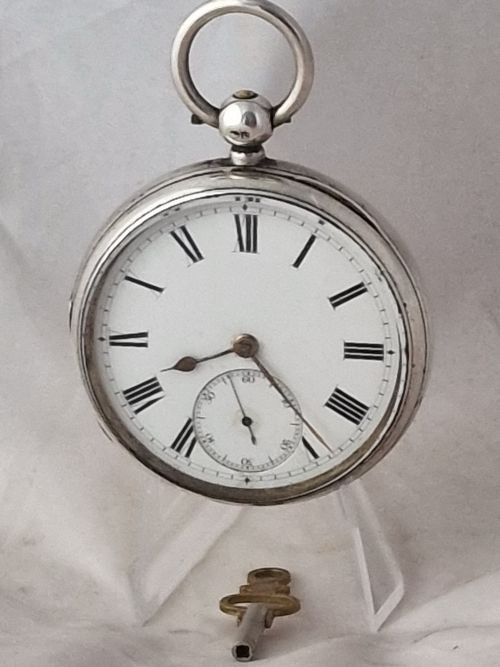
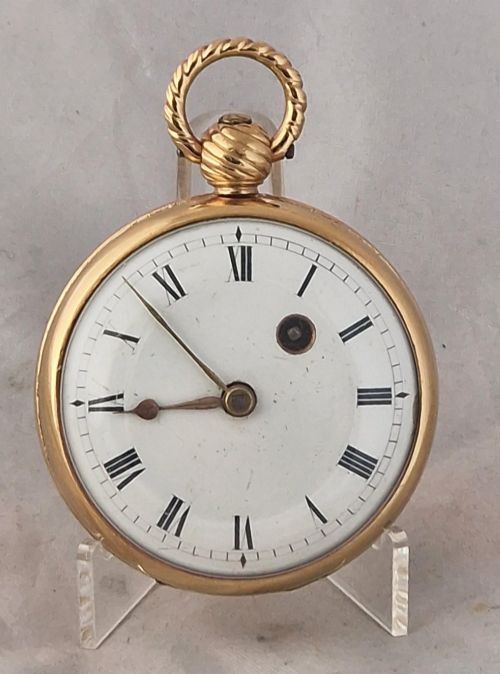
- An early type of escapement mechanism utilising a verge axis and pallets that interact with a crown wheel. It provides the characteristic ticking motion in older pocket watches and clocks.
- Drop dial clock
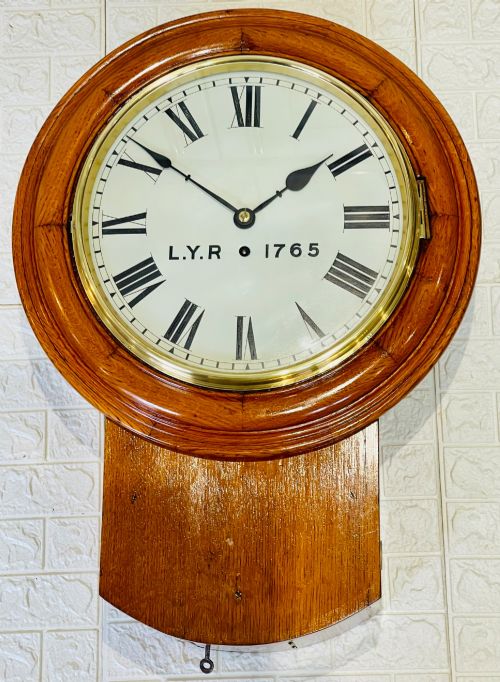
- A wall clock featuring an extended wooden trunk below the circular dial, frequently utilised in railway offices and public taverns. The configuration accommodates a longer pendulum drop.
- Skeleton clock
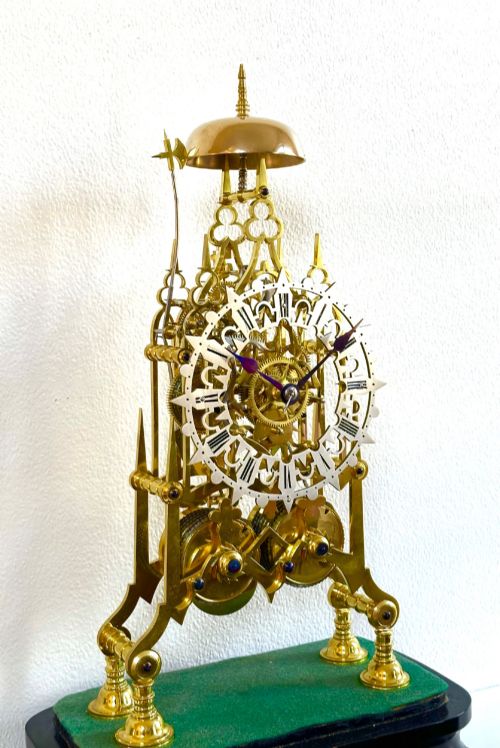
- A timepiece stripped of its outer case to reveal the intricate brass gear train and movement plates under glass. These pieces showcase the mechanical complexity of the gearwork.
- Bracket clock
- A portable table or mantel clock originally designed to sit on a wall bracket or desk. They frequently incorporate high-grade 8-day movements within mahogany, oak, or ormolu cases.
Mechanical Fusee Timepiece: Frequently Asked Questions
How does a fusee movement work?
A fusee movement uses a conical pulley connected to the mainspring barrel by a fine chain or cord. As the spring unwinds and loses tension, the chain pulls on a progressively wider section of the cone, maintaining constant torque.
This clever mechanical compensation ensures the clock maintains consistent timekeeping from the moment it is fully wound until the final hours of its run.
Where were drop dial clocks used?
Drop dial clocks were widely deployed in railway stations, offices, and public taverns across Britain during the nineteenth century. Their clear dials and robust wooden cases ensured reliable timekeeping in busy, public environments.
Today, these utilitarian pieces bring industrial character and historical charm to domestic hallways and kitchens.
What is a skeleton clock?
A skeleton clock is designed with open brass plates and exposed gear trains that lay the entire mechanical movement bare to view. They were housed beneath glass domes to protect the delicate wheel-work from dust whilst allowing uninterrupted observation.
Victorian makers produced these as decorative mantel pieces that highlighted contemporary engineering skill.
How do I wind my timepiece?
Winding requires inserting the appropriate key into the winding square on the dial face and turning it gently until resistance indicates the mainspring is fully tensioned. Care must be taken not to overwind antique mechanisms.
Most examples run for eight days per wind, requiring a weekly routine to maintain accurate time.