





Mechanical Alarm Clock
A mechanical alarm clock brings tangible weight and a distinct tick to the bedside, combining precision engineering with period design.
Mechanical Alarm Clock
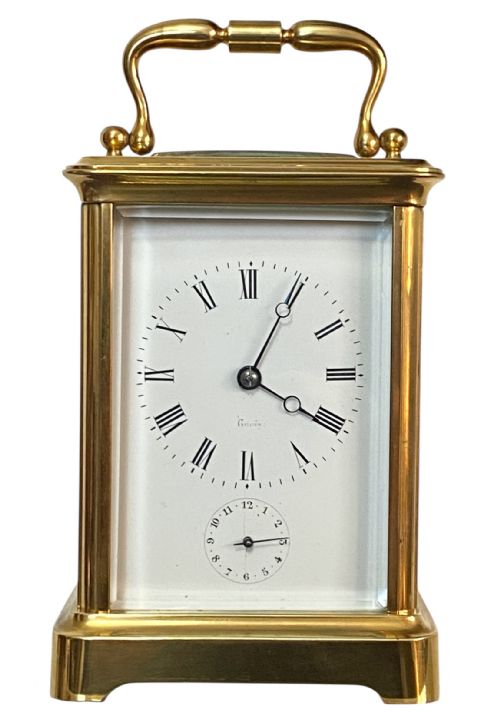
When searching for a mechanical alarm clock, collectors encounter everything from sturdy Victorian carriage clocks with integrated alarm functions to streamlined Art Deco desk pieces. These portable timepieces served practical waking duties in bedrooms and travel bags alike, driven by spring-wound movements rather than electricity.
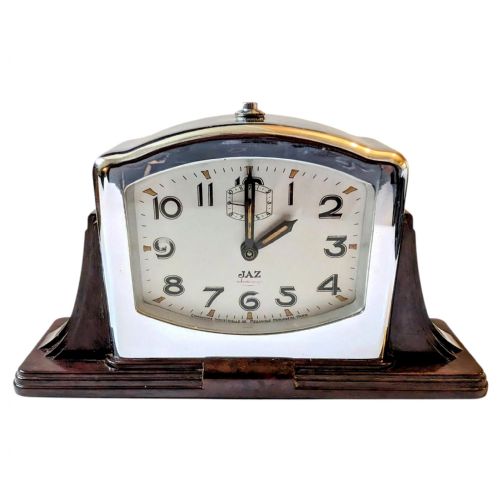
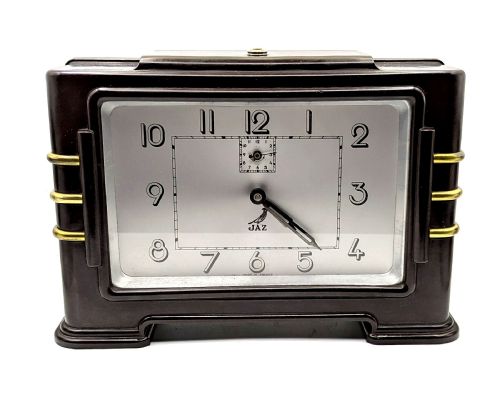
The most frequent examples on this page date from the 1930s, heavily represented by Art Deco designs in chrome, bakelite, and marble from French makers. Alongside these are earlier 19th Century and Victorian brass carriage clocks fitted with striking or alarm mechanisms.
Origins span France, Switzerland, Britain, and Hungary, showing a clear division between refined carriage clocks housed in glass and brass and later modernist bedside pieces shaped by industrial materials.
Materials and construction
Construction relies heavily on brass, glass, and heavy metals, often finished with gilt or chrome plating depending on the period. Victorian and 19th Century pieces utilise bevelled glass panels held within solid brass frames, allowing a clear view of the escapement and gear train.
Later 20th Century items introduce modern plastics such as bakelite alongside polished chrome and marble bases. Movement plates, wheels, and escapements are meticulously hand-assembled by skilled horologists to ensure reliable timekeeping and a distinct alarm strike.
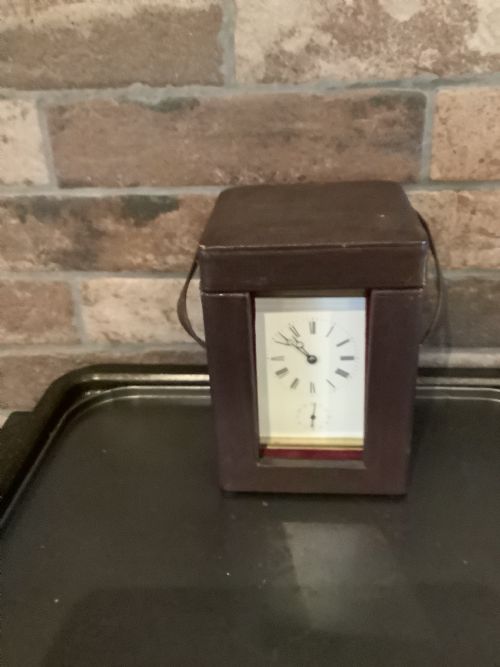
Early travel clocks came with leather cases so sturdy they outlived the carriages they rode in.
Assessing quality and execution
Material integrity and case preservation define the grade of a timepiece. Heavy cast brass, unblemished bevelled glass, crisp dial enamel, and intact original leather travel cases distinguish finer examples from standard production models.
Jaz·Jaeger·Harrods of London·Bourdin Paris·Hunt and Roskell·Drocourt·E White·Bayard·Blangy
The Mechanical Alarm Clock Glossary
- Carriage clock
- A portable spring-driven timepiece originally designed for officers travelling during the 19th Century. They usually feature a rectangular brass case with glass panels and a swinging handle on top.
- Sonnerie
- A striking mechanism that chimes the hours and quarters automatically without requiring the user to pull a cord. Grand sonnerie chimes on the hours and the passing quarters, whereas petite sonnerie chimes only the hours.
- Bakelite
- An early synthetic thermosetting plastic popular during the 1930s for its durability and rich finish. It appears frequently on Art Deco desk and mantle clocks.
- Escapement
- The internal mechanism that controls the release of power from the mainspring to the gear train, producing the characteristic ticking sound of the clock.
- Repeater
- A mechanism that repeats the last sounded hour or quarter when a button or pendant is pressed, useful for telling time in the dark.
Mechanical Alarm Clock: Frequently Asked Questions
How do I wind a mechanical alarm clock?
Most mechanical alarms have separate butterfly keys or butterfly winders on the back plate for the time train and the alarm train. Turn each key clockwise until you feel firm resistance, taking care not to overwind the mainspring.
Ensure you wind both functions if you intend to use the audible alarm feature alongside standard timekeeping.
What is the difference between a carriage clock and a desk clock?
Carriage clocks originate from the 19th Century and are characterised by heavy brass frames, bevelled glass panels, and a hinged carrying handle on top. They were engineered for portability during travel.
Desk and mantle clocks from the 1930s adopt stationary silhouettes using materials like bakelite, chrome, and marble, intended strictly for interior placement.
How do I date an antique mechanical alarm clock?
Dating relies heavily on stylistic indicators, case materials, and maker signatures engraved on the back plate or dial. The presence of heavy gilt brass and enamel points to Victorian origins, while streamline shapes and bakelite indicate the 1930s.
Maker marks and retailer signatures provide further archival clues to the exact decade of manufacture.
Can I travel with an antique carriage clock?
While original carriage clocks were built for travel and often include fitted leather cases, modern transit requires extra caution. Mechanical movements contain delicate escapements that can be knocked out of beat by rough handling.
Secure the balance wheel and pack the clock securely in its original case if movement is necessary.