




Vintage Carriage Clock Key
These vintage carriage clock key pieces are essential winding tools for antique timepieces, offering both mechanical utility and historical charm.
Vintage Carriage Clock Key
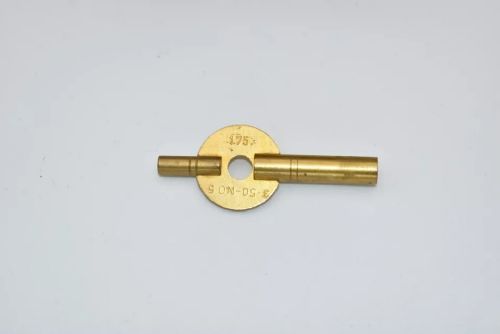
When you search for vintage carriage clock key, you are looking at winding mechanisms designed to fit the square arbors of antique timepieces. These items come from periods such as the Victorian era, the nineteenth century, and mid-twentieth century decades up to the nineteen-sixties.
The pieces on this page include clock accessories and complete clock objects featuring winding components. Origins span English and French workshops, encompassing styles like Neoclassical Revival, Edwardian, and Georgian Revival.
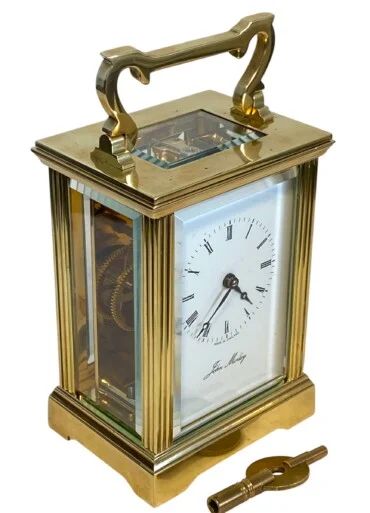
You are most likely to encounter brass and gilt brass forms alongside glass panels and enamel dials within these listings. Such items reflect the enduring mechanical heritage of portable travel timepieces from past centuries.
Materials and construction methods
The physical items in these listings utilise metals such as brass, gilt brass, and gilt bronze, often paired with glass and leather components. Metalwork forms the structural foundation for both the clocks and their winding accessories.
Enamel is frequently applied to dials, featuring white surfaces and Roman numerals. Construction techniques reflect traditional nineteenth and twentieth-century metalworking practices employed by clockmakers.
Listings span from the nineteenth century through to nineteen sixty, featuring brass, gilt bronze, and glass materials across French and English origins.
Assessing quality and craftsmanship
Quality in these items is determined by the precision of the metal casting and the crispness of any engraved detail on the brass or gilt bronze surfaces. Weight and substance also indicate a higher standard of manufacture.
The integration of mechanical complications, such as alarm functions or striking and repeating mechanisms, separates standard pieces from more complex examples.
John Morley·L Epee
The Vintage Carriage Clock Key Glossary
- Arbor
- The spindle or axis on a clock movement where the vintage carriage clock key attaches for winding. This square or rectangular shaft transfers torque to the mainspring.
- Gilt brass
- Brass coated with a thin layer of gold or gold-coloured alloy. This finish provides a bright appearance while using a more robust base metal underneath.
- Enamel
- A glassy substance fused to metal through firing to create durable dial faces. It provides a smooth, white background for painted numerals.
- Repeating
- A mechanism that chimes the hours and quarters upon demand when a lever or button is activated. This complication demonstrates advanced clockmaking skill.
- Grande Sonnerie
- A striking system that chimes the hours and the passing quarters automatically. It represents a sophisticated level of horological engineering.
Vintage Carriage Clock Key: Frequently Asked Questions
What is a vintage carriage clock key used for?
These keys wind the mainsprings inside portable timepieces, allowing the clock mechanism to run and keep time.
They fit onto the square arbors located on the back or underside of the clock movement.
How do I know the correct key size?
You measure the width of the square winding arbor on your clock using callipers to find the matching millimeter size.
Vintage pieces often require testing different keys to achieve a snug fit without damaging the metal.
What materials are these items made from?
The listings show items constructed primarily from brass, gilt brass, and gilt bronze.
Some related accessories incorporate leather storage cases and glass viewing panels.
How do I care for brass clock items?
You should clean brass and gilt brass surfaces gently with a soft, dry cloth to remove dust without abrasive polishing.
Avoiding harsh chemical cleaners preserves the original patination and any delicate gilding.