

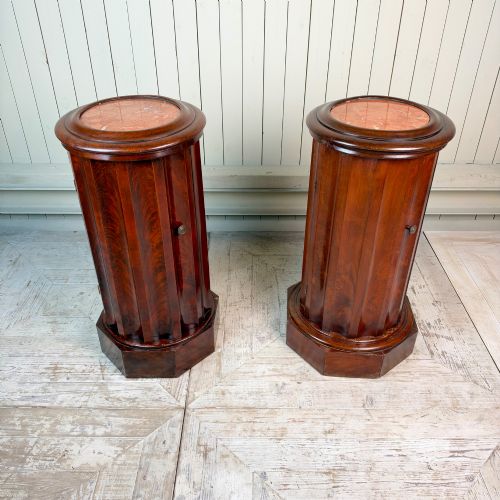
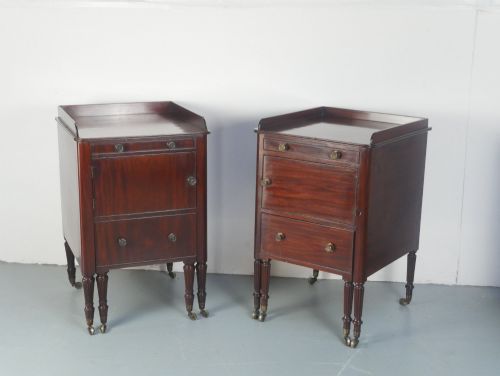
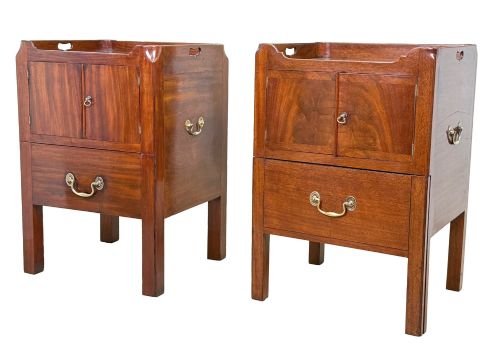
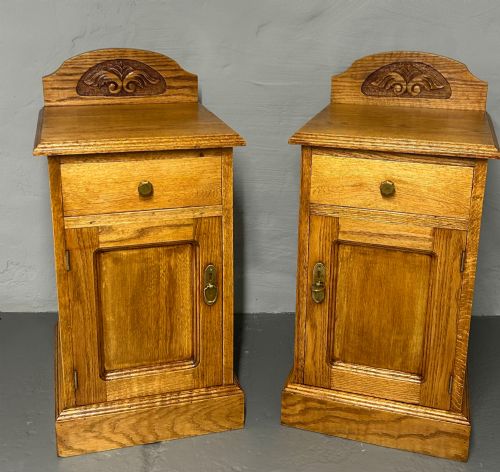

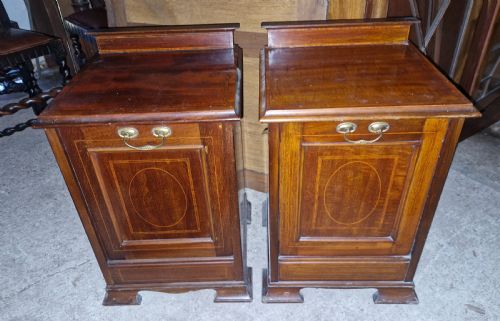


Matching Pair Bedside Cabinets
Matching pair bedside cabinets are dual bedroom storage pieces that bring symmetry to a scheme.
Matching Pair Bedside Cabinets
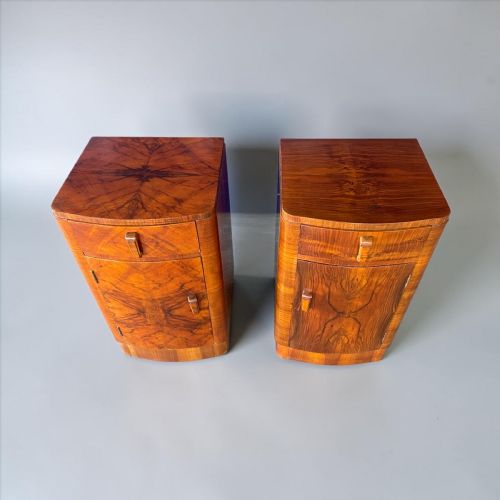
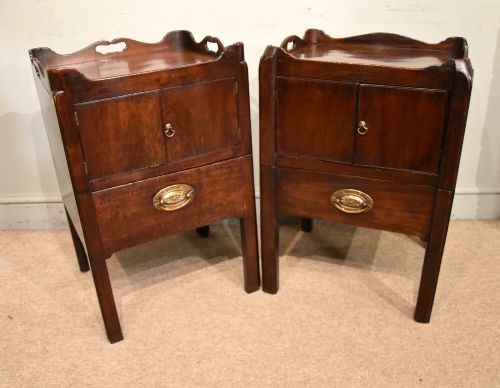
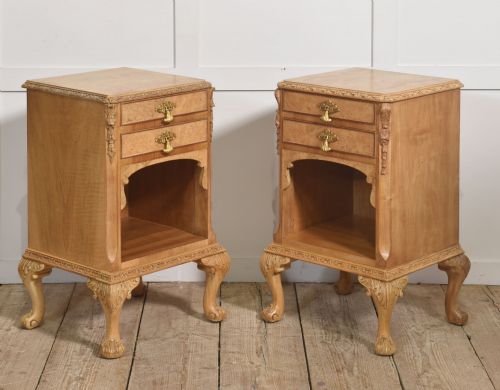
Matching pair bedside cabinets provide symmetrical storage beside a bed, offering surface space for a lamp and enclosed compartments for nighttime essentials. When seeking matching pair bedside cabinets, buyers encounter forms ranging from compact Victorian cylindrical pedestals to geometric Art Deco designs and Georgian mahogany night tables.
The pieces on this page span the eighteenth century through to the mid-twentieth century, capturing shifts in domestic habits and bedroom design. Oak, walnut, and mahogany dominate the offerings, built either as purpose-made pairs or assembled as closely matched sets from similar periods.
Construction and materials
Cabinet makers utilised solid timbers such as oak and mahogany for structural integrity, often applying figured veneers like burr walnut, blonde maple, and birdseye maple to visible exterior surfaces. These veneers were carefully laid to create symmetrical grain patterns across the front doors and top panels.
Joinery techniques varied by period, from traditional dovetailed drawer construction in eighteenth-century examples to curved laminated forms seen in later twentieth-century iterations. Brass handles, hinges, and occasional gallery rails provided functional and decorative accents across the different stylistic eras.
Matching Pair Bedside Cabinets Retail Price Guide 2026
Typical asking prices for matching pair bedside cabinets among the pieces listed under this phrase on Sellingantiques today, from the lower quarter to the upper quarter. They describe what is for sale here now, not the wider market.
The listings on this page span the eighteenth century to the nineteen-fifties, featuring oak, mahogany, walnut, and exotic veneers.
Quality variations
The standard of timber selection and veneer matching distinguishes superior examples from simpler utilitarian pieces. Artisans who took care to align grain patterns across both cabinets produced items of greater visual harmony.
Fine construction is evident in the weight of the drawers, the smoothness of door operations, and the subtlety of inlaid details or carved mouldings. Pieces retaining original hardware and sound structural timber command closer attention from discerning collectors.
Waring and Gillows
The Matching Pair Bedside Cabinets Glossary
- Veneer
- A thin slice of figured wood applied over a secondary timber base to create a decorative surface. This technique allowed cabinet makers to display expensive grain patterns without using solid costly wood.
- Cylindrical
- Having a circular cross-section, forming a rounded pillar shape. Victorian bedside cabinets frequently utilised this form to maximise interior space within a compact footprint.
- Matched pair
- Two pieces made separately or at slightly different times that share identical dimensions, timbers, and styles. Dealers assemble these sets to create visual balance on either side of a bed.
- Inlaid
- Ornamented by embedding pieces of contrasting wood, brass, or shell flush into the timber surface. Edwardian and Georgian examples often incorporate delicate stringing or geometric motifs.
- Burr walnut
- Timber taken from a tree growth or burl, featuring intricate, swirling grain patterns. It was highly prized by makers for creating decorative furniture facades.
Matching Pair Bedside Cabinets: Frequently Asked Questions
How do I style bedside cabinets?
Symmetry works well when placing identical cabinets beside a bed, creating a balanced focal point in the bedroom. Pairing them with matching lamps or framed art enhances the coordinated appearance.
Mixing eras can also succeed if the wood tones share a similar warmth or depth. Keeping the surface styling clean allows the natural grain of the walnut or mahogany to remain the primary feature.
Are these cabinets purely for bedrooms?
While designed primarily to hold nighttime items beside a bed, their compact proportions suit alternative spaces around the home. They function effectively as small side tables in a living room or as lamp stands in a hallway.
The enclosed cupboards and drawers provide practical storage for small objects in any room where floor space is limited. Their varied architectural forms allow them to integrate into diverse interior schemes.
How do I care for antique wood?
Protecting timber surfaces from direct sunlight prevents the rich colours of mahogany and walnut from fading unevenly over time. Using coasters and mats guards against moisture rings from glasses and mugs.
Applying a traditional beeswax polish occasionally maintains the lustre of the finish without building up heavy chemical residue. Avoid placing cabinets directly against heat sources to prevent the wood or veneer from splitting.
What defines Art Deco cabinets?
Art Deco bedside cabinets from the nineteen-thirties often feature streamlined geometric forms, curved drum shapes, and light blonde maples or rich burr walnuts. These designs departed from traditional period revival styles by emphasising clean lines and sleek surfaces.
Matching pairs from this era frequently showcase dramatic veneer grain patterns arranged symmetrically across the cabinet doors. They reflect a period of modernising domestic interior design and compact urban living.