


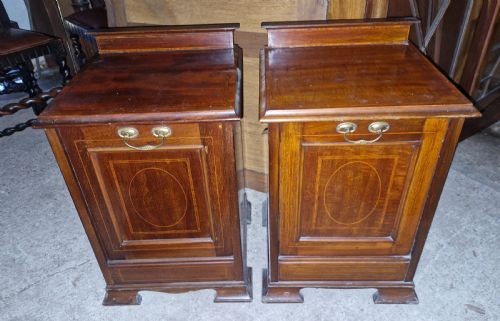


Matching Bedside Cabinets
Matching bedside cabinets bring symmetry to a bedroom, pairing practical storage with the distinct design eras of the past two centuries.
Matching Bedside Cabinets
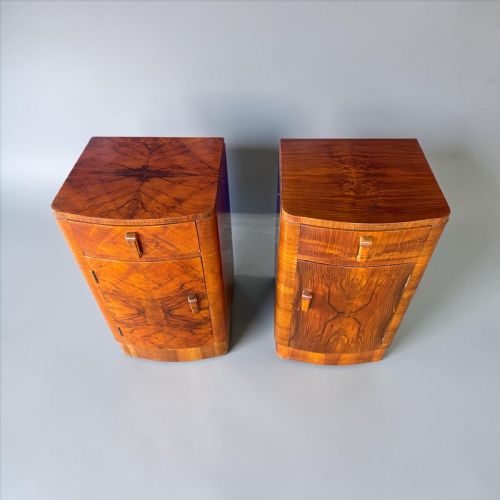
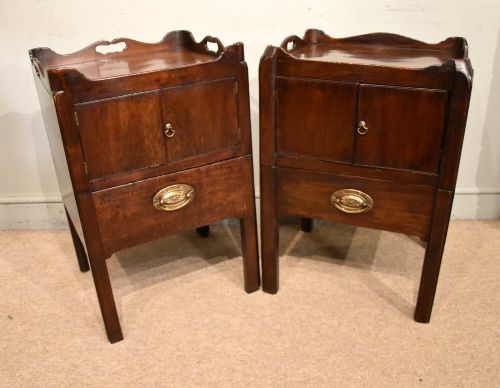
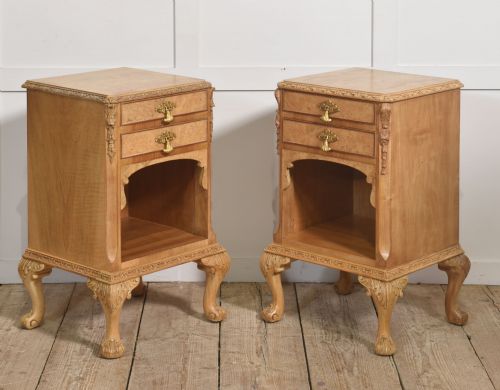
Matching bedside cabinets are predominantly encountered as pairs designed to sit symmetrically on either side of a bed. These pieces frequently emerge from the Art Deco period of the 1930s or span earlier Victorian and Edwardian decades.
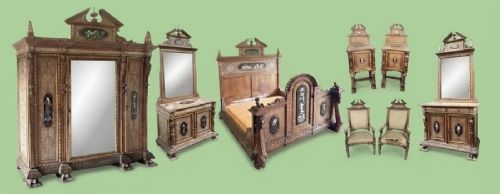
Forms range from simple rectangular cupboards to drum-shaped cabinets, demi-lune shapes, and items originally part of larger bedroom suites. Origins stretch from English workshops to French provincial makers and Italian studios.
Materials and Construction
Construction relies heavily on traditional cabinet timbers, with walnut, burr walnut, mahogany, and oak forming the structural carcasses. Finer examples utilise decorative veneers like birdseye maple, blonde elm, and satinwood to create striking grain patterns on the curved or flat surfaces.
Metal elements such as brass appear as handles, hinges, or decorative trim, while certain variants incorporate marble tops for durability and surface contrast.
Listings feature walnut, mahogany, oak, and maple timbers across Victorian, Edwardian, and Art Deco periods.
Assessing the Pieces
Quality separates pairs through the uniformity of the timber selection and the precision of the matching veneer work across both cabinets. Superior examples exhibit deliberate grain continuity and refined carving or inlay rather than basic mass production.
Construction integrity in the drawer joints, door alignment, and the retention of original hardware distinguish high-tier pieces from more utilitarian or heavily altered survivors.
Waring & Gillows·Gillows·Epstein
The Matching Bedside Cabinets Glossary
- Veneer
- A thin slice of figured wood applied to a stable underlying timber base. This technique allows cabinetmakers to display symmetrical grain patterns across the doors and top surfaces.
- Demi-lune
- A half-moon shape used for the footprint of specific cabinet designs. This curved profile is frequently observed in Art Deco pieces.
- Inlay
- A decorative technique where contrasting materials are embedded into the wood surface to form patterns. It appears often on Edwardian and Victorian furniture.
- Cylindrical
- A circular tubular form utilised for certain Victorian bedside cupboards. These pieces open with curved doors that follow the round contour.
Matching Bedside Cabinets: Frequently Asked Questions
How do I match cabinets with a bed?
Bedside cabinets are often acquired alongside matching beds or larger bedroom suites from periods like the 1930s Art Deco era. Alternatively, pairs can be selected to complement the wood tone or architectural style of an existing bedstead.
Matching the timber, such as burr walnut or mahogany, creates a cohesive bedroom aesthetic even if the pieces originate from different suites.
Were these always sold as pairs?
Many bedside cabinets were originally manufactured as matched pairs to flank a central bed, while others formed part of extensive bedroom suites that included wardrobes and dressing tables.
Over time, some pairs become separated, making closely matched sets a sought-after discovery for collectors seeking symmetrical bedside storage.
What styles are most common?
Art Deco designs from the 1930s dominate the available selections, frequently featuring walnut, blonde maple, or birdseye maple in drum or rectangular shapes.
Victorian and Edwardian mahogany and burr walnut cabinets also appear regularly, offering classical proportions and inlaid details.
How do I care for antique wood?
Antique cabinets require protection from direct sunlight and extreme humidity fluctuations to prevent the timber and delicate veneers from drying or splitting. Regular dusting with a soft, dry cloth maintains the finish without needing harsh chemical polishes.
Maintaining stable indoor temperatures preserves the original polish and structural integrity of both the solid wood and veneered surfaces.