



Blonde Maple Bedroom Furniture
Blonde maple bedroom furniture brings together the pale, figured grain of nineteenth-century timber and the striking geometries of the interwar years.
Blonde Maple Bedroom Furniture
Blonde maple bedroom furniture spans the late nineteenth century and the interwar decades, taking in both Victorian craftsmanship and Art Deco design. When you search for blonde maple bedroom furniture, you encounter substantial pieces designed to furnish complete chambers in matching suites.
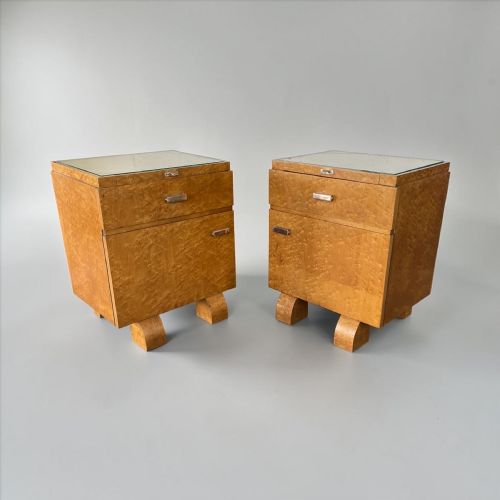
The dominant aesthetic on this page belongs to the 1930s, characterised by streamlined silhouettes and symmetrical wood veneers. Common forms range from compact bedside tables and tallboys to grand double beds with integral cabinets and mirrored wardrobes.
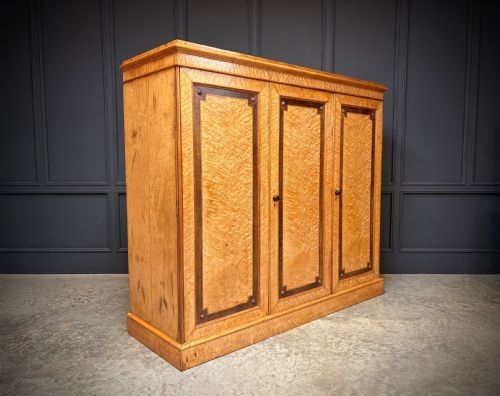
Earlier Victorian examples also appear, offering more traditional proportions alongside the same distinctive pale timber. Pieces often survive as pairs or matched sets, particularly bedside cabinets and dressing tables intended for twin or double rooms.
How these pieces were made
Cabinet makers utilised birds-eye maple veneers over solid timber carcasses to create the characteristic patterned surfaces seen across these pieces. The natural figuring of the wood is laid out in symmetrical patterns that catch the light from different angles.
Metal hardware in brass and chrome provides functional contrast to the pale timber, appearing on handles, hanging rails and structural trims. Glass elements, such as mirrored backs on chests of drawers and dressing tables, complete the construction.
Several beds arrive with built-in bedside cabinets, proving that breakfast in bed required zero assembly.
What varies in quality
The standard of a piece rests largely on the selection and matching of the timber veneer across prominent surfaces. Master makers ensured that the grain patterns flowed logically across drawers and doors, creating a unified visual rhythm.
Attribution also plays a part, as works by known workshops command attention for their sculptural forms and integrated design. Structural integrity in heavier items like wardrobes and bed frames distinguishes standard domestic output from more ambitious commissions.
Harry and Lou Epstein·H.L. Epstein Brothers
The Blonde Maple Bedroom Furniture Glossary
- Birds Eye Maple
- A figure in maple wood where small knots in the grain resemble tiny birds eyes, highly prized by cabinet makers. This figuring occurs naturally and creates a distinctive dotted texture across large surfaces.
- Compactum
- A multi-compartment wardrobe combining hanging space, shelves and internal drawers within a single carcass. This form maximised storage in smaller bedrooms.
- Skyscraper
- An Art Deco architectural style translated into furniture design through stepped cornices and vertical tiers. It is frequently seen on beds and cabinets from the interwar period.
- Tallboy
- A tall chest of drawers standing higher than a standard dresser, often combining a cabinet section at the top. This form offered generous vertical storage without occupying excessive floor space.
Blonde Maple Bedroom Furniture: Frequently Asked Questions
What periods do these pieces span?
The selection covers items from the nineteenth century up through the 1930s. The majority of pieces belong to the Art Deco era.
Victorian examples appear alongside interwar designs, showing how cabinet makers utilised maple across different stylistic periods.
Are matching bedroom sets common?
Many items survive in pairs, particularly bedside cabinets and matching dressing tables. Complete suites also occur, featuring beds with built-in cabinetry.
Matching pieces often share specific veneering patterns and hardware details typical of the interwar period.
How do I care for maple veneer?
Maple benefits from protection against direct sunlight, which can alter the pale tone of the timber over time. Regular dusting with a dry cloth preserves the polished surface.
Avoid excessive moisture and wax build-up to maintain the clarity of the grain patterns.
What materials accompany the maple?
Makers incorporated brass and chrome for handles, hinges and structural accents. Glass appears in mirror plates on dressing tables and chests of drawers.
Underpinning these surfaces are solid woods and secondary timbers that provide structural stability to the carcasses.