


Marquetry Tripod Stand
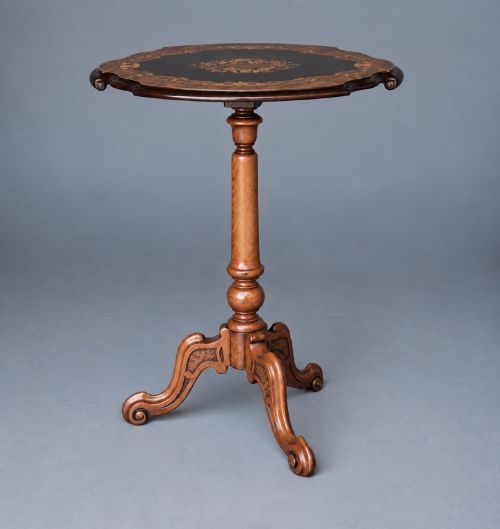
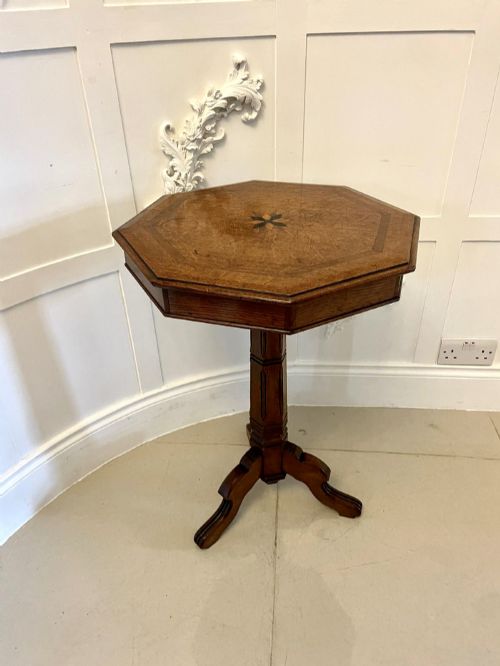
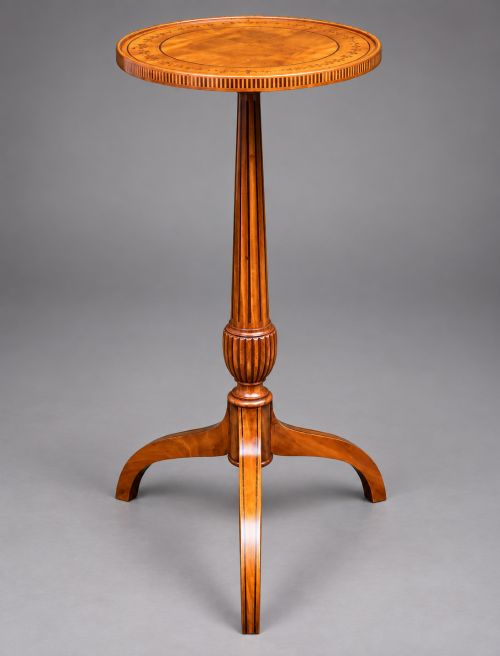
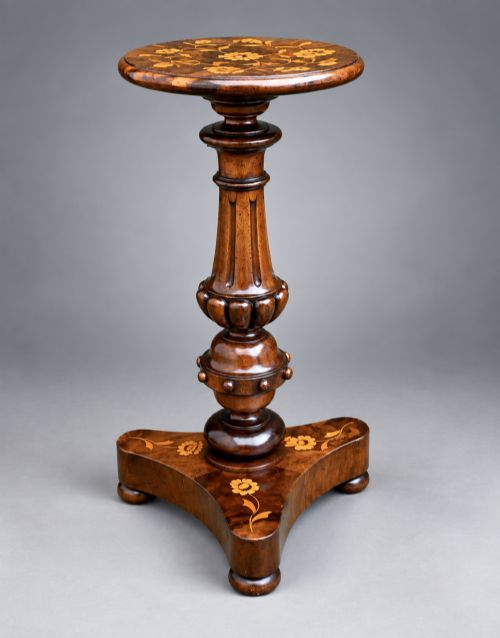
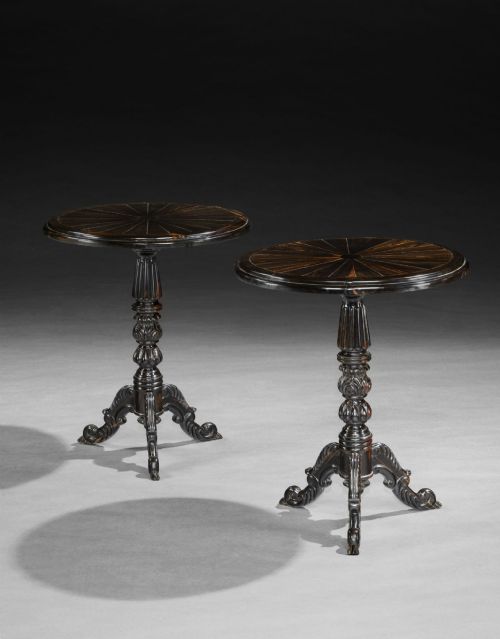
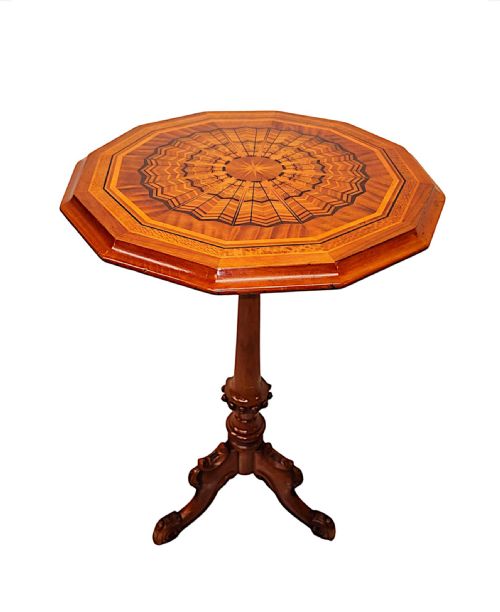
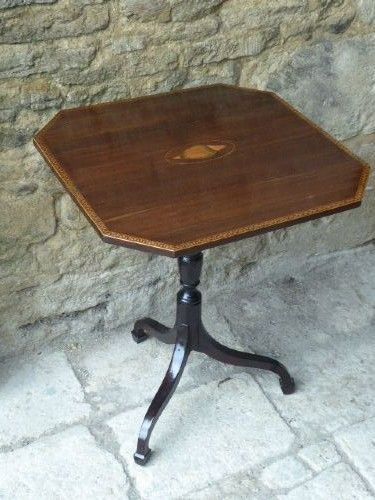
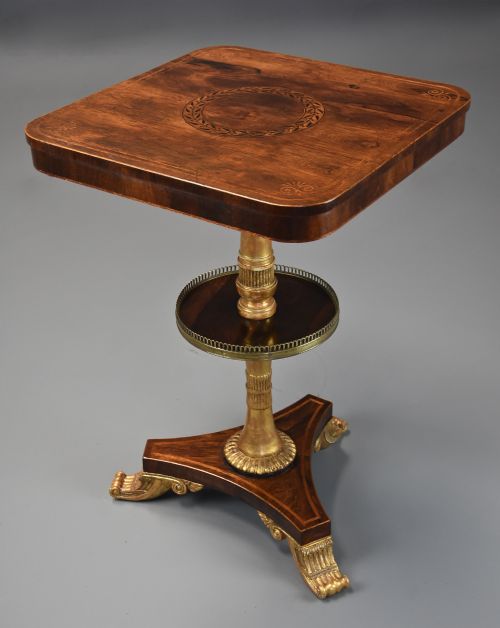
These marquetry tripod stands combine three-legged stability with intricate wood inlay, offering a portable surface for lamps or wine.
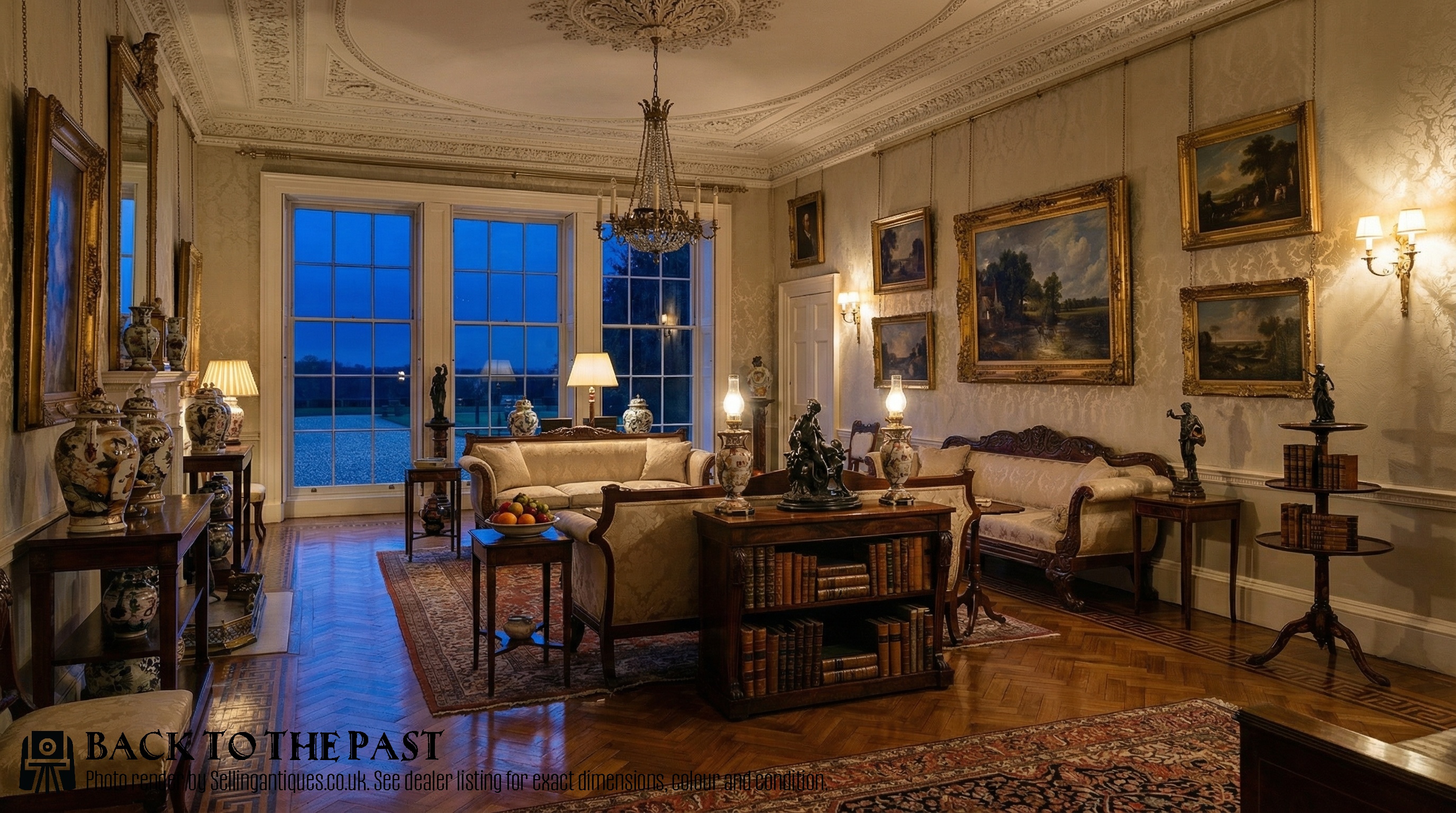
Marquetry Tripod Stand
Buyers will most frequently encounter nineteenth-century examples featuring satinwood, walnut, or mahogany surfaces decorated with floral or geometric wood inlay. These versatile tables appear in various regional styles, including Dutch marquetry and Anglo-Indian colonial designs, alongside standard English interpretations.
Materials and construction
Cabinet makers utilised dense timbers such as mahogany, rosewood, walnut, and ebony for the structural frames, pillars, and tripod bases of these stands. Contrasting lighter woods like satinwood provide the ground or detail for complex pictorial or floral marquetry patterns.
The decorative surfaces rely on precision veneer work, where thin slices of various wood species are cut and fitted together to form intricate motifs. Brass inlays and hardware occasionally accent the timber, particularly in Regency pieces.
Listings span the eighteenth and nineteenth centuries, featuring materials from standard mahogany and oak to exotic satinwood, rosewood, and ebony.
Judging the work
Quality rests primarily on the crispness and complexity of the wood inlay, where tighter joints between contrasting species distinguish finer work from simpler decorative borders. The choice of primary timber also sets pieces apart, with burr walnut and figured satinwood commanding attention over plain domestic woods.
Proportion and stability define the better examples, ensuring the central pillar stands plumb and the three legs meet the floor without wobble. Carved details on the stem and the execution of the tilting mechanism further separate standard production from superior craftsmanship.
Gillows·George Bullock
The Marquetry Tripod Stand Glossary
- Marquetry
- The art of forming decorative patterns on a wooden surface by fitting together small pieces of veneer. It differs from inlay by covering the entire background rather than being set into recessed channels.
- Tripod table
- A small occasional table supported by a single central pillar resting on three feet. This design prevents rocking on uneven floors.
- Snap top
- A tabletop mounted on a hinge that allows it to swivel into a vertical position for storage when not in use. It is also known as a tipping table.
- Satinwood
- A durable, lustrous timber native to India and Ceylon with a natural golden sheen. It serves as a favored ground for detailed inlay work.
- Teapoy
- A small stand or box originally designed to hold tea canisters. Examples often sit on pillar and tripod bases.
Marquetry Tripod Stand: Frequently Asked Questions
What was a marquetry tripod stand used for?
These small tables held wine glasses, candles, or lamps beside seating areas in reception rooms.
Their portable nature allowed servants to move them easily around a house as evening activities shifted.
How do I care for antique marquetry wood?
Keep these stands away from direct sunlight and heat sources to prevent the delicate veneer from lifting.
Apply a traditional beeswax polish occasionally to nourish the timber without building up heavy chemical residues.
Can I use a music stand as a table?
Certain surviving music stands feature adjustable reading ledges that tilt flat or convert into small reading desks.
Check the mechanism carefully before placing items on a tilted surface to ensure it locks securely in place.
How do I distinguish Regency from Victorian stands?
Regency stands often incorporate brass stringing, rosewood, and classical architectural proportions dating from the early nineteenth century.
Victorian examples frequently display heavier burr walnut veneers, elaborate floral marquetry, and broader stylistic revivals.