


Inlaid Walnut Tier Table
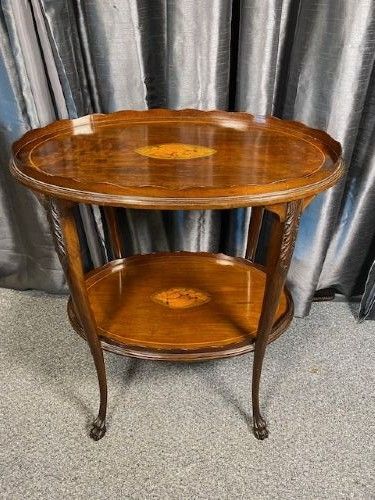
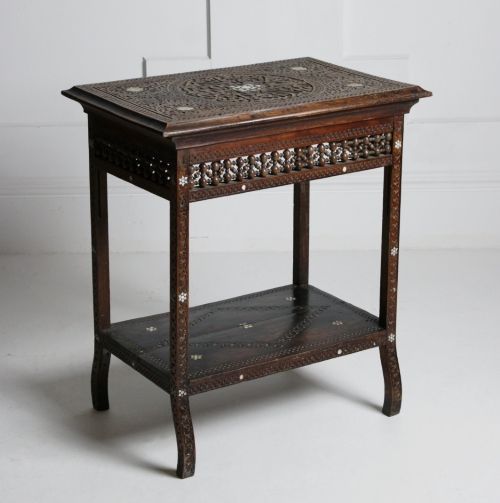
An inlaid walnut tier table offers multiple display levels enriched by fine decorative woodwork, suiting both period interiors and contemporary rooms.
Inlaid Walnut Tier Table
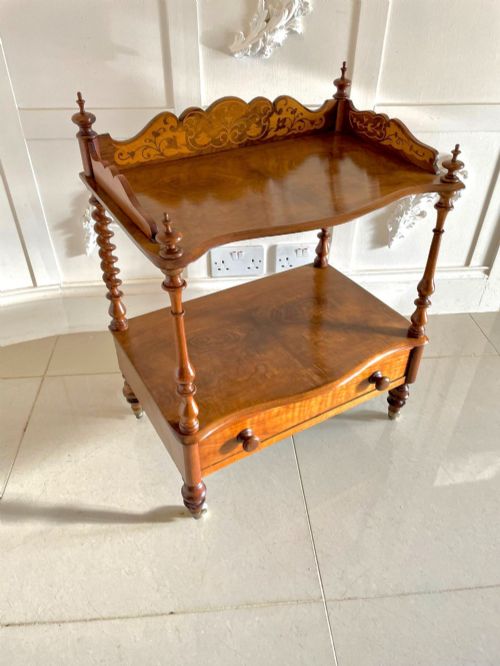
An inlaid walnut tier table provides stacked surfaces for display and daily use, drawing on forms such as etageres, whatnots, and multi-level occasional tables. The pieces found here span the nineteenth century, the Victorian era, the Edwardian period, and into the nineteen-thirties.
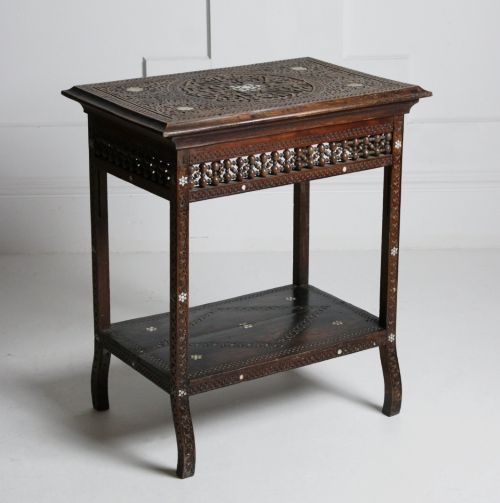
The selection ranges from French marquetry etageres to British Victorian walnut stands, featuring two or three tiers supported by slender uprights or legs. Buyers meet various shapes, including oval, kidney-shaped, hexagonal, and rectangular formats designed to fit compact spaces or serve as focal points.
How they were made
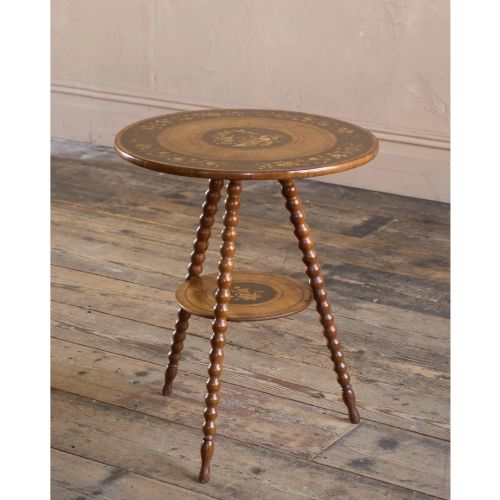
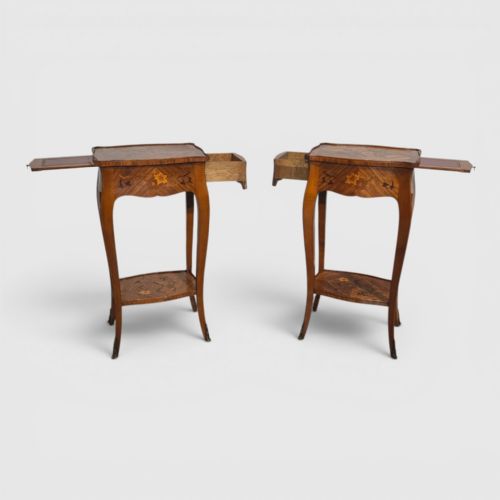
Cabinetmakers utilised walnut, burr walnut, and exotic wood veneers laid over solid secondary timbers to construct the tiered frameworks. Marquetry inlay, parquetry, and brass stringing decorate the top surfaces and shelves with floral motifs or geometric patterns.
Many examples incorporate cast brass or ormolu mounts, galleries to protect the edges of upper tiers, and turned legs such as bobbin or fluted supports. French pieces frequently employ fine ormolu mounts and meticulous floral marquetry in kingwood, rosewood, and satinwood.
The site listings feature nineteenth-century Victorian pieces alongside Edwardian and nineteen-thirties items, utilising walnut, brass, ormolu, and marquetry inlay.
What varies in quality
The precision of the marquetry and the choice of timber set finer examples apart from simpler pieces, with burr walnut and multi-wood inlay demanding high levels of joinery skill. The crispness of cast ormolu mounts and the integration of brass galleries indicate the original maker's investment in materials.
Structural integrity across multiple tiers relies on sturdy leg joints and well-balanced uprights, ensuring that upper shelves remain level and stable. The depth of the hand-finished polish and the subtlety of the wood figuring further distinguish standard occasional tables from exceptional works.
Paul Sormani
The Inlaid Walnut Tier Table Glossary
- Etagere
- A piece of furniture consisting of several open shelves or tiers for displaying small objects. These tiered stands gained popularity in nineteenth-century French and English interiors.
- Marquetry
- Decorative veneer work cut and fitted into intricate patterns or pictures using various woods. Craftsmen assemble these colourful wooden elements before gluing the entire sheet to the table surface.
- Burr walnut
- Timber taken from a tree growth that produces swirling, highly figured grain patterns. Cabinetmakers prize this wood for its rich visual texture on table tops.
- Ormolu
- Gilded bronze mounts applied to furniture for decorative accent. French makers utilised these metallic details to highlight the corners and legs of etageres.
Inlaid Walnut Tier Table: Frequently Asked Questions
What is an etagere?
An etagere is a multi-tiered piece of furniture designed specifically for displaying ornaments, books, or small collections.
These open shelving units allow items to be viewed from multiple angles within a room.
How do I care for walnut veneer?
Walnut veneer requires protection from direct sunlight and extreme humidity changes to prevent warping or fading of the timber.
Regular dusting with a soft, dry cloth maintains the polished surface without damaging the delicate marquetry inlay.
Where should I place a tier table?
Tier tables fit well beside seating areas, in hallways, or against empty wall spaces where vertical display is beneficial.
The multiple shelves provide practical surface area without occupying a large floor footprint.
How can I tell Victorian from Edwardian pieces?
Victorian tables often feature darker timbers, heavier burr walnut veneers, and ornate brass or ebony stringing details.
Edwardian and later pieces frequently adopt lighter satinwood accents, French Louis XV revival styling, or simpler geometric parquetry.