

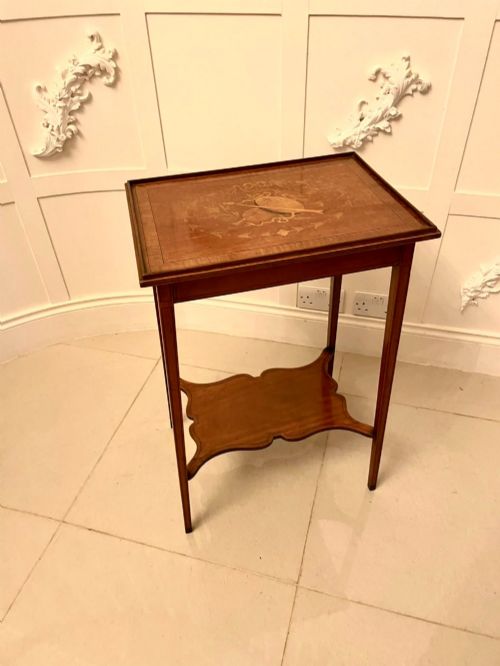


Marquetry Top End Table
These marquetry top end tables bring intricate patterned woodwork into living spaces as occasional, side, or games surfaces.
Marquetry Top End Table
A marquetry top end table combines a functional surface with detailed wood veneers arranged in geometric or pictorial patterns. These pieces appear across several eras, including the Georgian, Victorian, and Edwardian periods.
Most examples function as occasional tables, side tables, or specialised games tables with lift-up tops and chess boards. Makers utilise forms ranging from French Louis XV Revival and Sheraton Revival to Swedish Biedermeier and William IV designs.
Buyers frequently encounter occasional and side tables featuring inlaid surfaces of satinwood, mahogany, and walnut. Origin and period vary widely, spanning British, French, and Swedish workshops from the nineteenth and early twentieth centuries.
Assessing quality in veneer and design
Quality rests upon the precision of the veneer work and the complexity of the wood selection. Superior pieces display seamless integration of contrasting timbers like boxwood, satinwood, and rosewood without visible gaps in the marquetry.
The choice of structural timber and secondary decoration dictates the standing of the piece. Finer examples combine robust mahogany or walnut carcases with high-grade additions such as ormolu mounts, marble tops, or signed maker details.
Marquetry Top End Table Retail Price Guide 2026
Typical asking prices for marquetry top end table among the pieces listed under this phrase on Sellingantiques today, from the lower quarter to the upper quarter. They describe what is for sale here now, not the wider market.
Current listings feature materials including mahogany, satinwood, boxwood, walnut, rosewood, kingwood, ormolu, and marble.
The Marquetry Top End Table Glossary
- Marquetry
- Decorative veneer work arranged in patterns or pictures on a wooden surface. Craftsmen cut thin slices of various coloured woods and fit them together precisely.
- Occasional table
- A small, movable table designed for periodic use around a room. These pieces serve functions ranging from simple side tables to specialised games surfaces.
- Specimen wood
- Furniture constructed from or decorated with a variety of different, often exotic timber samples. Each wood section displays its own distinct natural grain and colour.
- Ormolu
- Gilded bronze mounts applied to furniture for decorative effect. This technique adds metallic highlights to nineteenth-century revival styles.
- Biedermeier
- A Central European style emphasising clean lines and domestic comfort over heavy ornamentation. Swedish interpretations often highlight striking local wood grains like alder root.
Marquetry Top End Table: Frequently Asked Questions
How do I use a games table daily?
A games table functions as a standard side or occasional surface when closed. Lifting the top reveals a specialised board for chess or other pastimes.
Keep the surface protected with coasters and avoid placing heavy objects on folding flaps. Regular gentle polishing maintains the veneer without damaging the inlaid details.
Where should I place an occasional table?
Position these tables beside seating areas where their decorative tops remain visible. They suit corners or blank wall spaces that require a compact furniture accent.
Keep them away from direct sunlight and heat sources to prevent the wood veneers from drying out or warping over time.
What defines Edwardian inlaid furniture?
Edwardian pieces often feature lighter woods like satinwood combined with delicate stringing and floral marquetry. The style draws inspiration from earlier Sheraton designs but typically employs softer construction.
Examine the edges and corners for precise veneer alignment and lighter secondary timbers such as mahogany and rosewood.
How do I distinguish walnut from mahogany?
Walnut displays a rich brown tone with dark, sweeping grain patterns that can appear slightly open-textured. Mahogany generally offers a red-brown hue with a straighter, more uniform grain.
Inspect the underside or secondary areas where the unfinished timber shows its true colour and weight.