




Antique Veneer Hall Table
These antique veneer hall table examples combine fine timbers with functional surfaces, offering a practical centrepiece for an entrance hall.
Antique Veneer Hall Table
An antique veneer hall table serves as a narrow surface in an entranceway, drawing the eye with patterned wooden surfaces while taking up minimal floor space. The selections span console tables, side tables, and occasional forms designed for narrow spaces.
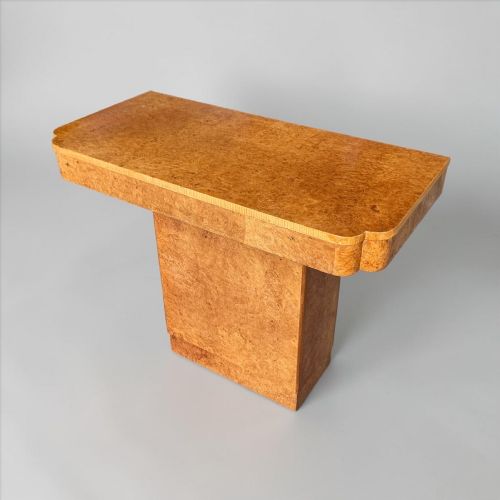
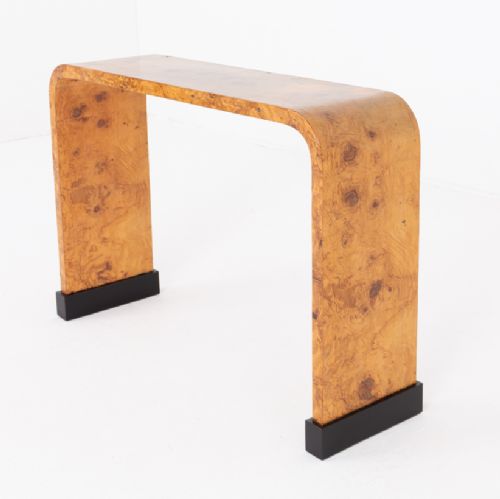
The varieties met on this page range from early William and Mary pieces featuring intricate oyster veneers to sleek Art Deco console tables and Biedermeier examples. These forms utilise various woods to create decorative grain patterns suited to a hallway.
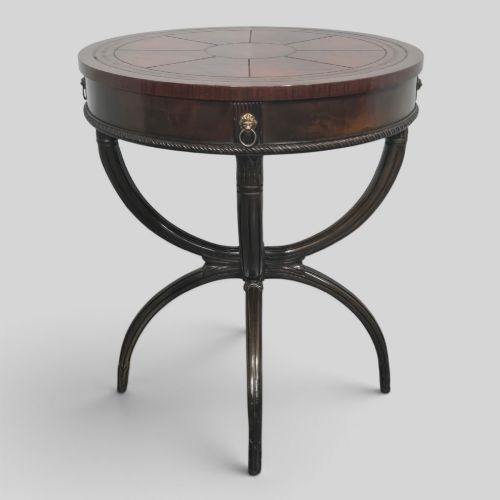
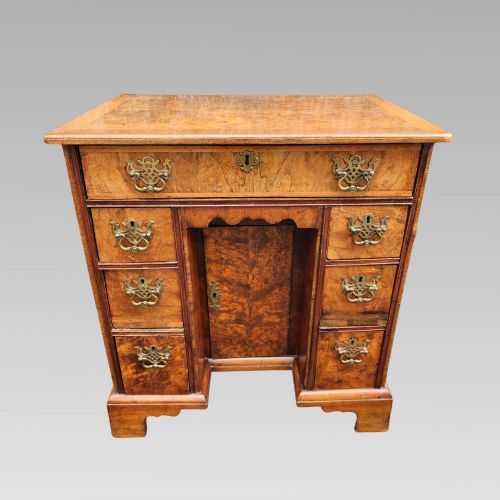
Period influences stretch from the seventeenth century through the Georgian and Regency eras into the twentieth century. Buyers encounter console tables, desks, and lowboys that utilise distinctive veneers like burr walnut, birch, and mahogany.
How they were made
Cabinetmakers applied thin slices of decorative wood, such as burr walnut, kingwood, and mahogany, over solid secondary timbers. This technique allowed workshops to display striking natural grain patterns that solid wood construction could not achieve.
Inlay work and featherbanding often supplemented the main veneers, integrating contrasting timbers like holly, olive, and ebonised wood. These borders framed the top surfaces and edges of console and side tables with precision.
Listings feature periods from the seventeenth century through the Regency era to Art Deco, utilising walnut, mahogany, and birch.
What varies in quality
The choice of timber grain and the complexity of the veneering pattern dictate the visual impact of each piece. Quarter-veneered tops and matched oyster figures require high skill in cutting and arranging the wood.
The harmony between the primary veneer and secondary timbers shapes the overall finish. Superior examples display careful alignment of grain across drawers and tabletops, maintaining consistent patination through the centuries.
The Antique Veneer Hall Table Glossary
- Veneer
- A thin layer of figured wood applied to a solid timber base to create decorative surfaces. This technique makes efficient use of scarce, highly figured logs.
- Oyster veneer
- Circular slices cut across small branches or roots, resembling oysters when arranged across a tabletop. These create repeating circular patterns popular in the seventeenth century.
- Burr walnut
- A knotted growth on a walnut tree yielding turbulent, highly figured grain patterns. Cabinetmakers prize this timber for its rich swirls.
- Featherbanding
- Narrow strips of wood arranged in a herringbone pattern to border tabletops. This technique frames the primary veneer.
- Lowboy
- A small side table with drawers, often standing on cabriole legs. These served as dressing or serving tables in earlier periods.
Antique Veneer Hall Table: Frequently Asked Questions
What is an antique veneer hall table used for?
These tables provide a narrow surface in an entrance hall for placement of correspondence, keys, or decorative objects. Their slim proportions allow them to sit flush against hallway walls without obstructing pathways.
Historically, similar tables functioned as serving surfaces or occasional desks in domestic rooms before finding a permanent role in modern hallways.
How do I identify a William and Mary table?
William and Mary pieces often feature oyster veneers in olive or walnut, frequently combined with geometric inlay work. Their silhouette typically includes straight turned legs and stretcher bases characteristic of the late seventeenth century.
Examining the construction methods and the specific arrangement of the wood grain helps distinguish this early period from later revivals.
What woods appear in these tables?
Common timbers include walnut, burr walnut, mahogany, birch, and kingwood, often supplemented by glass or brass elements. Cabinetmakers also utilised alder root, laburnam, and ash depending on the period and regional style.
Contrasting woods like holly and ebonised timber frequently serve as decorative inlay borders around the main surfaces.
How do Art Deco hall tables differ?
Art Deco tables from the nineteen-twenties and thirties favour streamlined geometric forms and smooth polished surfaces. They often utilise birch or walnut veneers without the elaborate inlay work found in seventeenth or eighteenth-century pieces.
These twentieth-century examples prioritise clean lines and functional console shapes suited to modern architectural spaces.