


Marquetry Tea Tray
When you handle a marquetry tea tray, you meet an intricate wooden canvas designed to carry silver and porcelain through the formal rituals of the parlour.
Marquetry Tea Tray
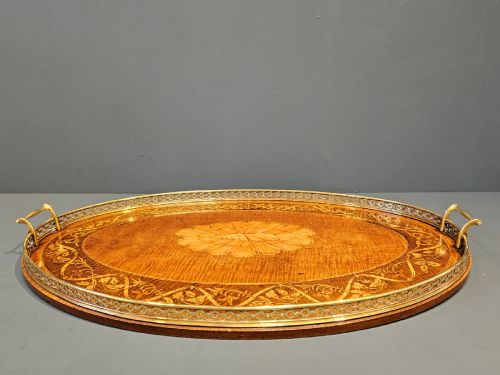
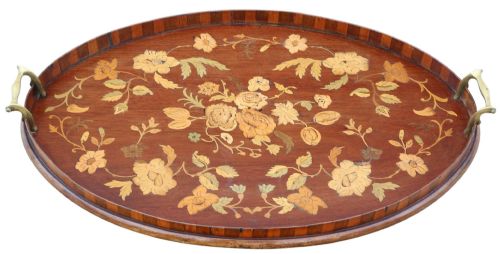
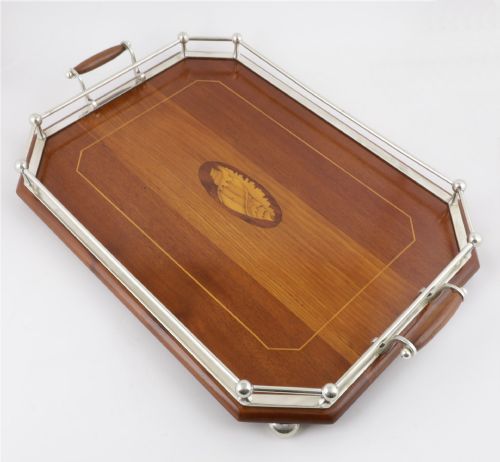
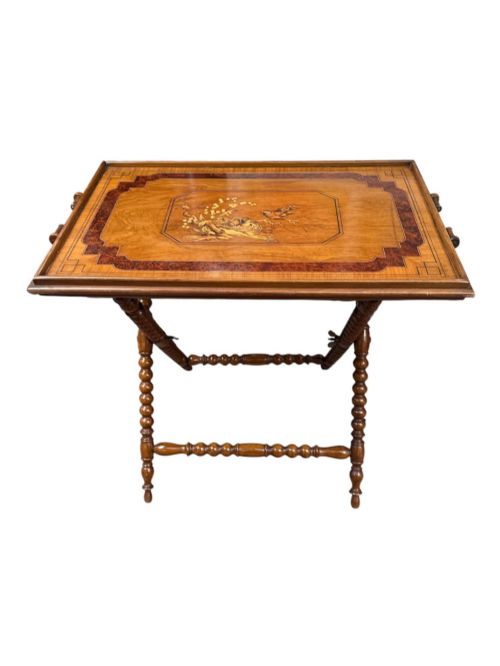
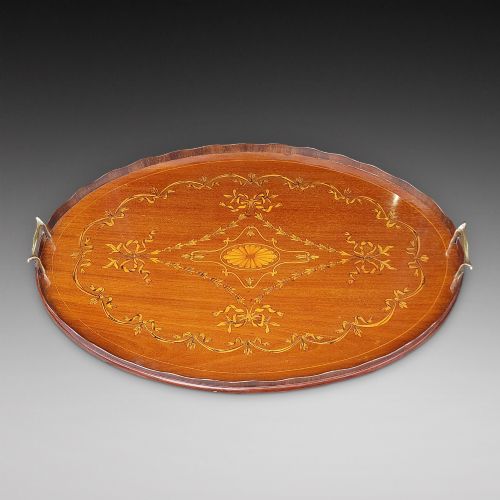
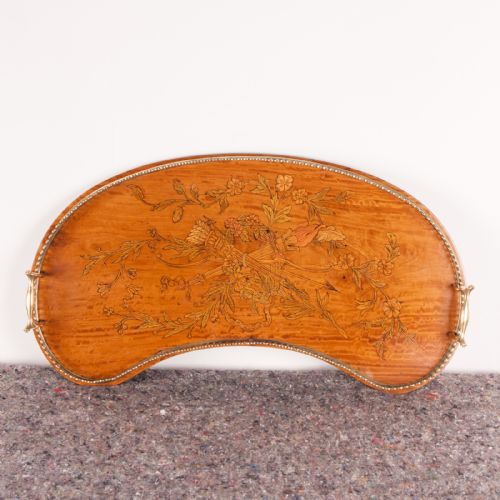
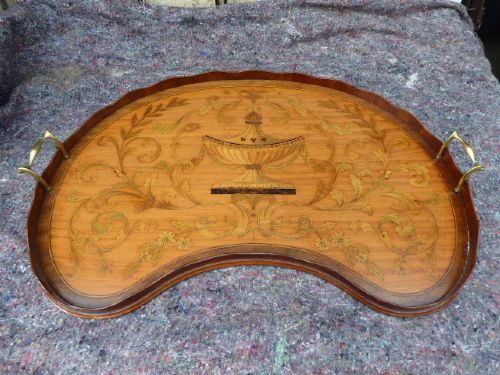
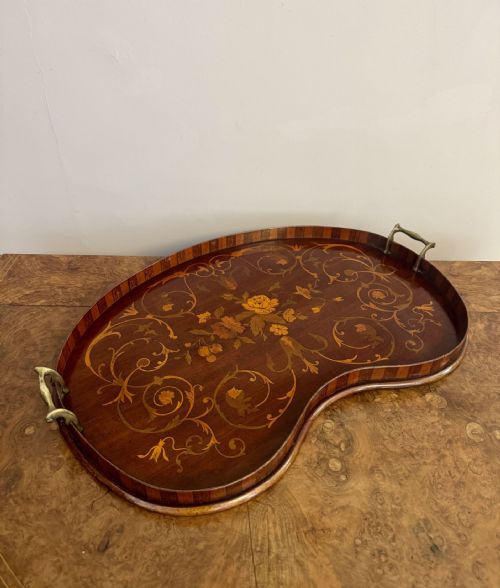
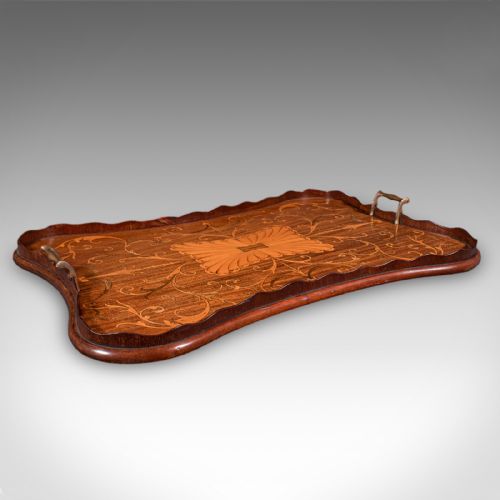
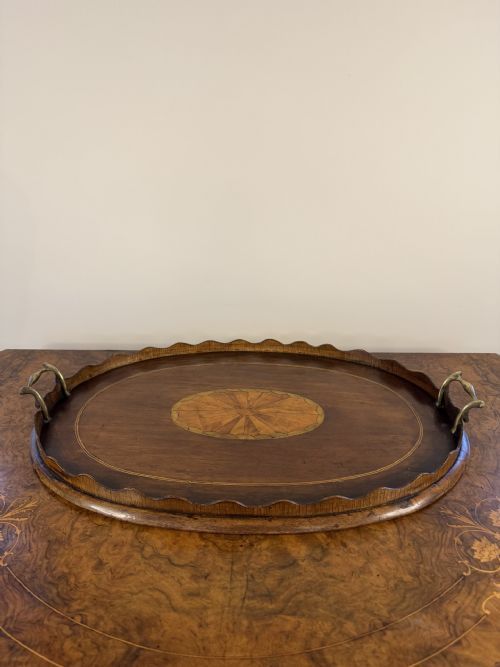
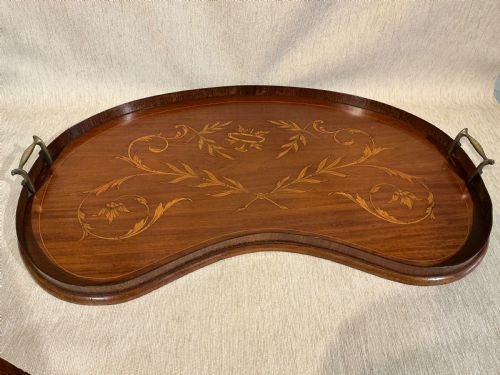
A marquetry tea tray brings together shaped timbers and delicate pictorial inlay to form a portable serving surface with raised edges or handles. You will most frequently encounter Edwardian and nineteenth-century examples shaped as ovals, rectangles or kidney forms designed for display or service.
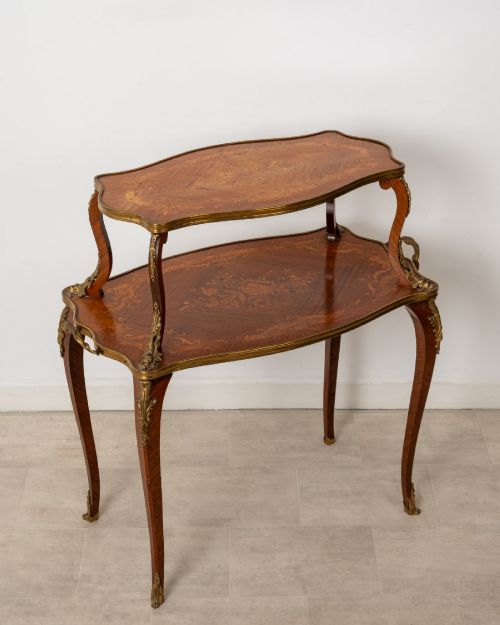
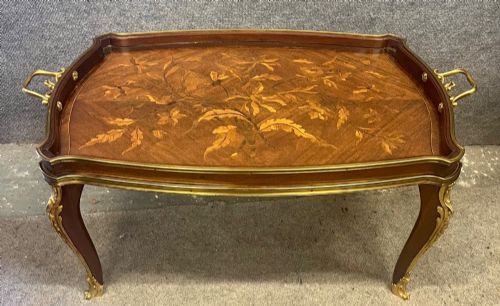
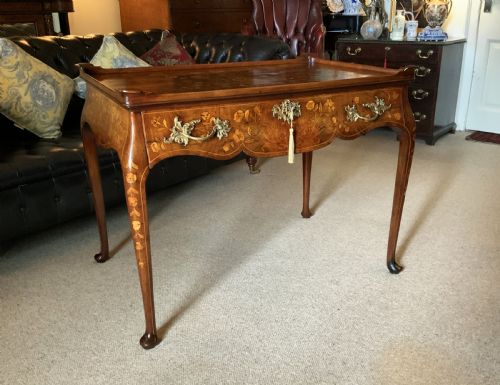
The form spans flat serving platters fitted with brass handles through to raised gallery edges and multi-tiered occasional tables where the tray lifts clean from its stand. Makers worked within Georgian, Victorian, Edwardian and revival styles, drawing on Sheraton or French Louis models to satisfy domestic demand for elegant hospitality.
While many pieces function strictly as standalone servers, others integrate permanently into side tables and etageres for daily use in the drawing room. The surface designs range from simple geometric stringing to elaborate floral sprays, birds and classical ribbon motifs rendered in contrasting timbers.
Materials and construction methods
Cabinetmakers built the structural base of a marquetry tea tray using stable primary timbers such as mahogany, walnut or satinwood, providing a firm foundation for decorative work. Onto this core they applied finely sliced veneers of exotic and native woods, cutting intricate pictorial designs by hand before gluing them into position.
Contrasting details relied on woods like boxwood, kingwood, burr yew and rosewood to create depth and shadow within floral, foliate or architectural scenes. Workshops reinforced these wooden surfaces with brass galleries, silver-plated rims or integrated brass handles to withstand the physical demands of carrying heavy service items.
Object forms documented in the archive range from standalone serving trays and afternoon tea platters to convertible tray tables, side tables and two-tier etageres.
Judging execution and finish
The division between ordinary and exceptional pieces rests entirely on the precision of the veneer work and the complexity of the design. Master craftsmen fitted timber pieces with microscopic exactness, whereas lesser examples rely on surface painting or careless joints that leave visible gaps between the contrasting woods.
The choice of secondary woods and the refinement of the handles or gallery dictate the overall success of the piece. A superior tray maintains structural integrity across its flat expanse without warping, holding its polished sheen and sharp inlay work despite generations of handling.
Edwards and Roberts
The Marquetry Tea Tray Glossary
- Marquetry
- The art of applying small pieces of veneer to a structure to form decorative patterns or pictorial scenes. Craftsmen cut various coloured woods together to ensure tight, seamless joints.
- Gallery
- A raised rim or perforated metal fence surrounding the edge of a tray to prevent items from sliding off. These fixtures commonly employ brass or silver-plated metal.
- Etagere
- A piece of furniture consisting of a set of open shelves or trays for displaying small objects. They often feature multiple tiers supported by slender uprights.
- Satinwood
- A durable, lustrous yellow timber imported from tropical regions, frequently used for veneering and inlay. It provides a bright background that makes darker woods stand out sharply.
- Stringing
- A thin, narrow strip of contrasting wood inlaid into a channel in the primary surface. It creates delicate geometric borders and frames around central panels.
Marquetry Tea Tray: Frequently Asked Questions
How do I clean an antique marquetry tea tray?
Dust the surface regularly with a soft, dry cloth to prevent grit from abrading the delicate veneer work. Avoid using water, damp sponges or modern chemical polishes, as moisture penetrates old glue and lifts the inlay.
Apply a traditional beeswax polish sparingly with a soft cloth once or twice a year to nourish the timber. Buff the surface gently after application to maintain a soft, protective sheen without building up thick residues.
Can I still use these trays for serving tea?
Most antique trays retain sufficient structural strength to carry lightweight items like teacups and saucers. However, exposure to hot liquids, condensation and heavy weight risks staining the aged wooden surface and cracking old glues.
Protect the inlay by placing linens or doilies across the surface during use, or reserve the tray for decorative display. Treating the piece as a static tabletop display ensures the delicate pictorial veneer remains undamaged.
What is the difference between marquetry and inlay?
Inlay strictly involves setting pieces of wood, metal or shell into a hollowed-out recess within a solid wooden surface. The surrounding timber forms the main background of the object.
Marquetry covers the entire surface with an assembled mosaic of veneers cut from different timbers to create a complete picture. The patterned veneer sheet is then glued down as a single cohesive skin onto the carcase.
How do I date an Edwardian marquetry tea tray?
Examine the base timber, handle fixings and overall design style to establish the era of manufacture. Edwardian pieces often combine Sheraton revival motifs with lighter satinwood grounds and machine-cut elements.
Look for clues in the construction of the gallery edges and the finish of the underside. Twentieth-century examples frequently feature cleaner, uniform base boards and standardised brass fittings compared to earlier handmade variants.