


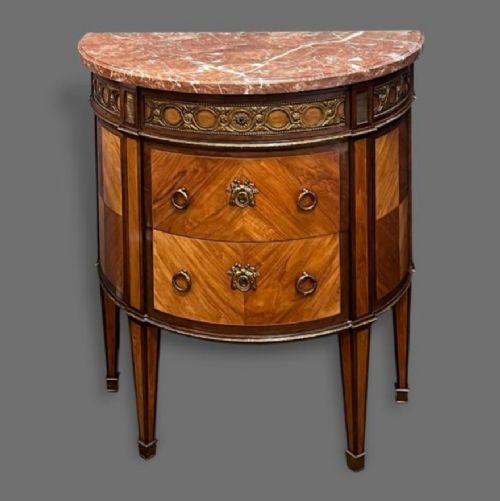


Marquetry Side Commode
These marquetry side commodes combine precise wood inlay with useful surface space, bringing decorative presence and practical storage to a room.
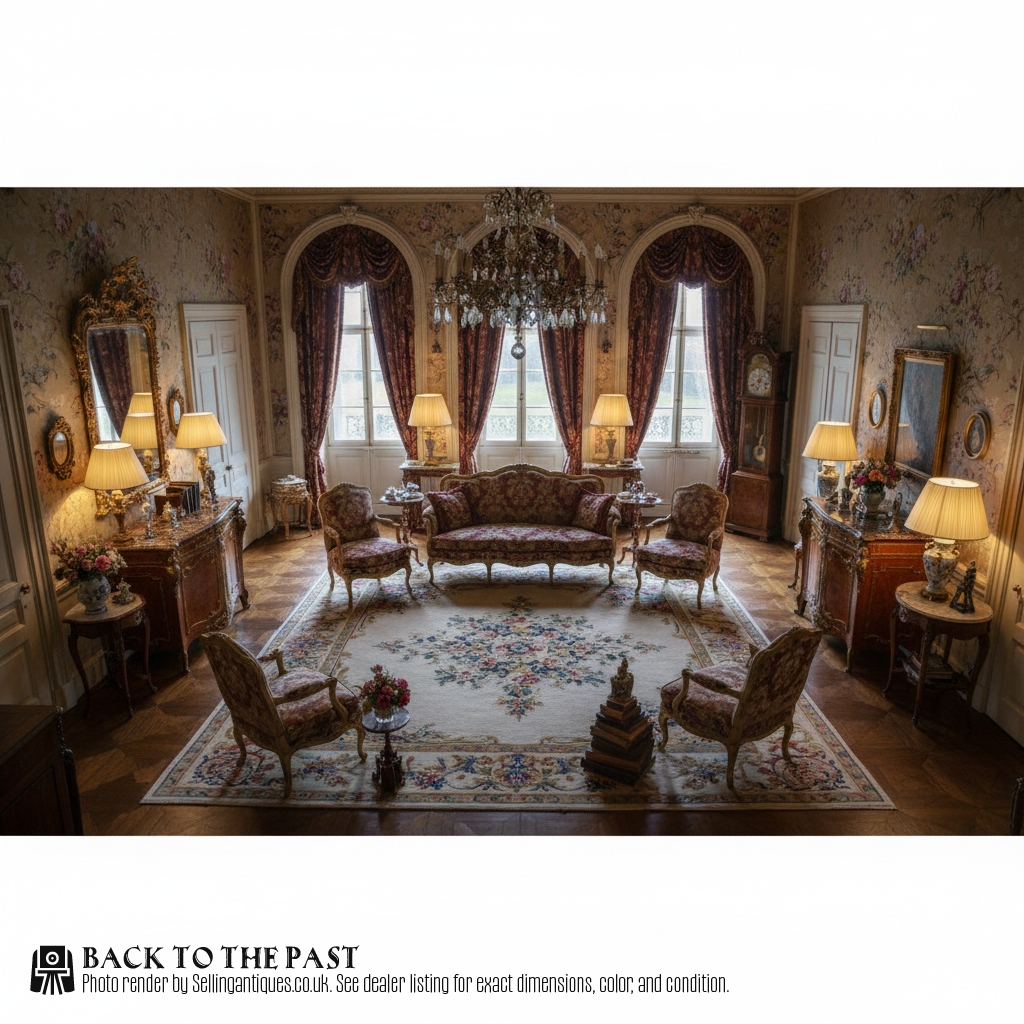
Marquetry Side Commode
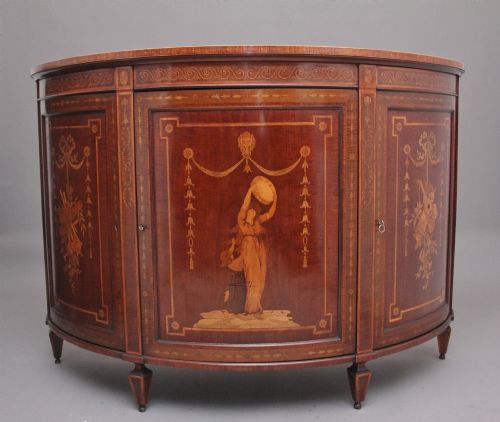
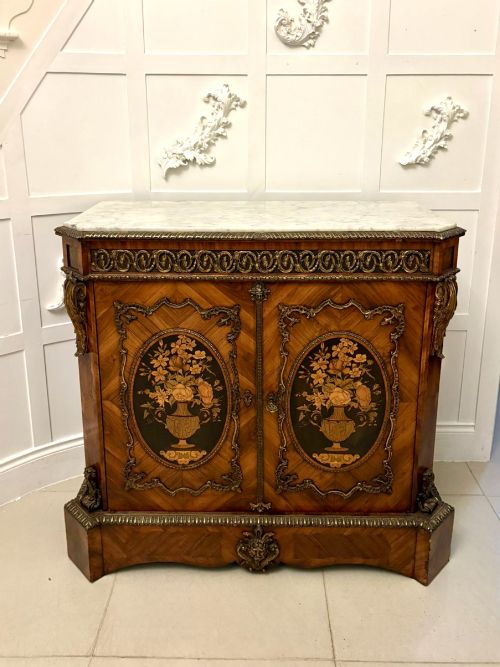
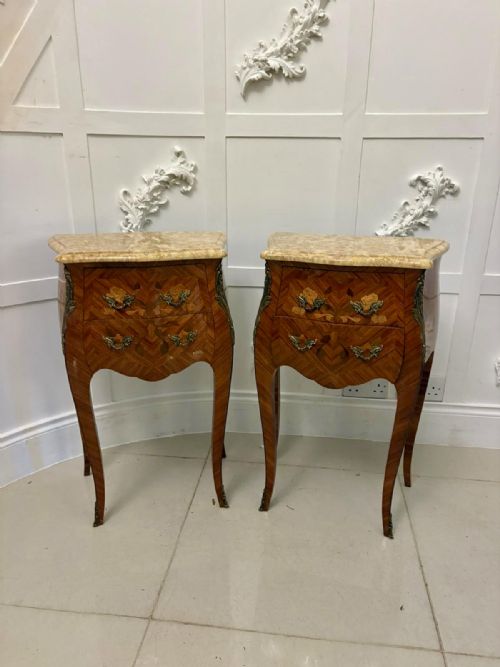
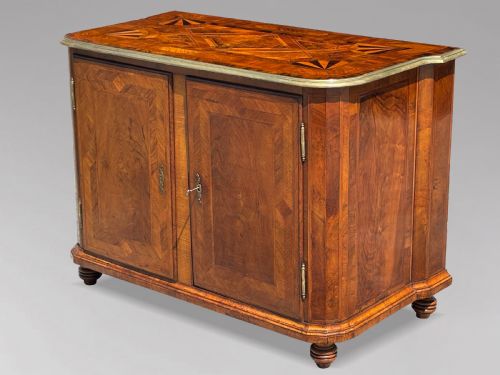
A marquetry side commode is a low storage piece or cabinet featuring detailed wood veneer patterns on the exterior surfaces. You will frequently encounter French Louis XV and Louis XVI style interpretations across the listings, alongside Georgian and Sheraton revival examples.
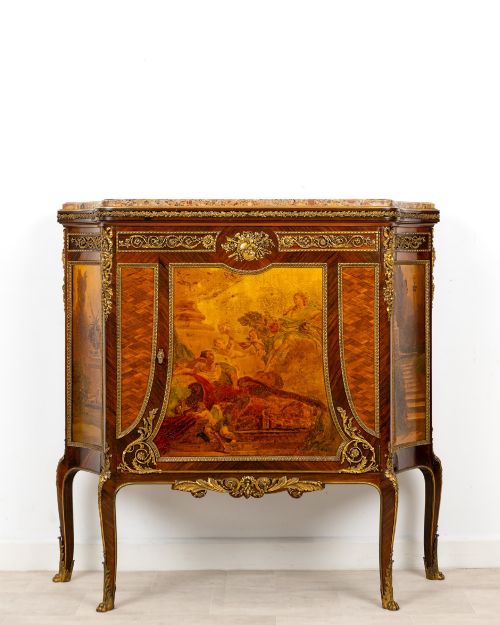
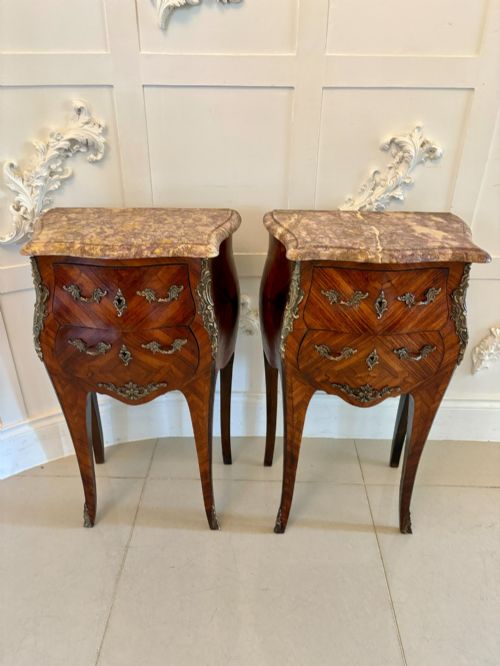
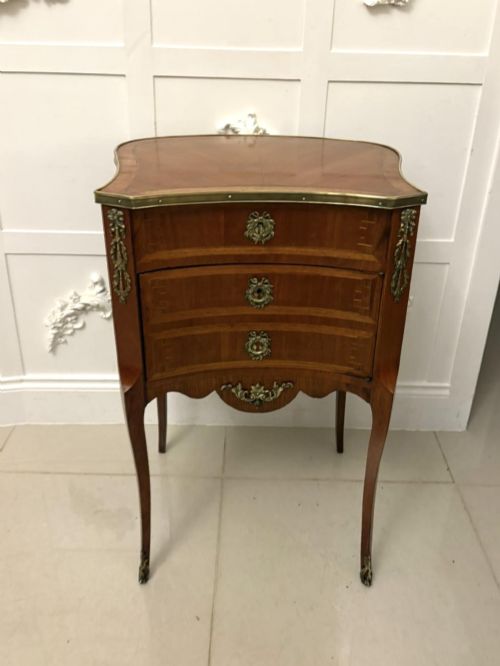
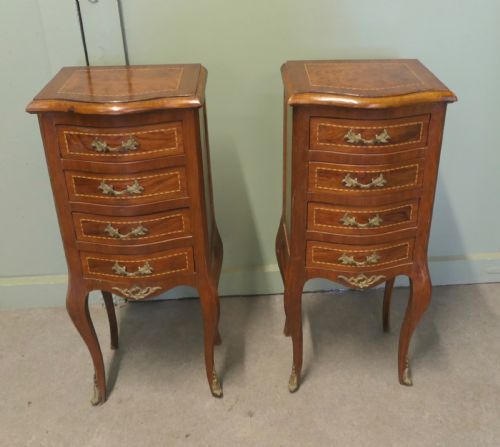
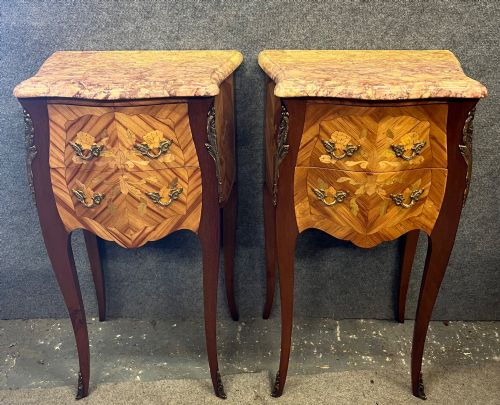
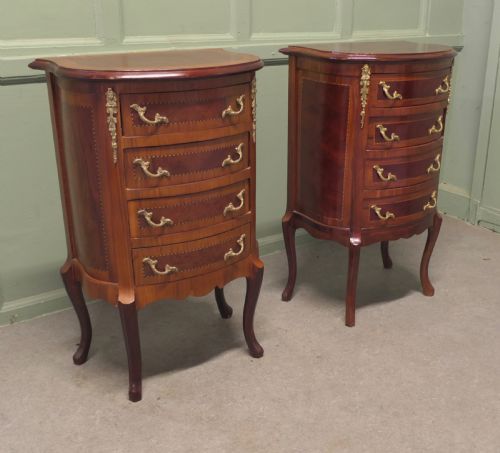
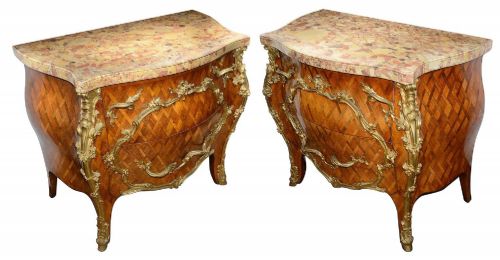
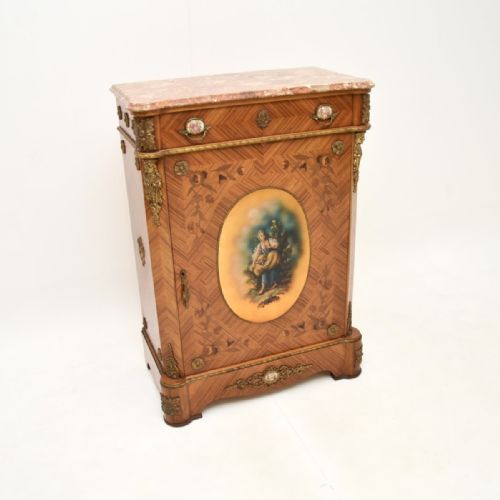
The forms vary from demi-lune consoles and serpentine cabinets to compact bedside chests and lamp tables. Many pieces incorporate fitted marble tops and mounted metal details alongside the patterned wood veneers.
Origins span across nineteenth-century workshops and early twentieth-century interpretations, featuring diverse regional cabinet-making traditions from France, England, Italy, and Malta.
How they were made
Cabinet-makers constructed these pieces using dense carcase timbers such as mahogany, walnut, and kingwood, applied with contrasting decorative veneers in satinwood, burr elm, and burr yew. Artisans cut these fine woods by hand to assemble elaborate floral or geometric pictorial compositions.
Mounts in ormolu, gilt bronze, and brass accent the corners, handles, and feet, providing structural protection and visual contrast to the polished timber. Heavy marble slabs, shaped to follow the serpentine or demi-lune contours of the cabinet tops, complete the construction.
Marquetry Side Commode Retail Price Guide 2026
Typical asking prices for marquetry side commode among the pieces listed under this phrase on Sellingantiques today, from the lower quarter to the upper quarter. They describe what is for sale here now, not the wider market.
Some nineteenth-century side cabinets secretly doubled as music storage cupboards for sheet scores.
What varies in quality
The standard of the marquetry work sets the primary distinction, seen in the tightness of the veneer joints and the intricacy of the floral or geometric motifs. Finer pieces demonstrate careful grain selection where individual wood species create natural shading without relying on excessive surface stain.
The integration of the cast bronze or ormolu mounts determines the overall execution, where sharper chiselling and precise fitting to the wood contours separate standard production from superior workshops.
Maison Millet·Joseph Zwiener·Pietro Ferrario
The Marquetry Side Commode Glossary
- Marquetry
- Decorative veneer work formed by fitting together small pieces of various coloured woods to create pictorial or geometric patterns on a surface.
- Demi-lune
- A half-moon or semicircular shape utilised for console tables and small commodes designed to sit flush against a wall.
- Ormolu
- Gilded bronze mounts applied to furniture edges and feet for decoration and protection, characteristic of French cabinet-making.
- Vernis Martin
- A type of simulated Japanese lacquer developed in France, often featuring painted pastoral scenes on furniture panels.
- Serpentine
- A shaped furniture front or top curving outward in the centre and inward at the sides.
Marquetry Side Commode: Frequently Asked Questions
What is a marquetry side commode used for?
These cabinets serve as decorative storage units in reception rooms, hallways, and bedrooms. The flat top surface accommodates lamps, ornaments, or books while the internal drawers and cupboards store smaller items.
Their compact dimensions allow them to occupy narrow wall spaces where standard furniture would prove too deep. Many versions function specifically as bedside chests or lamp tables.
How do I identify French styles?
French Louis XV style pieces display curving lines, cabriole legs, and asymmetrical floral marquetry. Louis XVI examples transition toward straight tapered legs, geometric symmetry, and neoclassical proportions.
Both styles frequently incorporate marble tops and cast ormolu mounts, though the earlier period relies on more flowing, organic contours.
Are the marble tops original?
Many cabinets retain their fitted marble slabs, shaped precisely to match the serpentine or demi-lune contours of the wooden carcase beneath. These tops provide a durable, cool surface that contrasts with the warm tones of the kingwood or mahogany.
Replacement marble tops do occur on older pieces, identifiable by differences in thickness or minor discrepancies in the edge bevelling.
How should I care for wood veneer?
Protect the polished timber surfaces from direct sunlight and steady heat sources to prevent the veneers from drying or fading. Regular dusting with a soft, dry cloth preserves the finish without requiring heavy polishes.
Avoid placing damp items directly onto the wood, utilising the marble top sections for drinks or plants instead.