
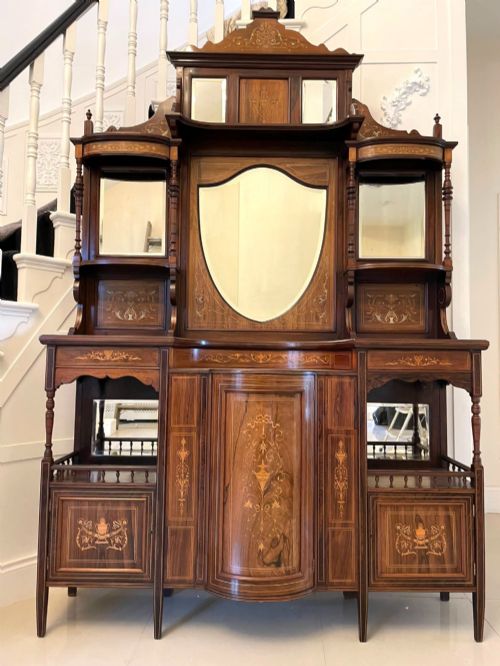
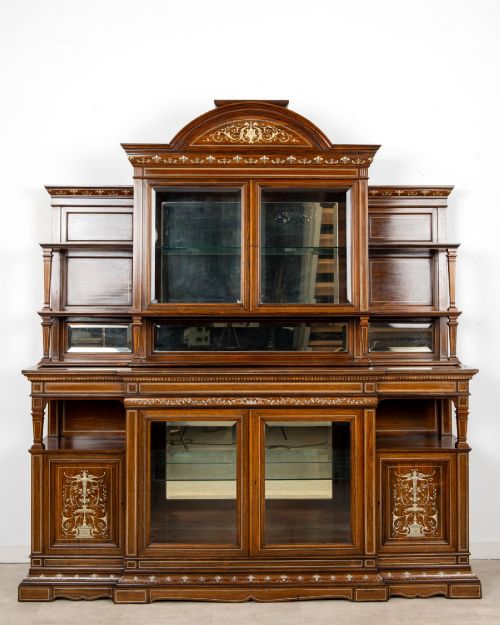
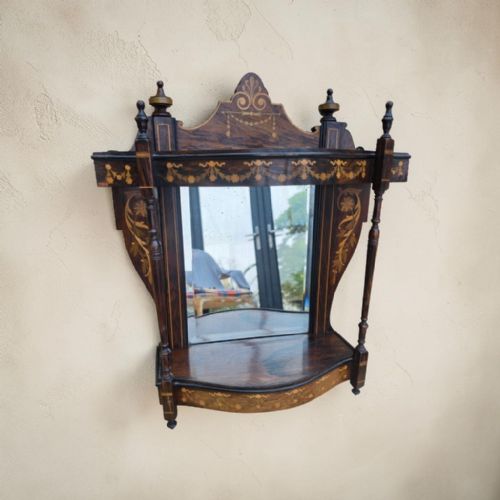
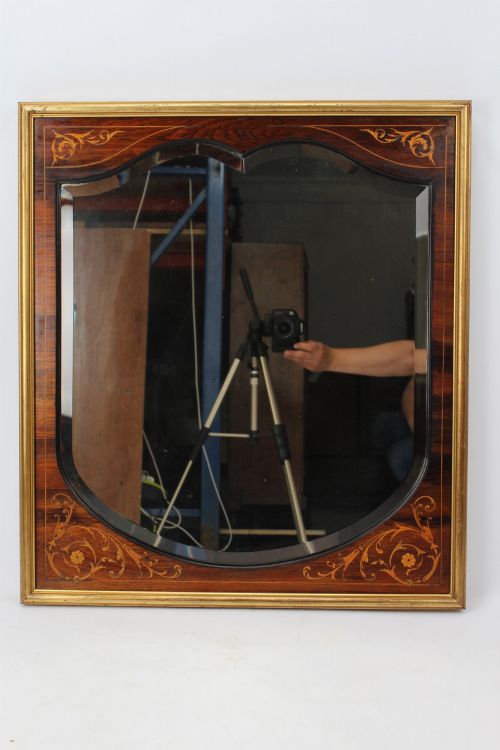
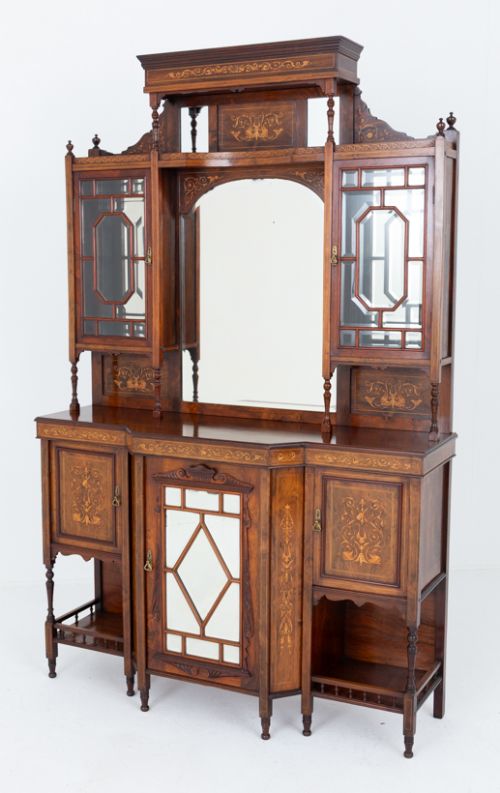


Marquetry Rosewood Mirror
A marquetry rosewood mirror brings warmth and intricate floral or geometric detail to a room, drawing the eye with rich timber grain.
Marquetry Rosewood Mirror
A marquetry rosewood mirror combines deep, dark timber with contrasting inlaid woods, appearing primarily across Victorian and Edwardian periods in wall-hanging, overmantel, and cheval formats. These pieces range from simple rectangular hanging glasses to large architectural frames designed to sit above a fireplace.
The aesthetic movement and revival styles heavily influence these designs, incorporating delicate floral motifs alongside classical geometry. Buyers encounter both small bedroom mirrors fitted with practical shelves and grand overmantel pieces intended for formal reception rooms.
Materials and construction
Cabinet makers utilised dense, richly figured rosewood as a dark ground, applying precise veneers of lighter timbers such as boxwood, satinwood, and sycamore to create complex marquetry pictures and stringing lines. This technique required immense skill to ensure the contrasting woods sat flush within the primary timber.
Frames frequently incorporate bevelled glass secured by pine or mahogany backing boards, occasionally accented with brass fittings or gilt details. The inlay work relies on hand-cut botanical or classical motifs fitted tightly into the prepared surface.
Listings feature rosewood mirrors spanning the Victorian and Edwardian eras, incorporating satinwood, boxwood inlay, and brass.
Assessing quality
The standard of a marquetry rosewood mirror rests upon the crispness of the inlay and the depth of the timber's grain. Superior pieces display tightly fitted botanical marquetry with minimal filler, where contrasting woods retain their sharp edges against the dark rosewood background.
Construction details differentiate standard workshop production from high-end cabinet making. Well-executed frames show careful mitring at the corners, substantial backing timber, and original glass exhibiting gentle age rather than modern replacement.
Collinson and Lock·Jas Shoolbred·Stephen Webb·Donald Ross
The Marquetry Rosewood Mirror Glossary
- Marquetry
- Decorative veneer work forming pictures or patterns by fitting together small pieces of various woods. Artisans select different coloured timbers to achieve naturalistic shading in floral or architectural designs.
- Rosewood
- A dense, heavily grained tropical timber ranging from deep brown to purplish-black with dark streaks. It takes a high polish and serves as the primary ground for fine Victorian and Edwardian cabinet furniture.
- Overmantel mirror
- A large wall glass specifically designed to hang above a fireplace mantelpiece. These pieces often feature extended frames that match the domestic architecture of the period.
- Boxwood inlay
- The practice of embedding pale, hard boxwood into darker furniture surfaces to create contrasting lines or geometric borders. It provides a sharp visual boundary against rosewood.
- Cheval mirror
- A full-length swing glass supported by a freestanding frame with vertical pillars. This form allows the entire mirror plate to tilt at different angles.
Marquetry Rosewood Mirror: Frequently Asked Questions
How do I clean a rosewood frame?
Dust the timber gently with a soft, dry cloth to prevent surface scratching. Avoid modern chemical sprays and moisture, which can damage the delicate veneer and older polish.
Apply a traditional beeswax polish sparingly once or twice a year if the timber appears dry. Buff the surface thoroughly with a clean cloth to maintain the natural sheen of the rosewood.
Can these mirrors hang safely on modern walls?
These frames carry considerable weight due to the dense rosewood and thick glass plates. Secure fixings into structural brickwork or wall studs rather than relying solely on plasterboard.
Utilise professional mirror hangers or robust picture wire rated well above the weight of the piece. Ensure the hanging cord connects securely to the structural timber of the frame rather than the backing boards.
How do I distinguish Victorian from Edwardian examples?
Victorian pieces tend to feature darker, heavier rosewood with denser, more profuse marquetry and rich polish. The designs often reflect heavy aesthetic movement or revival influences with deep mouldings.
Edwardian examples frequently present a lighter, more refined interpretation of classical styles, often utilising satinwood or boxwood inlay with greater restraint. The overall proportions lean toward airier domestic interiors.
Are the mirror plates original?
Original mirror plates frequently display light foxing, minor silver loss, or tiny grey speckling caused by the degradation of the backing over time. These signs indicate genuine age and historical authenticity.
Unblemished glass in an antique frame often points to a later replacement plate. Inspect the edges of the glass and the backing boards to determine whether the mirror retains its original components.