
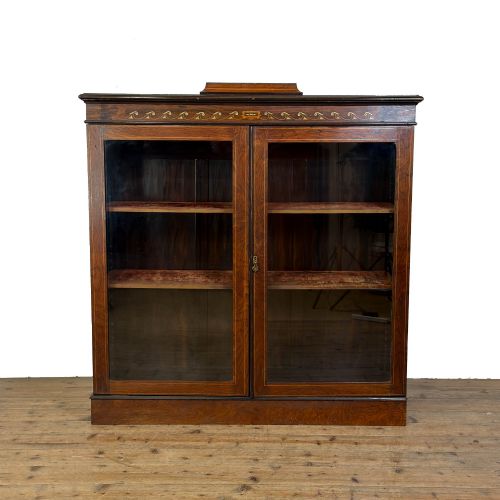
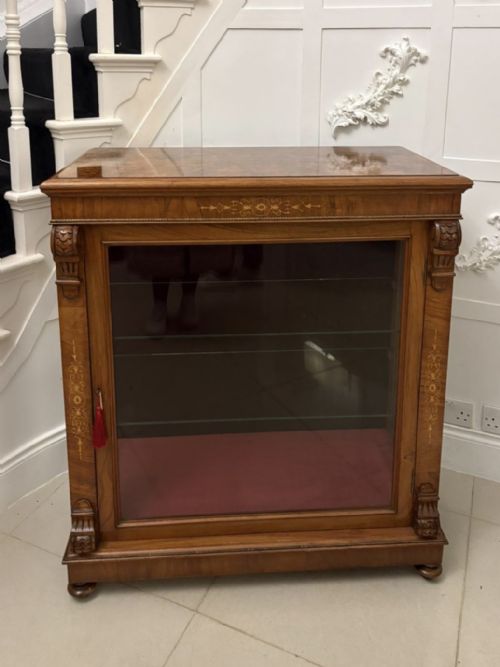
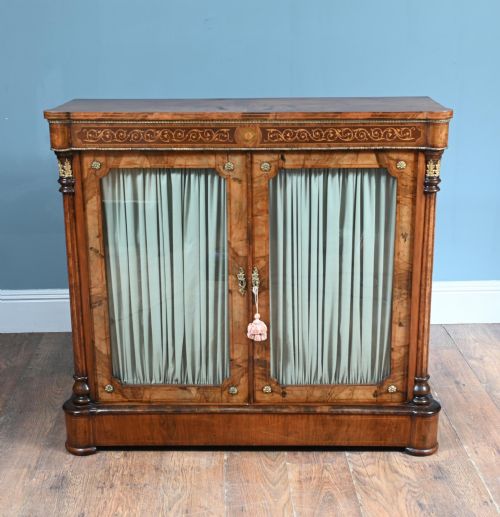
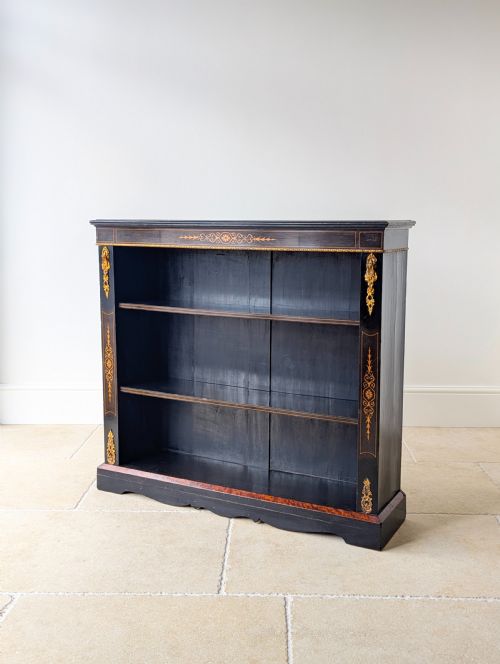
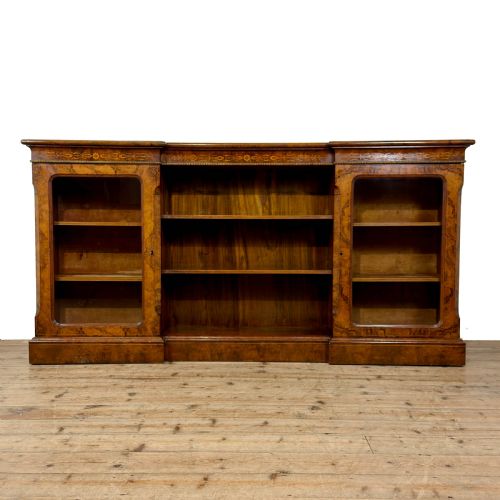


Marquetry Low Cabinet
A marquetry low cabinet brings together intricate inlaid woodwork and low-slung proportions, offering a practical surface and enclosed display space for rooms with lower ceilings.
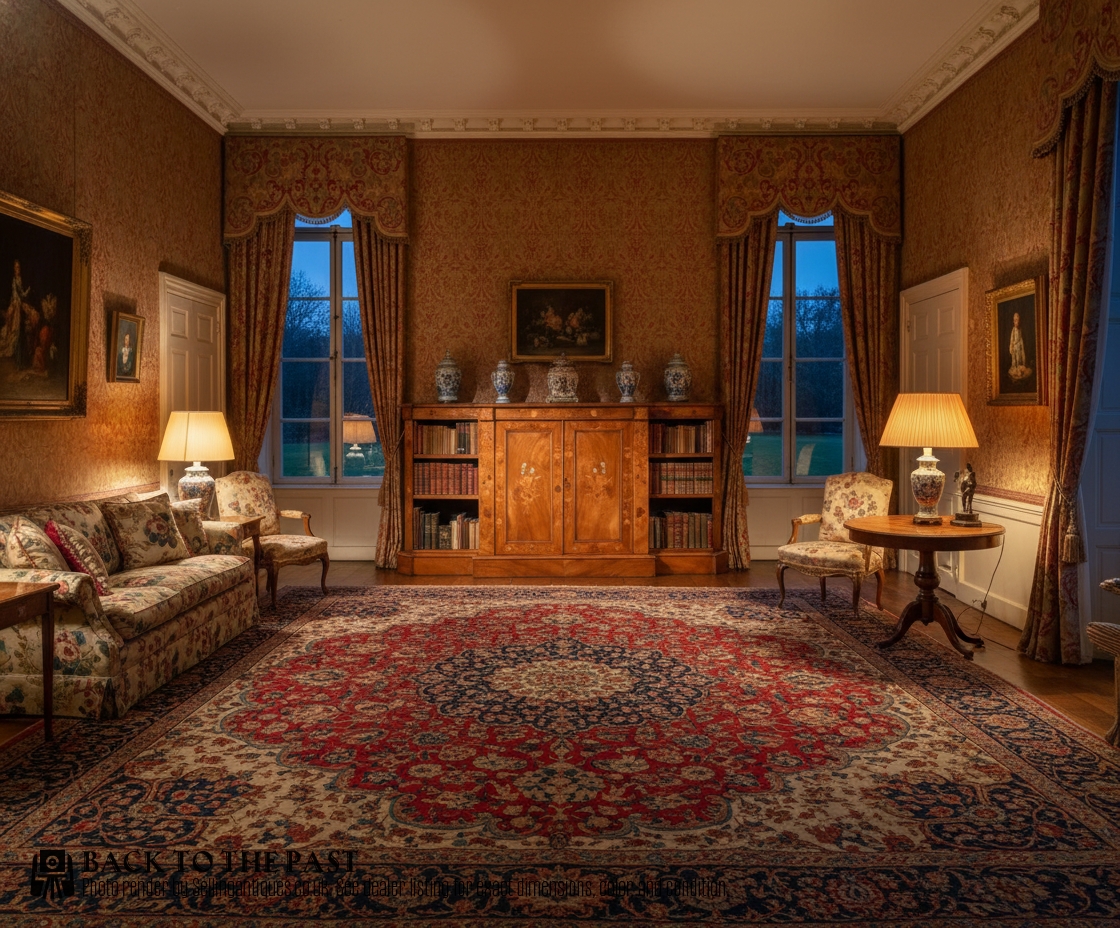
Marquetry Low Cabinet
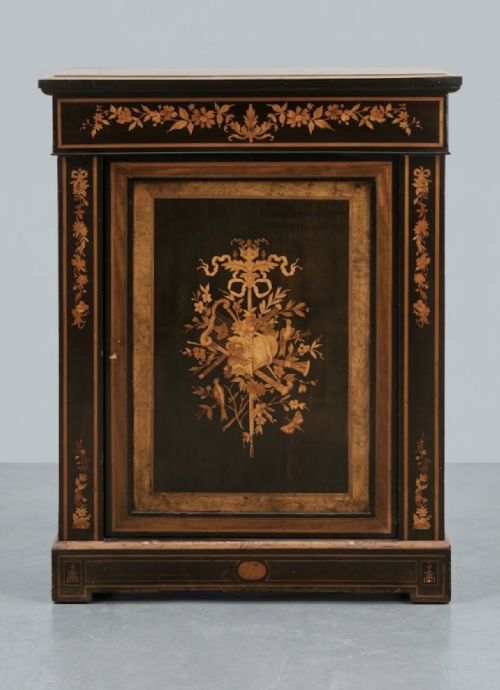
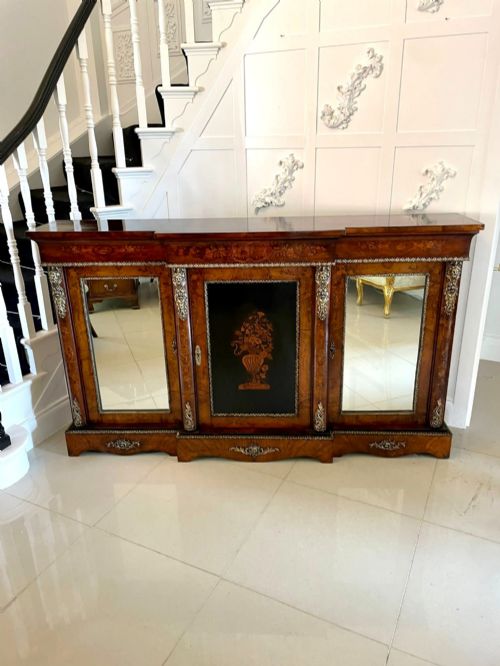
A marquetry low cabinet is a low-profile storage or display piece designed to sit below eye level, often taking the form of pier cabinets, side cabinets, or credenzas. These pieces serve as functional furniture that also acts as a decorative focal point through patterned wood surfaces.
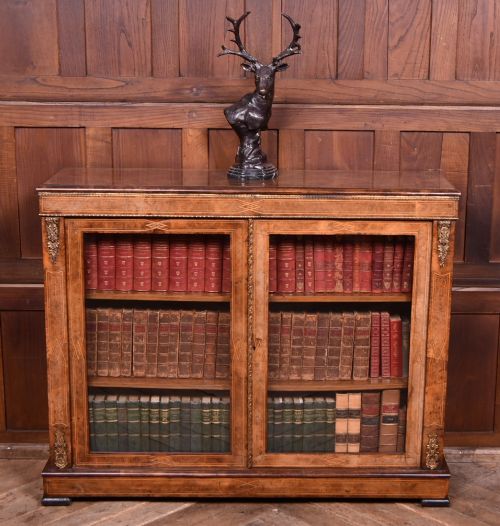
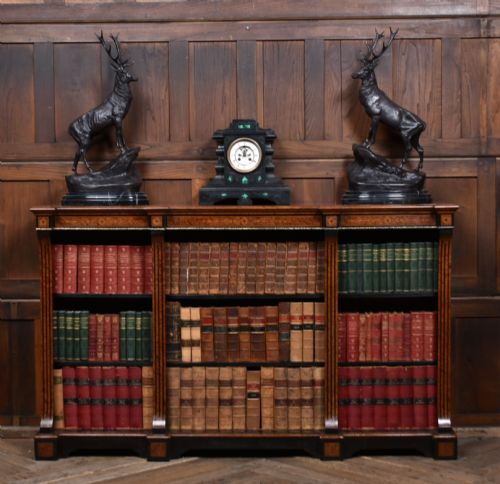
The selections span several periods, with Victorian and nineteenth-century examples appearing most frequently alongside Regency, Edwardian, and Georgian pieces. Walnut, burr walnut, and mahogany form the structural backbone of these cabinets, frequently paired with glazed doors for displaying books or objects.
Makers and workshops of the past constructed these cabinets in various formats, including breakfront bookcases and compact pier cabinets. The combination of low proportions and inlaid wood makes them adaptable for modern rooms needing surface display and concealed storage.
How they were made
Cabinet makers utilised dense hardwoods like walnut, mahogany, and kingwood as the primary structural timbers, often applying burr walnut and satinwood veneers to create rich, figured surfaces. The contrasting grain patterns provide the natural colour variation necessary for detailed wood inlay.
Marquetry panels were formed by cutting thin sheets of various woods, such as fruitwoods or exotic timbers, and fitting them together like a puzzle to create floral or geometric motifs. Brass mounts, ormolu, and ebonised wood details frequently accent the main timber body, while glass panels are fitted into glazed doors.
Listings feature eighteenth-century Georgian designs through to Edwardian pieces, with walnut and mahogany remaining the dominant structural materials.
What varies in quality
The calibre of a marquetry low cabinet rests primarily on the intricacy and precision of the wood inlay work and the selection of the underlying veneers. Superior examples display tightly fitted marquetry with crisp botanical or geometric lines using diverse timber tones, while simpler pieces rely on basic inlay or plain veneers.
Construction methods and secondary materials further separate the grades, seen in the choice of solid timbers versus secondary woods, the weight of the brass or ormolu mounts, and the clarity of the glass. Finer cabinets exhibit seamless timber matching across the doors and frame, whereas standard production shows simpler joinery and less varied wood selection.
Whytock and Reid·Waring and Gillow
The Marquetry Low Cabinet Glossary
- Marquetry
- Decorative veneer work arranged in pictorial or geometric patterns using various woods, metals, or shells. This technique creates the intricate surface designs seen on cabinet doors and friezes.
- Burr walnut
- Timber taken from the abnormal growth of a walnut tree, yielding highly swirled and mottled grain patterns. Cabinet makers prized this wood for its rich visual texture on prominent panels.
- Pier cabinet
- A narrow cabinet designed to fit against the wall space between windows. These upright or low display cases often feature glazed doors and delicate inlay.
- Ormolu
- Gilded bronze mounts and decorative trimmings applied to furniture. This material provides metallic contrast against dark woods like walnut and ebonised timber.
- Credenza
- A low sideboard or cabinet originally used for serving food or displaying plate. In later periods, these pieces evolved into glazed display cabinets for drawing rooms.
Marquetry Low Cabinet: Frequently Asked Questions
Where should I place a low cabinet?
These cabinets suit living rooms, hallways, or dining spaces where standard tall bookcases would overwhelm the wall height. Their low profile allows the top surface to hold lamps, clocks, or decorative objects without blocking windows or art.
Positioning them away from direct sunlight and radiators protects the delicate veneers and marquetry work from drying out and splitting over time.
How do I identify a Victorian cabinet?
Victorian examples often feature figured walnut, ebonised wood accents, or elaborate marquetry inlay. They frequently take the form of glazed pier cabinets or breakfront credenzas manufactured during the mid to late nineteenth century.
Closer inspection of the interior linings, shelf supports, and timber preparation helps distinguish these mid-nineteenth-century pieces from later revival styles.
What is the difference between a pier cabinet and a side cabinet?
A pier cabinet is typically narrow and designed specifically for the wall space between two windows, frequently featuring a single glazed door. A side cabinet offers a broader footprint intended to stand against any flat wall in a room.
Both forms utilise similar marquetry techniques and timber veneers, but their proportions dictate where they sit best within a room layout.
How do I care for inlaid wood furniture?
Maintenance involves dusting with a soft, dry cloth and occasionally applying a suitable furniture wax to nourish the timber and protect the veneer. Avoid using modern liquid sprays or silicone polishes, which can damage the polish and sink into the grain.
Maintaining a stable room temperature prevents the wood from expanding or contracting, which keeps the delicate marquetry pieces secure within their veneers.