



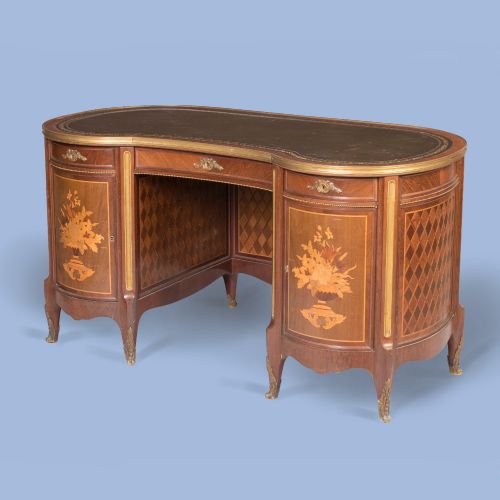


Marquetry Kidney Shaped Desk
These marquetry kidney shaped desk examples offer graceful curved writing surfaces inlaid with intricate decorative veneers.
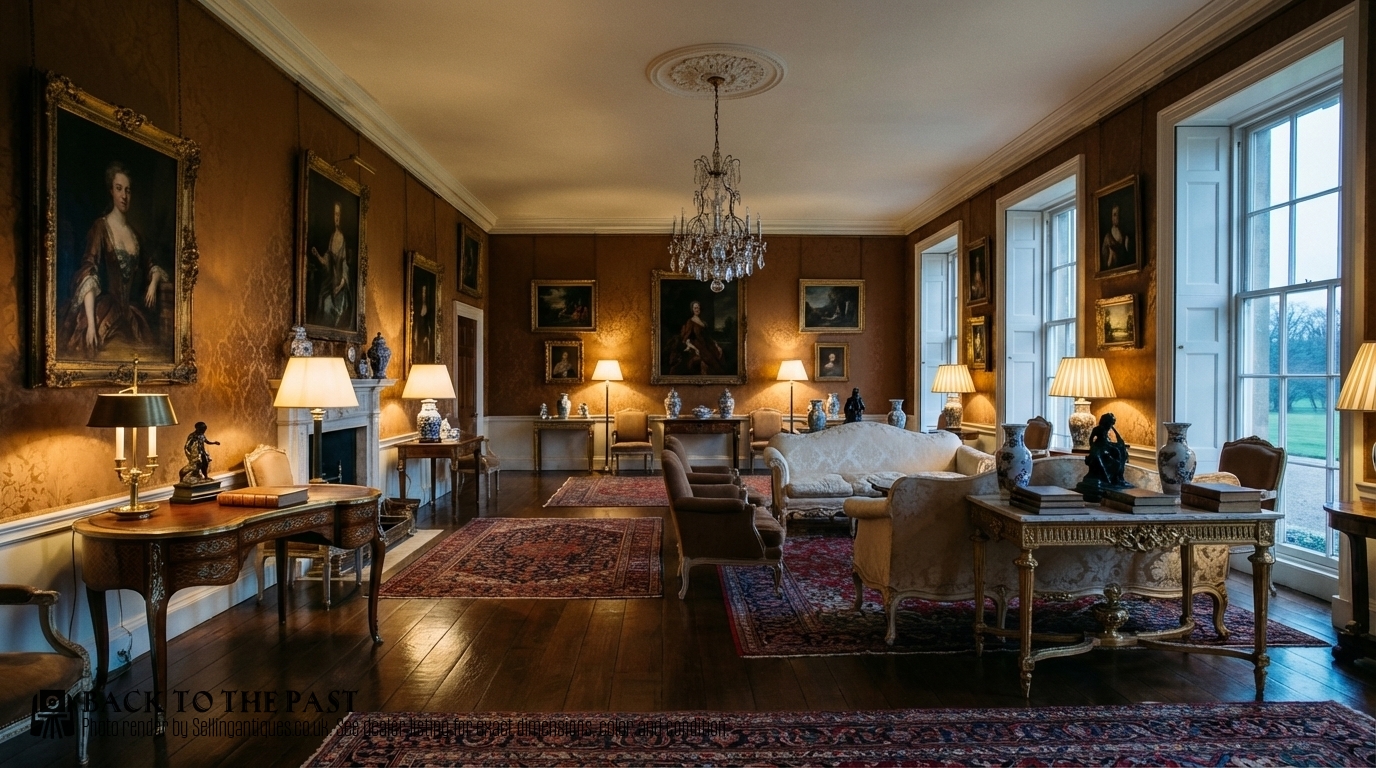
Marquetry Kidney Shaped Desk
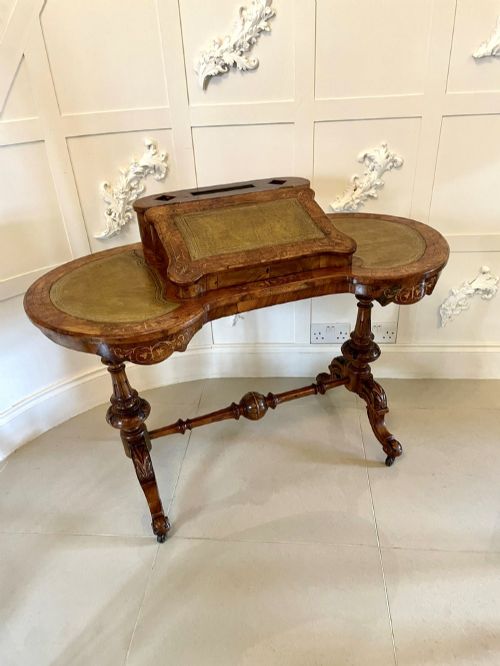
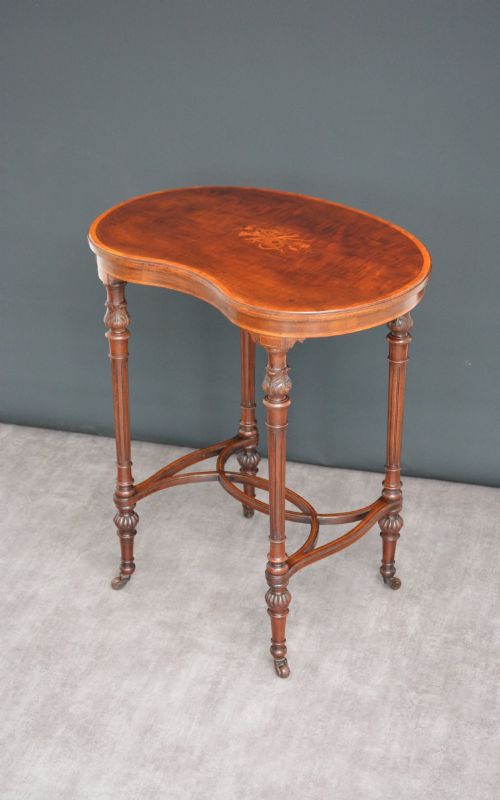
A marquetry kidney shaped desk provides a distinctive curved silhouette designed to wrap comfortably around the writer. The form appears frequently across nineteenth century periods, including Victorian and Edwardian iterations.
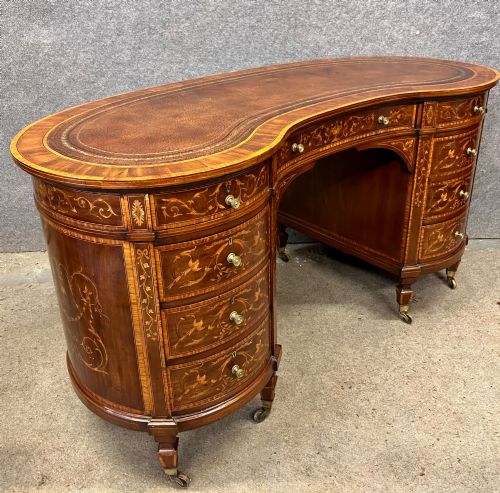
Makers construct these tables in mahogany, burr walnut, satinwood, and rosewood. Many examples incorporate intricate inlay work alongside brass mounts and leather writing surfaces.
Materials and construction methods
Craftsmen shape native and exotic hardwoods over robust carcases to achieve the signature curved profile. Fine veneers of satinwood, walnut, and mahogany form the base for detailed marquetry patterns.
Mounts in ormolu and cast brass accent the edges and legs, while inset tooled leather provides a durable writing plane. Cabinetmakers utilise precise inlay techniques to form floral and geometric motifs across the top.
Marquetry Kidney Shaped Desk Retail Price Guide 2026
Typical asking prices for marquetry kidney shaped desk among the pieces listed under this phrase on Sellingantiques today, from the lower quarter to the upper quarter. They describe what is for sale here now, not the wider market.
Listings feature mahogany, burr walnut, satinwood, and rosewood across Victorian and Edwardian periods.
Assessing quality and execution
The sophistication of the timber selection and the precision of the marquetry define the upper tier of these pieces. Dense burr walnut and figured satinwood indicate superior material choice by the workshop.
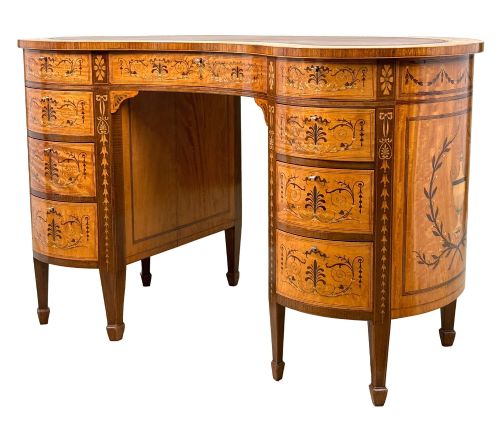
The crispness of the brass ormolu mounts and the integration of the curved drawers demonstrate the level of cabinetmaking skill. Freestanding examples finished with inlay on all sides require greater joinery expertise.
Edwards & Roberts
The Marquetry Kidney Shaped Desk Glossary
- Marquetry
- Decorative veneer work forming pictures or patterns by assembling small pieces of different coloured wood. This technique requires immense patience and skill from the cabinetmaker.
- Kidney shaped
- A curved furniture form resembling a bean or kidney, popular for writing tables and desks. It allows the user to sit closer to the centre of the work surface.
- Ormolu
- Gilded bronze mounts applied to furniture for decorative effect. The metal is cast and then finished with gold leaf or mercury gilding.
- Satinwood
- A lustrous yellowish timber native to India and Ceylon, frequently used for fine stringing and inlay. It provides a bright contrast against darker woods like mahogany.
- Burr walnut
- Wood taken from the wart or growth on a walnut tree, showing intricate swirling grain patterns. It commands high value for its decorative visual impact.
Marquetry Kidney Shaped Desk: Frequently Asked Questions
What is a marquetry kidney shaped desk?
A marquetry kidney shaped desk is a writing table featuring a curved, bean-like top decorated with detailed wood veneer patterns. These pieces date primarily from the nineteenth and early twentieth centuries.
Cabinetmakers designed the curved outline to embrace the seated user, combining practical workspace with decorative appeal. They frequently appear in woods such as mahogany, walnut, and satinwood.
Where were these desks placed?
Victorian and Edwardian owners often placed these tables freestanding in the centre of a room rather than pushed against a wall. Their finished backs and detailed marquetry allowed them to be viewed from all angles.
They served as elegant writing tables, ladies' desks, or occasional pieces in drawing rooms and libraries. The compact profile suited smaller sitting spaces while offering a distinct writing surface.
How do I care for the leather top?
The inset leather writing surface benefits from occasional cleaning with a slightly damp cloth and treatment with appropriate leather balms. Avoid harsh chemical cleaners that can strip the natural finish.
Keep the desk away from direct sunlight and extreme heat sources to prevent the leather from cracking and the underlying wood veneers from lifting.
How do I distinguish Victorian from Edwardian examples?
Victorian pieces often display heavier proportions and darker timbers like mahogany or burr walnut, sometimes featuring rich ormolu mounts. Edwardian items frequently utilise lighter satinwood inlay and Sheraton Revival styling.
Examination of the secondary woods inside the drawers and the style of the marquetry patterns helps clarify the specific period of manufacture.