





French Kidney Writing Desk
These French kidney writing desk pieces offer curved serpentine forms and elegant surfaces designed for correspondence, spanning Victorian revivals to earlier centuries.
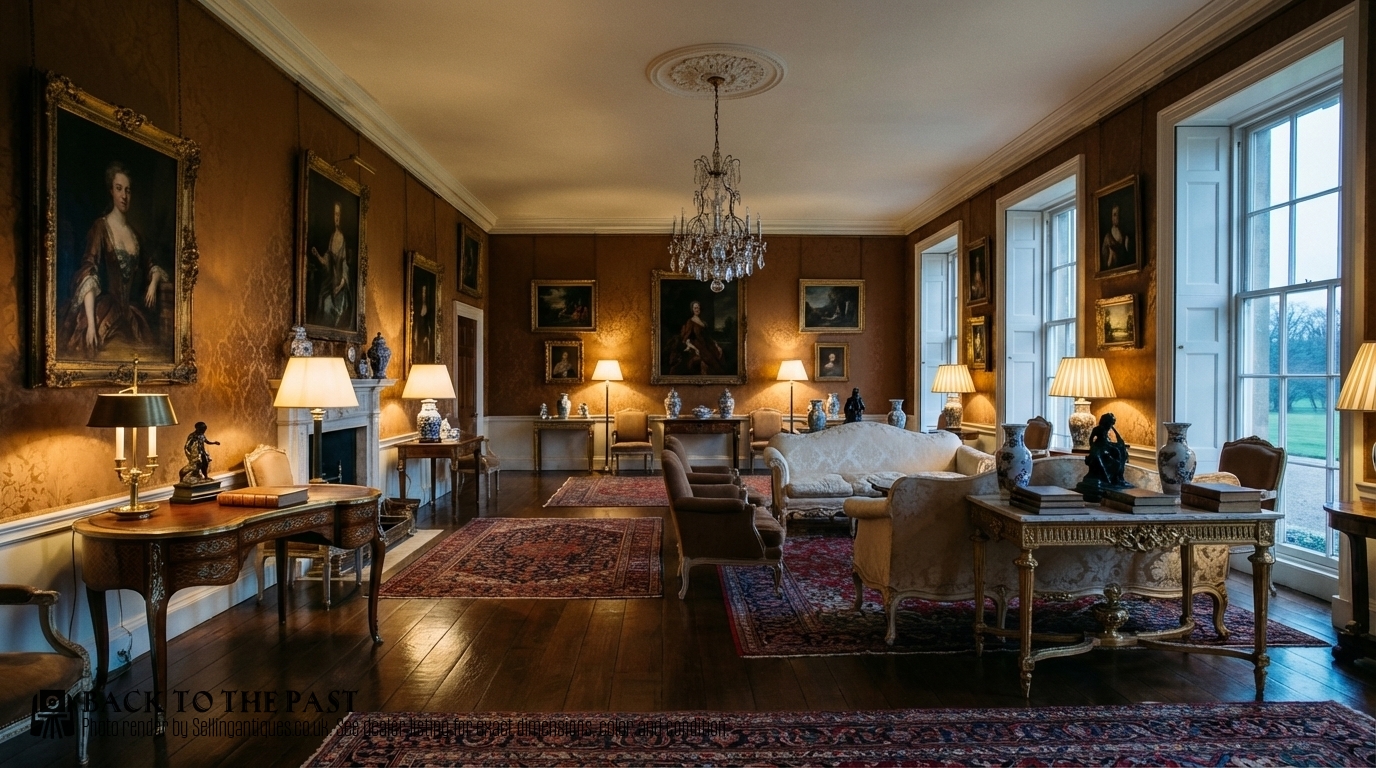
French Kidney Writing Desk
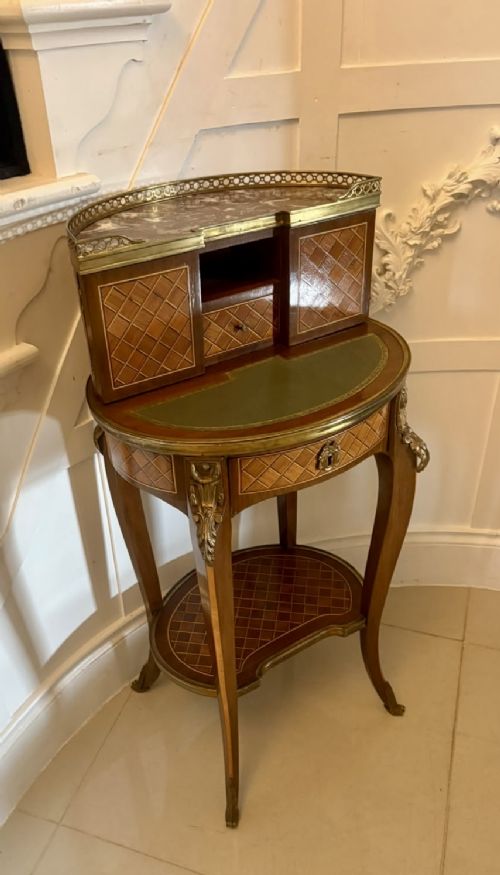
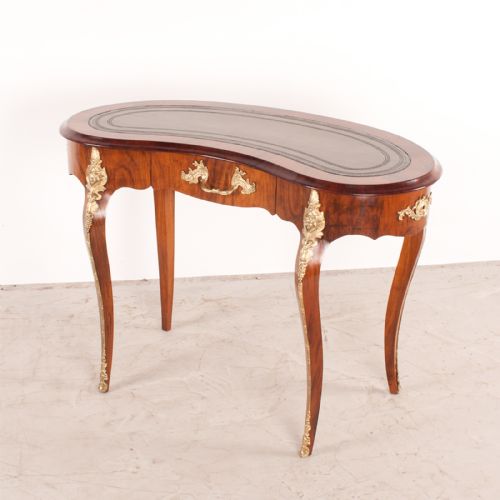
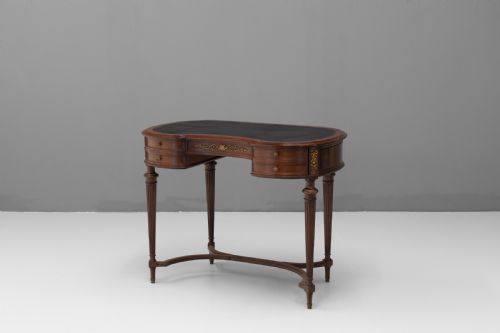
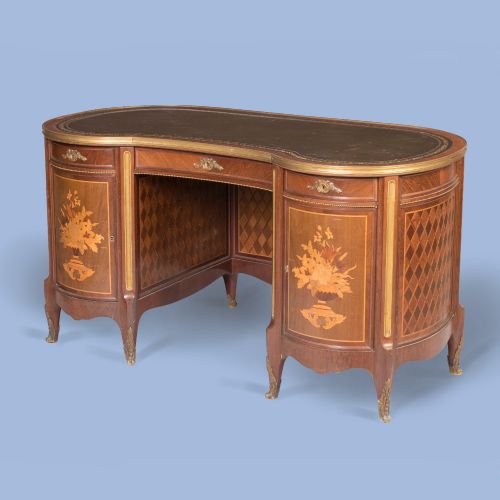
A French kidney writing desk presents a distinctive curved outline intended to sit comfortably against the torso of the user. These pieces appear in forms ranging from compact ladies writing tables to larger freestanding library tables.
The selection on this page draws heavily from Victorian interpretations of French styles, alongside pieces dating to the nineteenth and eighteenth centuries. Makers often incorporated leather writing surfaces alongside fine timber veneers to create functional writing spaces.
Occasional tables and side tables also emerge within this category, sharing the characteristic kidney outline. Buyers will encounter both simpler mahogany versions and elaborate ormolu-mounted marquetry pieces.
Materials and construction
Cabinet makers utilised choice hardwoods including burr walnut, kingwood, rosewood, and mahogany as the structural foundations for these writing desks. These timbers were frequently arranged in intricate marquetry patterns or selected for their figured grain.
Gilded bronze ormolu mounts typically accentuate the curved corners and edges of the desks, complemented by brass details. Insets of tooled leather provide the traditional writing surface across the top of the desk.
French Kidney Writing Desk Retail Price Guide 2026
Typical asking prices for french kidney writing desk among the pieces listed under this phrase on Sellingantiques today, from the lower quarter to the upper quarter. They describe what is for sale here now, not the wider market.
The listings on this page span several periods, featuring walnut, mahogany, rosewood, and kingwood combined with leather and ormolu.
Assessing quality
The refinement of the timber veneers and the intricacy of the marquetry inlay set individual writing desks apart. Superior examples display carefully matched burr walnut or rosewood grain that follows the challenging curve of the kidney shape.
Cast and chased ormolu mounts contribute significantly to the distinction of a piece, with finer examples showing crisp detail and secure attachment to the frame. The integration of leather inserts and the precision of the joinery further indicate the original maker's skill.
The French Kidney Writing Desk Glossary
- Kidney shaped
- A curved furniture outline resembling a bean, designed to wrap partially around a seated user. This form became particularly popular for ladies writing tables during the nineteenth century.
- Ormolu
- Gilded bronze mounts applied to furniture for decorative effect. The metal is cast and chased before receiving its gold finish.
- Marquetry
- Decorative patterns created by fitting thin pieces of wood veneer onto a structural surface. Craftsmen used contrasting timbers to form floral or geometric designs.
- Bureau-plat
- A flat-topped writing table, typically freestanding with drawers beneath the writing surface. These desks often feature leather insets and elaborate mountings.
- Kingwood
- A dense, richly figured timber imported from South America, prized by cabinet makers for high-end French and revival furniture.
French Kidney Writing Desk: Frequently Asked Questions
What is a kidney desk used for?
These pieces served traditionally as writing tables or correspondence desks for ladies in a drawing room or private study.
The curved front allowed the user to sit close to the centre while keeping stationery and ink within easy reach on the surface.
How do I date a kidney desk?
Dating relies on examining the underlying timbers, construction methods, and secondary woods used within the drawer linings. Stylistic clues such as the presence of Victorian revival ormolu mounts also point towards specific decades.
Comparing the inlay techniques and the wear patterns on the leather insert helps narrow the period of manufacture.
Are these desks freestanding?
Many examples feature finished backs and polished veneer all round, allowing them to sit in the middle of a room rather than flat against a wall.
Library tables and larger bureau-plat forms are particularly well suited to central placement.
How do I care for the leather top?
Leather writing surfaces require gentle dusting and occasional treatment with appropriate leather dressings to prevent drying and cracking.
Avoiding direct sunlight and excessive moisture helps preserve both the leather and the surrounding timber veneer.