
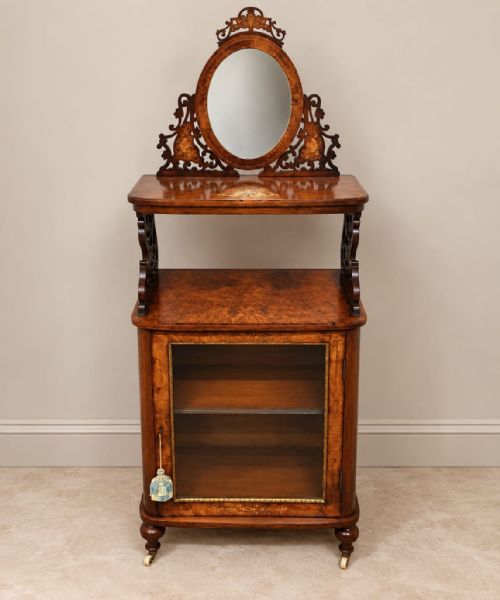
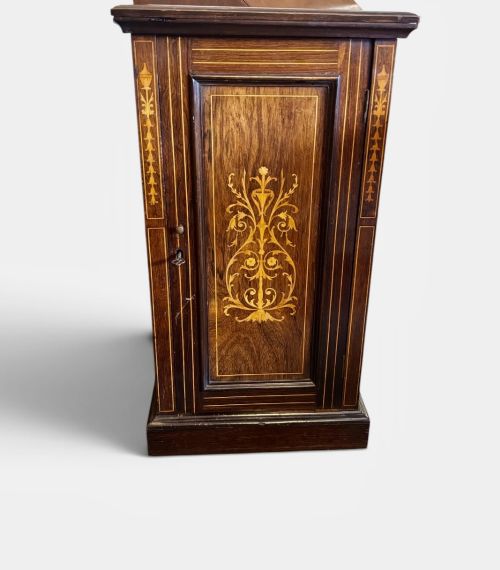
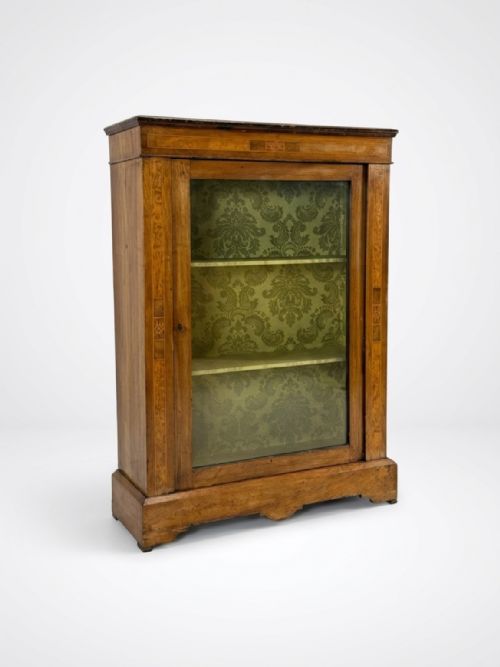
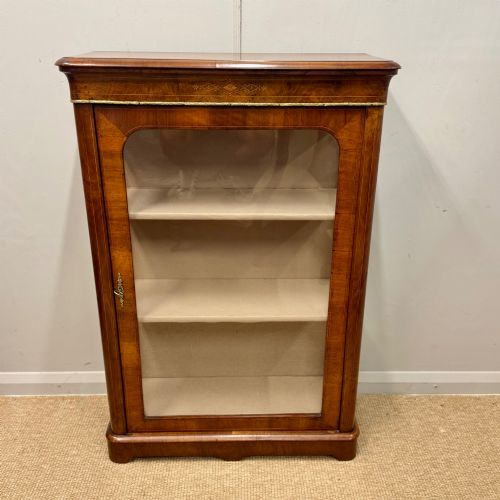
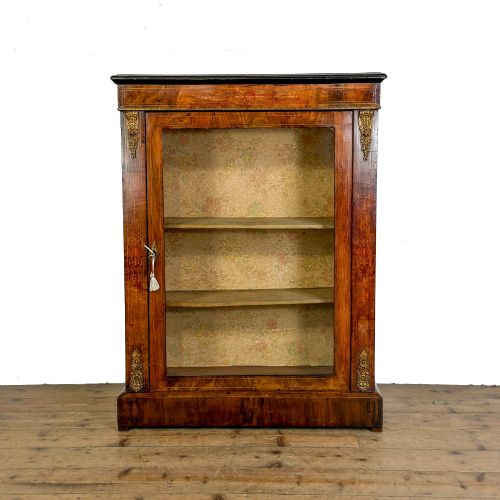
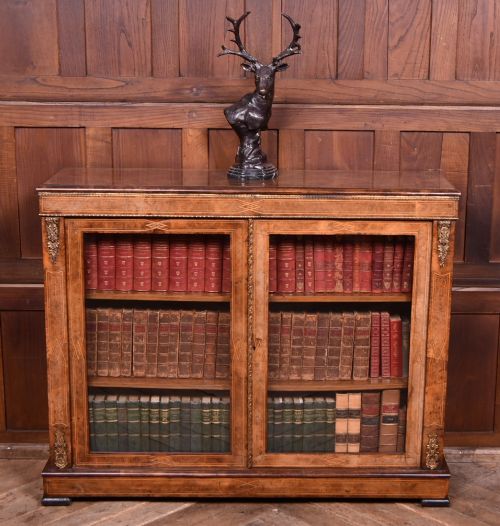
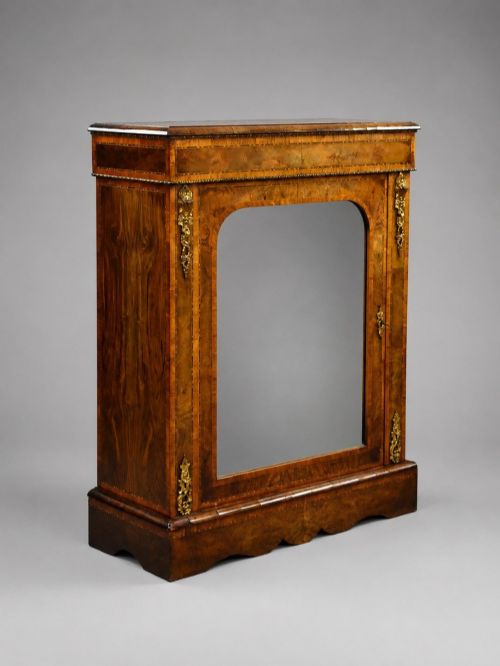
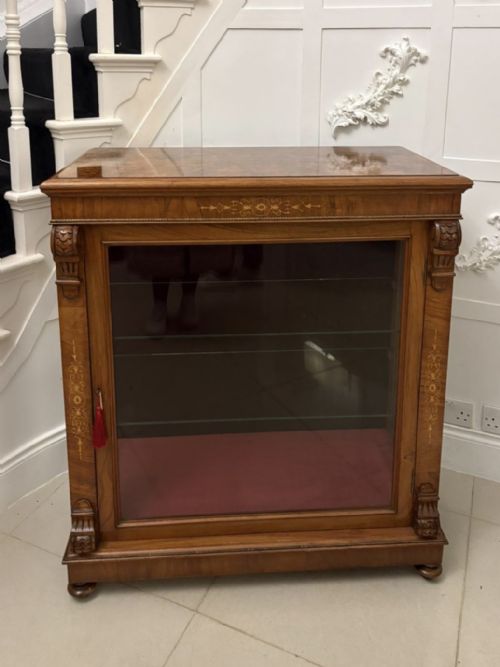
Marquetry Inlay Pier Cabinet
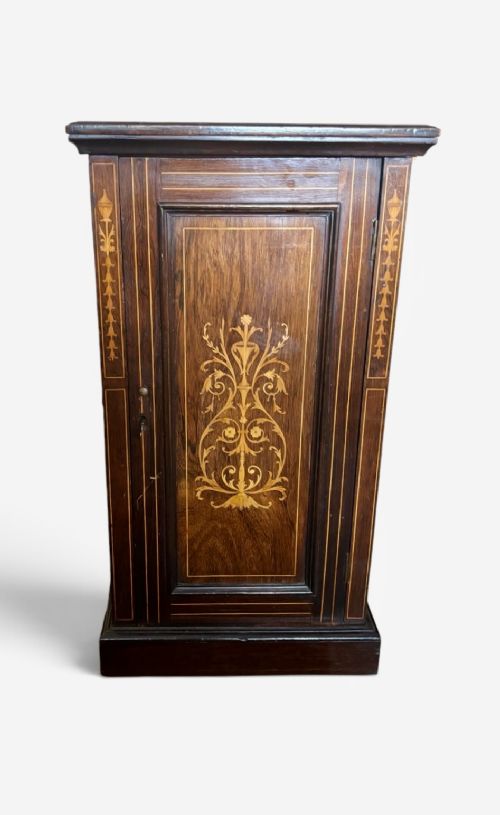
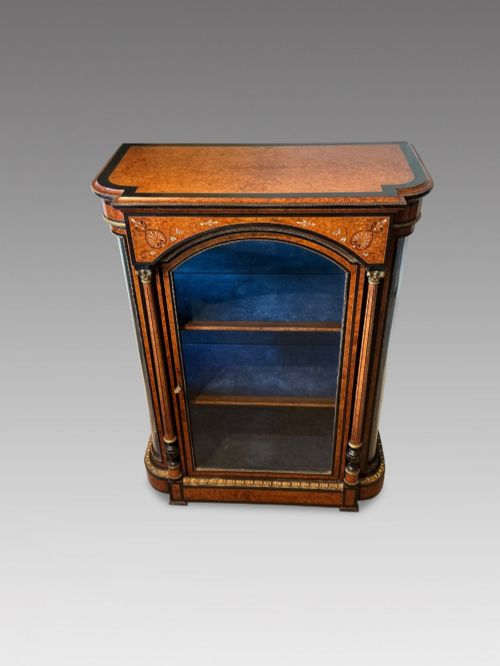
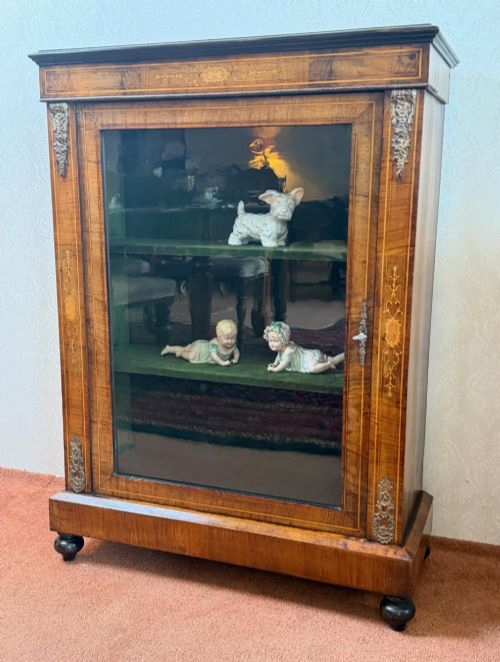
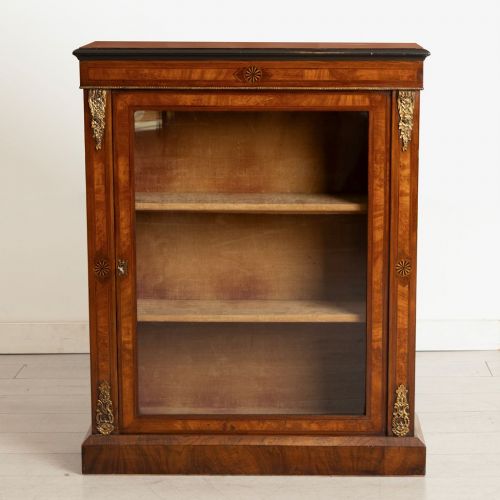
These marquetry inlay pier cabinet examples combine walnut and exotic woods with glass and brass, built for displaying treasured objects.
Marquetry Inlay Pier Cabinet
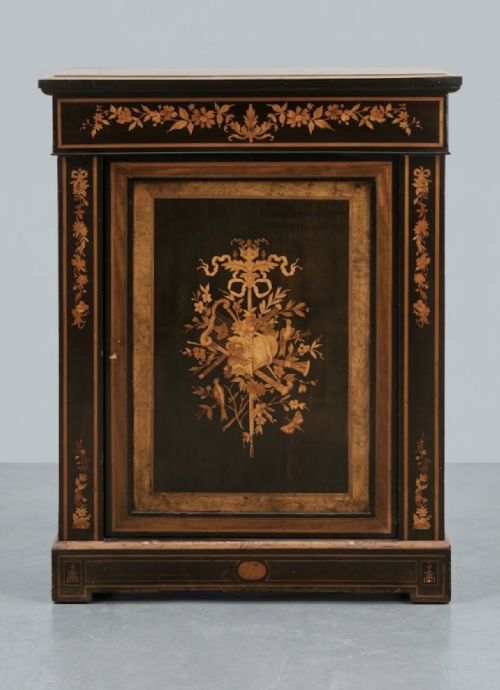
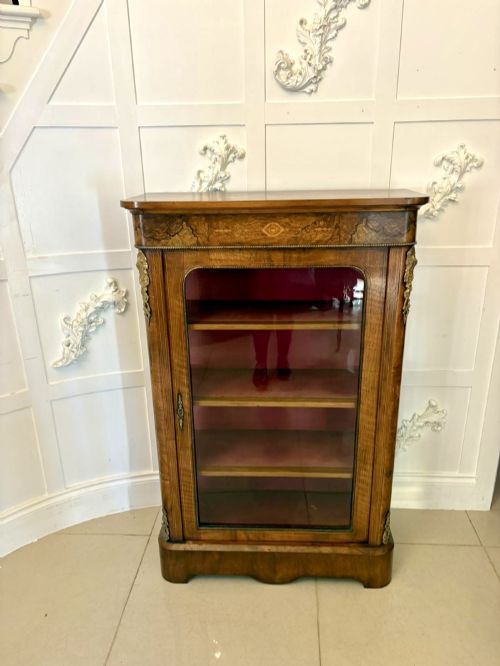
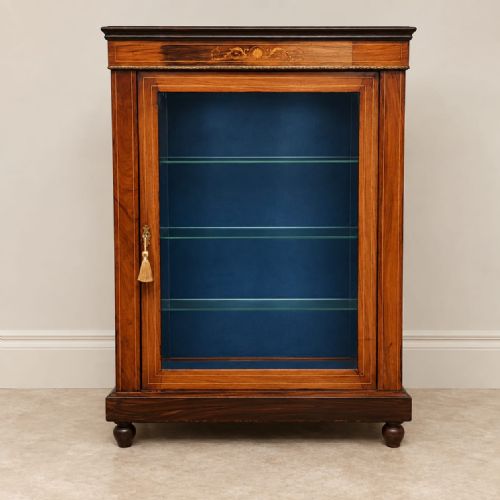
A marquetry inlay pier cabinet is a tall and narrow display piece designed to stand against the wall between windows, originating primarily in the Victorian era alongside French Napoleon III interpretations.
Most pieces met on this page date from the nineteenth century, particularly around eighteen-sixty to eighteen-eighty, taking the form of glazed display cabinets or side cabinets in burr walnut, rosewood, and mahogany.
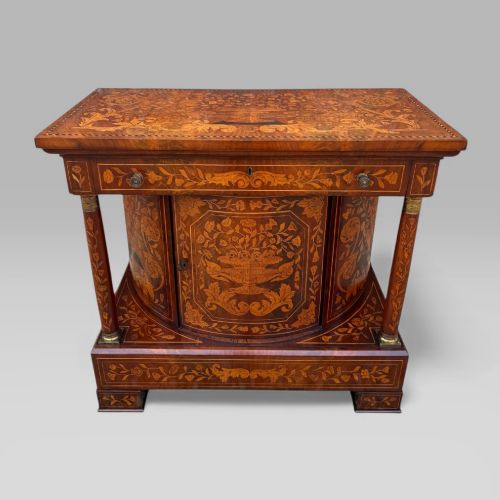
Makers utilised rich veneers and intricate floral marquetry to ornament these domestic display cases, which served to hold porcelain and ornaments in formal reception rooms.
How they were made
Cabinetmakers constructed these forms using solid timbers and decorative veneers such as burr walnut, rosewood, and mahogany, often enhanced by ebonised wood and satinwood details.
The characteristic surface decoration relies on marquetry inlay using boxwood and exotic timbers, combined with cast brass mounts, ormolu, and tortoiseshell in Boullework interpretations.
Glazed doors protect the interior shelving, which is frequently lined with velvet, while marble tops appear on select French Napoleon III examples.
Periods represented span the eighteenth century, the Victorian era, and the Edwardian period.
What varies in quality
Quality rests in the selection of timbers, where highly figured burr walnut or rich rosewood veneer distinguishes superior examples from plainer mahogany or walnut carcasses.
The intricacy and precision of the marquetry inlay dictate the standard of the piece, separating standard floral motifs from finely executed pictorial and geometric compositions.
Refinement shows in the casting and finishing of brass or ormolu mounts, the quality of the glass, and the overall proportions of the narrow silhouette.
The Marquetry Inlay Pier Cabinet Glossary
- Pier cabinet
- A tall and narrow cabinet designed to fit the wall space between windows. These pieces often feature a single glazed door and flat sides.
- Marquetry
- An art form assembling pieces of wood veneer into decorative patterns and pictorial designs. Cabinetmakers apply this technique to cabinet doors and friezes.
- Burr walnut
- A prized timber harvested from walnut tree growths, producing swirling and mottled grain patterns. It forms the primary decorative veneer on many Victorian examples.
- Ormolu
- Gilt bronze mounts used to decorate furniture edges and corners. This technique appears frequently on French Napoleon III pieces.
- Credenza
- A sideboard or display cabinet form used for storage and display. Victorian variations merge this form with the narrow pier cabinet style.
Marquetry Inlay Pier Cabinet: Frequently Asked Questions
What is a pier cabinet used for?
These pieces served as display and storage furniture in Victorian reception rooms, designed to hold precious ceramics, glass, and ornaments.
The glazed doors protected delicate collections from dust while allowing guests to view the contents from the room.
Where did pier cabinets stand?
Cabinetmakers built these narrow forms specifically for the wall space, or pier, located between large drawing room windows.
This placement utilised otherwise empty architectural gaps to reflect light and display decorative arts.
How do I date a pier cabinet?
Dating relies on timber choices, construction techniques, and stylistic markers such as Victorian walnut veneers or French Napoleon III ebonised finishes.
Most examples date from the nineteenth century, with specific decades indicated by the complexity of the marquetry and mount styles.
What woods were used?
Craftsmen utilised walnut, burr walnut, rosewood, mahogany, and satinwood as primary timbers for these display pieces.
Inlay work frequently incorporated boxwood, ebony, and exotic woods to create contrasting floral and geometric patterns.