

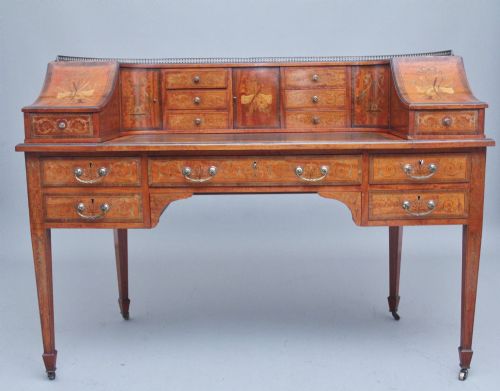
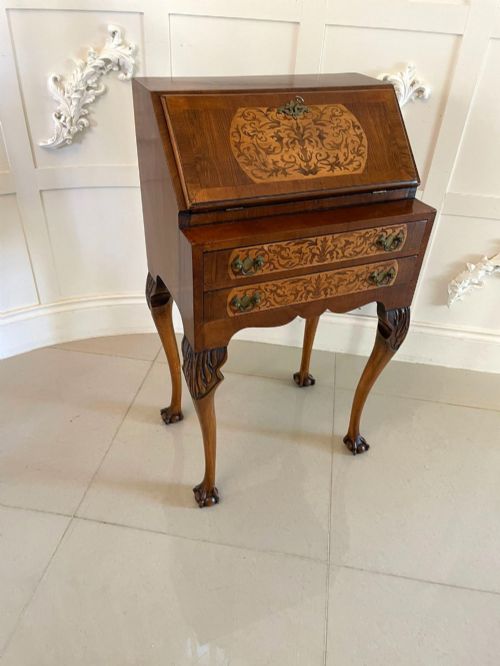
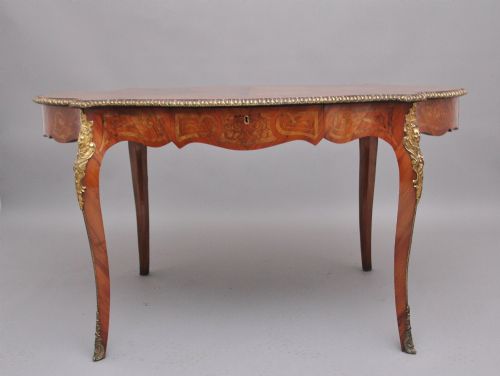
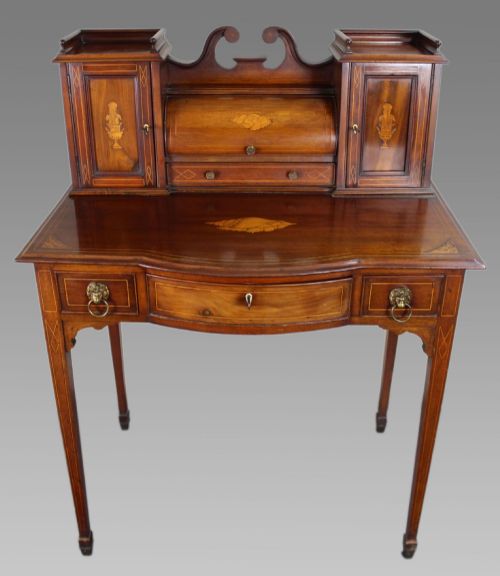
Marquetry Inlaid Bureau
Marquetry inlaid bureau pieces combine fitted writing compartments with elaborate wood mosaic decoration, offering both practical workspace and striking visual depth.
Marquetry Inlaid Bureau
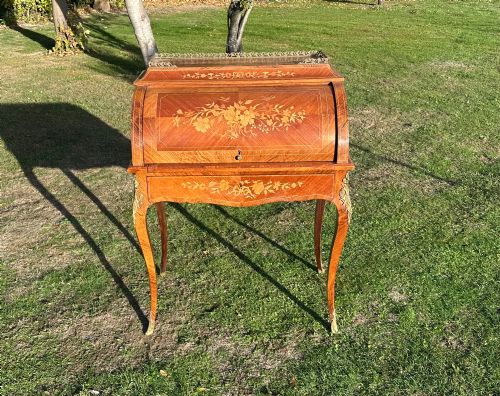
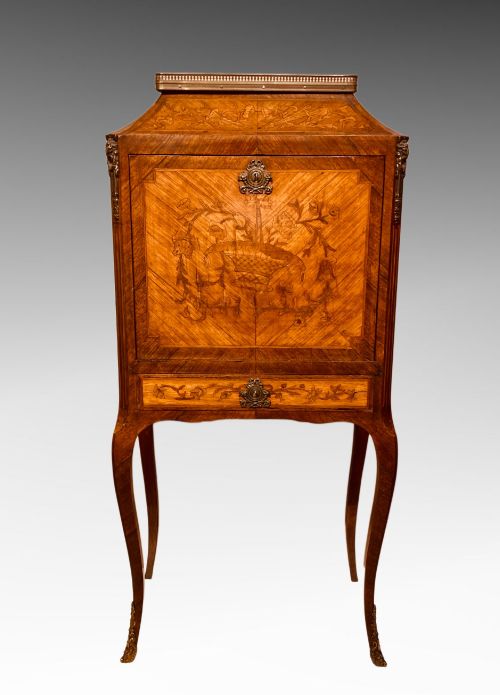
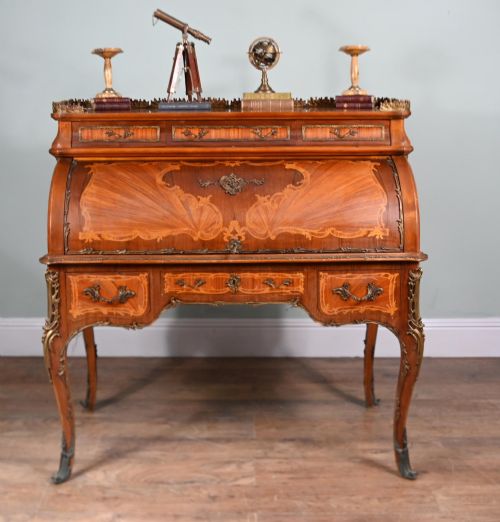
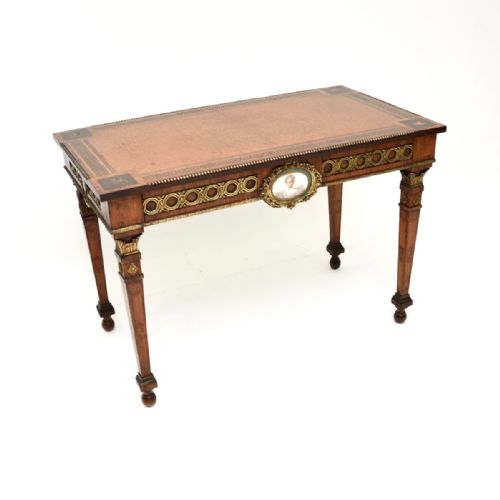
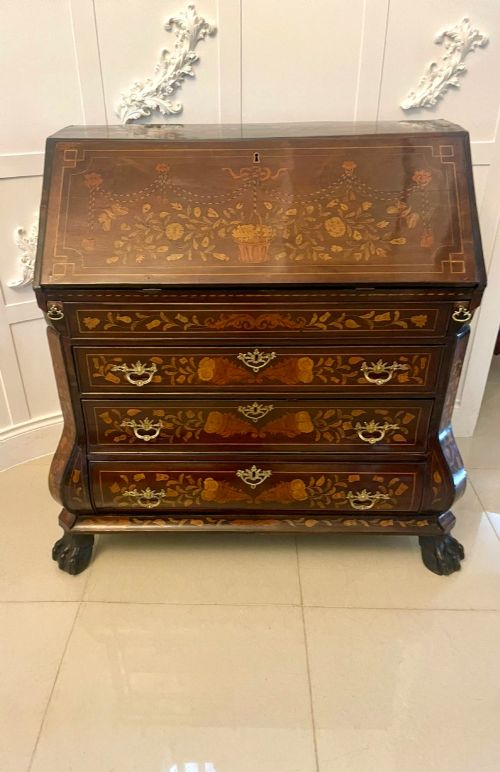
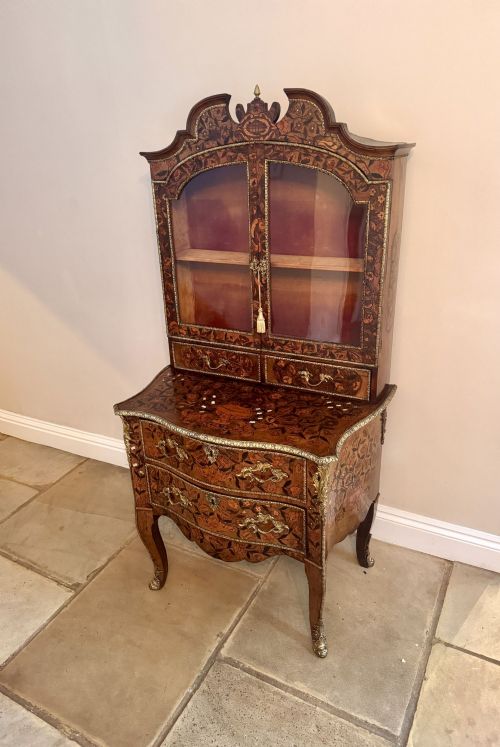
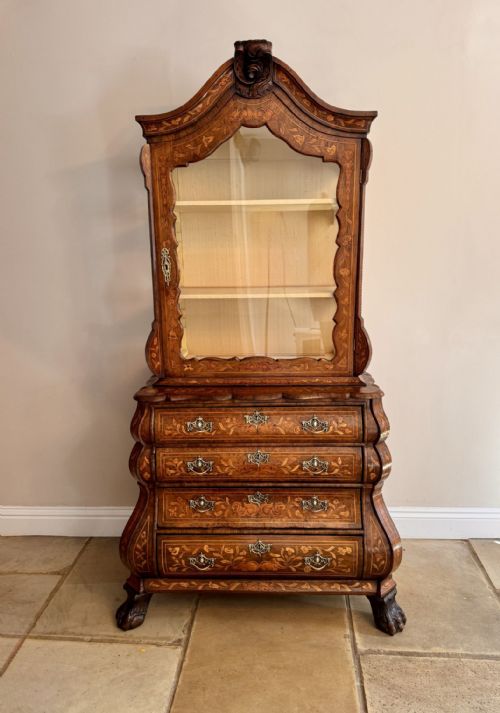
A marquetry inlaid bureau is primarily found in forms ranging from fall-front writing desks and bureau bookcases to serpentine cabinets and cylinder desks. These pieces span the eighteenth and nineteenth centuries, originating from English workshops, French makers, and Dutch ateliers.
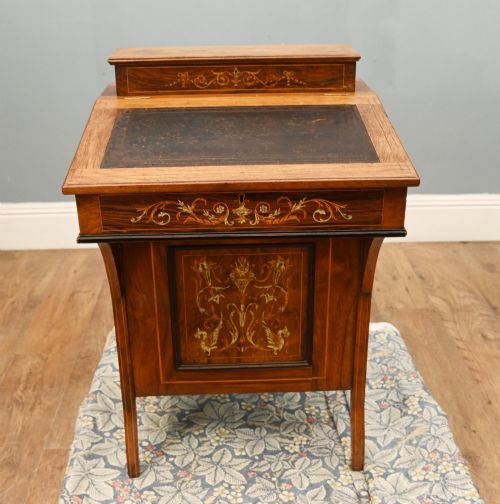
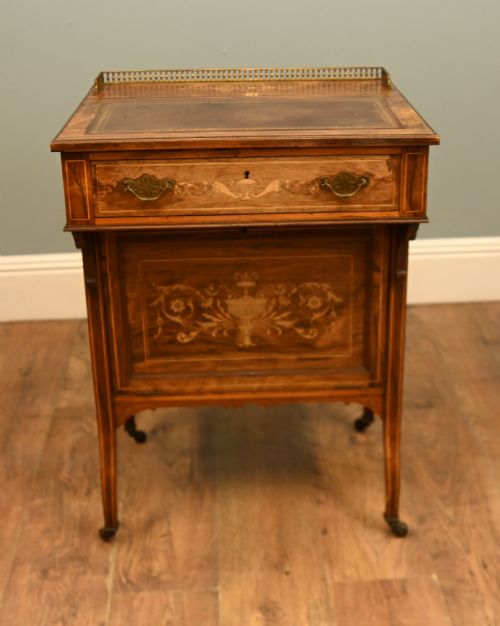
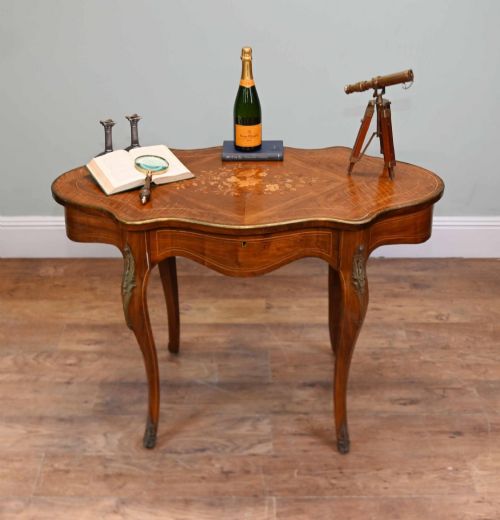
The selection on this page relies heavily on walnut, mahogany, and satinwood foundations, decorated with floral or geometric wood patterns. Bureau desks and bureau bookcases dominate the configurations, alongside freestanding writing tables and bureau de dame variations.
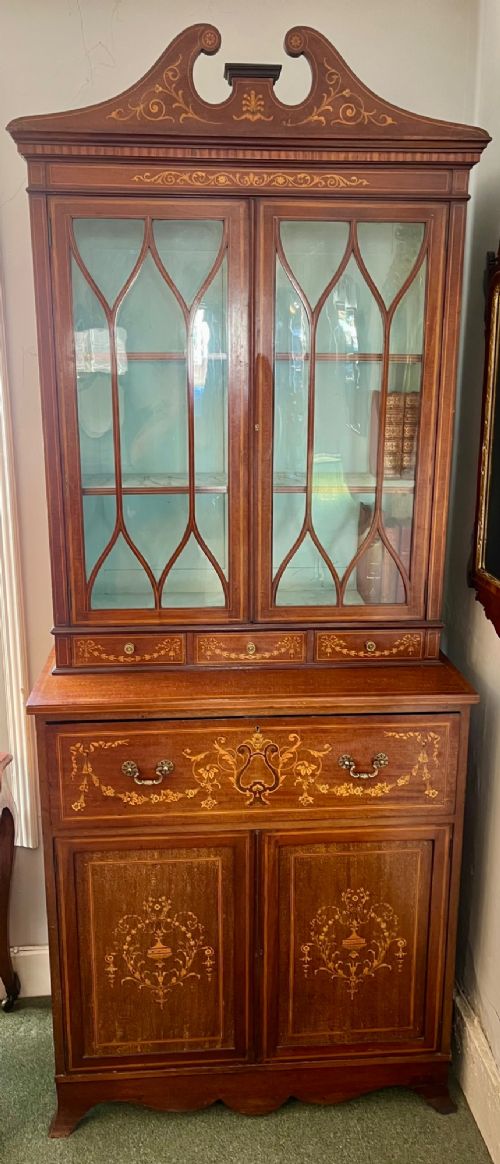
Georgian and Victorian examples sit alongside Dutch Baroque and Louis XV Revival styles. Buyers encounter both bureau bookcases with upper display sections and compact writing desks featuring fitted interior drawers.
Materials and Construction
Cabinetmakers built these carcases using solid hardwoods like mahogany and walnut, often applying burr walnut or satinwood veneers across flat and curved surfaces. Contrasting timbers such as kingwood and rosewood were shaped into floral or scroll motifs for the marquetry panels.
Inlayers cut thin slices of tinted and natural woods to assemble pictorial designs, securing them into recessed channels on the fall-fronts and tabletops. Brass mounts, glass doors, and leather writing surfaces complete the construction of the more elaborate desks.
Marquetry Inlaid Bureau Retail Price Guide 2026
Typical asking prices for marquetry inlaid bureau among the pieces listed under this phrase on Sellingantiques today, from the lower quarter to the upper quarter. They describe what is for sale here now, not the wider market.
Some bureau interiors hide secret compartments behind sliding pigeonholes, designed for letters that required absolute privacy.
Design and Execution
Quality rests in the precision of the wood mosaic work and the depth of the timber figuring in the carcase. Pieces with crisp floral marquetry across bombe fronts or bureau doors demonstrate superior cabinetmaking skill.
The complexity of the interior fitted compartments, the retention of original brass hardware, and the harmony of secondary timbers dictate the standing of an individual desk.
Edwards and Roberts·Gillows Oxford Street Workshop·Maple and Co.
The Marquetry Inlaid Bureau Glossary
- Marquetry
- A decorative technique where small pieces of veneer are assembled to form pictorial patterns on furniture surfaces. This method contrasts with parquetry, which relies on geometric arrangements.
- Bureau
- A sloping front desk that opens to reveal a fitted interior of small drawers and pigeonholes. Eighteenth-century versions often sit atop a chest of drawers or a bookcase.
- Bombe
- A bulging, outward-curved contour found on the sides and fronts of eighteenth-century case furniture. This swelling shape requires advanced woodworking skill to fit veneer accurately.
- Bureau Bookcase
- A two-part piece combining a sloping writing desk below and a glazed cabinet above for books or display. These structures often feature double-dome or arched pediments.
Marquetry Inlaid Bureau: Frequently Asked Questions
How do I use a bureau desk?
The sloping front panel folds down to create a writing surface, supported by automatic wooden brackets or pulls. Inside, a collection of small drawers and compartments organises stationery and correspondence.
When closed, the fall-front conceals the workspace entirely, keeping documents out of sight in a sitting room or study. The lower drawers provide general storage for household papers or linens.
What is the difference between marquetry and parquetry?
Marquetry uses varied wood veneers to create pictorial compositions such as floral sprays, birds, and scrollwork. The artisan cuts organic, curved shapes to build intricate scenes across the surface.
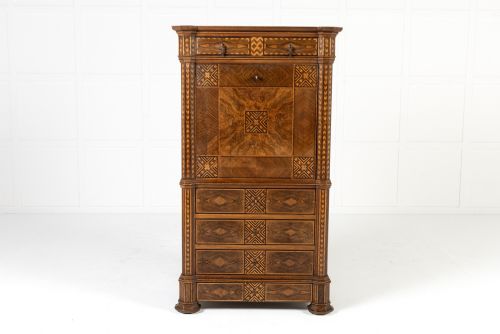
Parquetry constructs geometric motifs like cubes, stripes, and checkerboards using uniform wood polygons. While both decorate the exterior of these desks, marquetry requires more figurative cutting.
Where should I place a bureau in my home?
These desks suit studies, living rooms, and large hallways where the decorated fall-front can be viewed directly. Freestanding versions look best away from walls, allowing the polished timber and side details to be appreciated from all angles.
Keep wooden writing furniture away from direct sunlight and heat sources to prevent the veneers from drying out or lifting. Consistent indoor humidity preserves both the polish and the delicate wood inlays.
How do I distinguish 18th century from Victorian pieces?
Eighteenth-century pieces typically feature solid construction in oak or pine carcases, with hand-cut dovetails and rich walnut or mahogany veneers. Their marquetry often displays naturalistic floral designs executed with subtle shading from heated sand.
Victorian interpretations frequently utilise machine-sawn veneers on softer secondary woods, accompanied by bolder machine-cut brass mounts and darker ebonised accents. Revival styles from this later era borrow heavily from earlier Dutch and French motifs.