


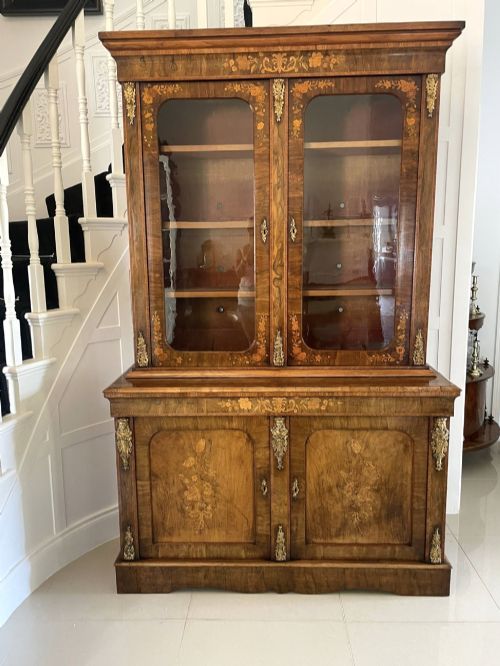
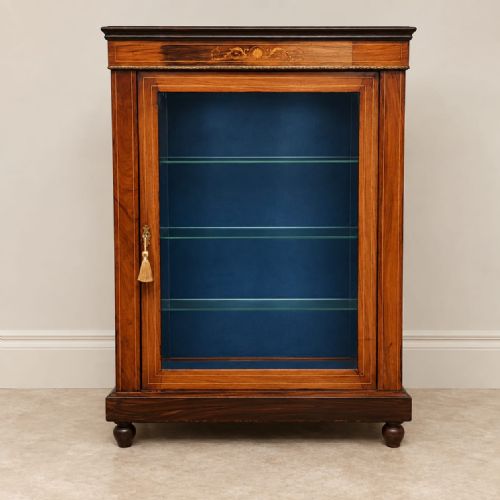
Marquetry Display Credenza
A marquetry display credenza brings Victorian craftsmanship and detailed wood inlay into a room.
Marquetry Display Credenza
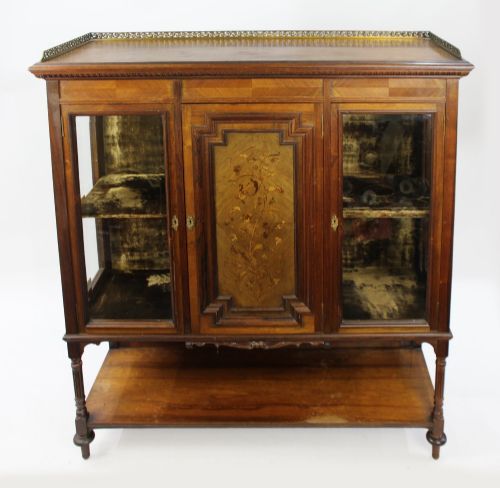
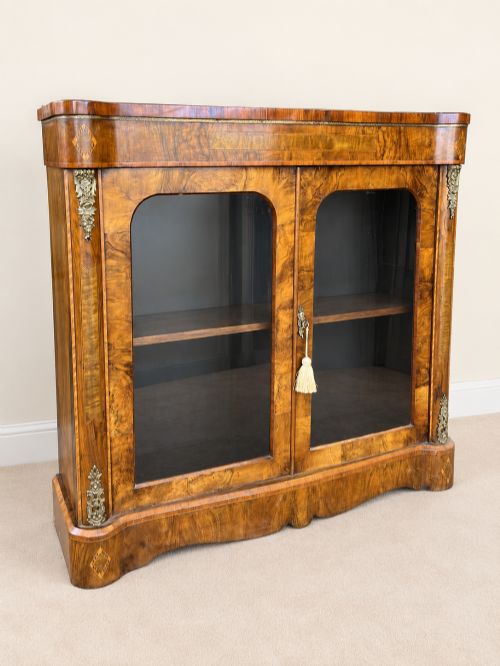
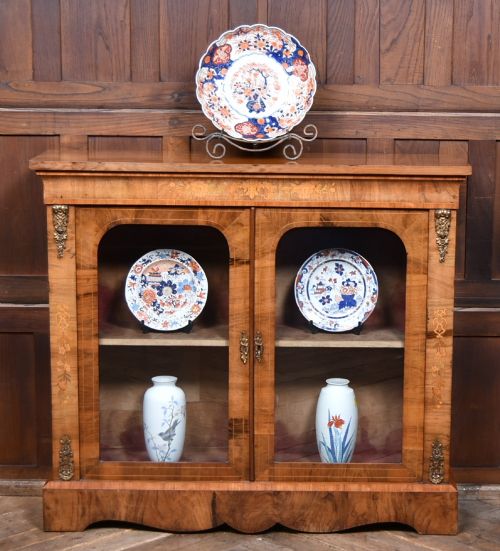
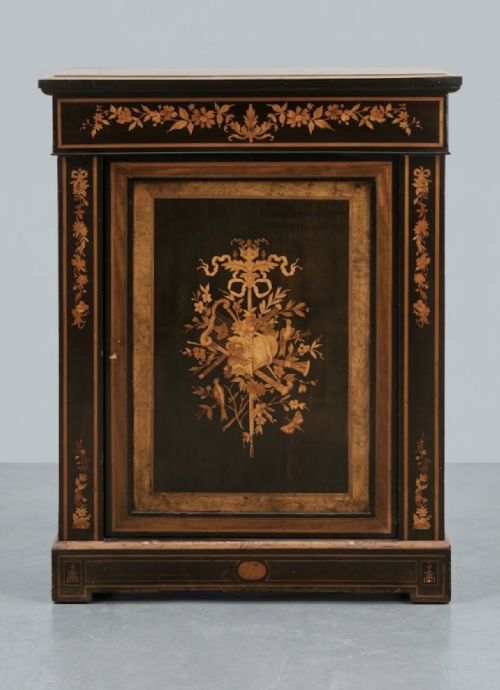
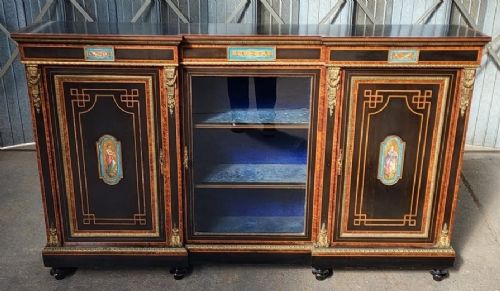
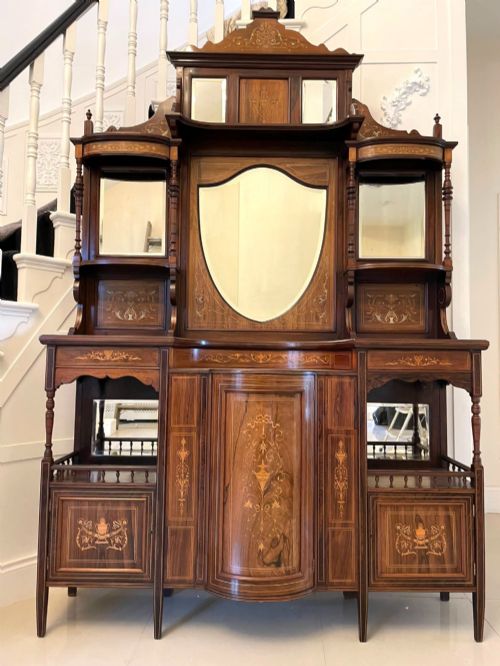
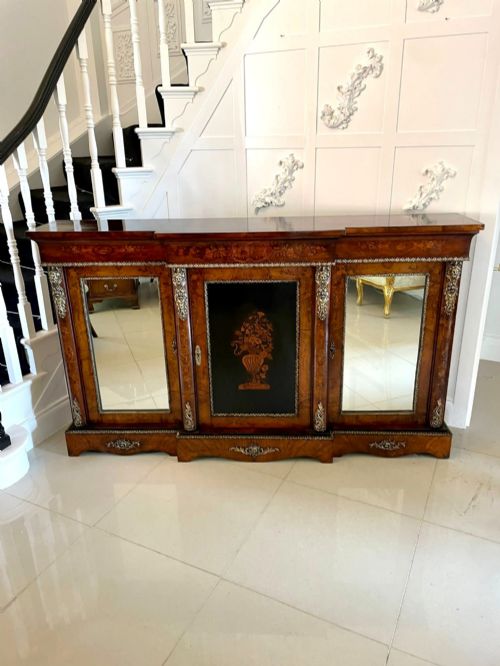
A marquetry display credenza is a sophisticated Victorian storage and display piece found predominantly in burr walnut, rosewood, and ebonised wood. These items frequently combine glazed cabinets with central or side compartments, serving both decorative and practical roles in the nineteenth-century interior.
The versions most commonly met on this page date from the mid-nineteenth century, particularly around the 1850s to 1880s. They appear in styles ranging from straightforward Victorian and Aesthetic Movement to French and Sheraton revivals.
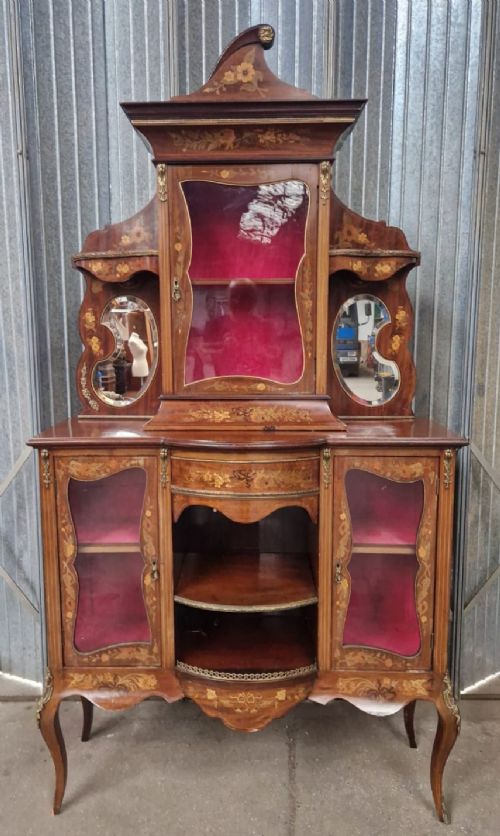
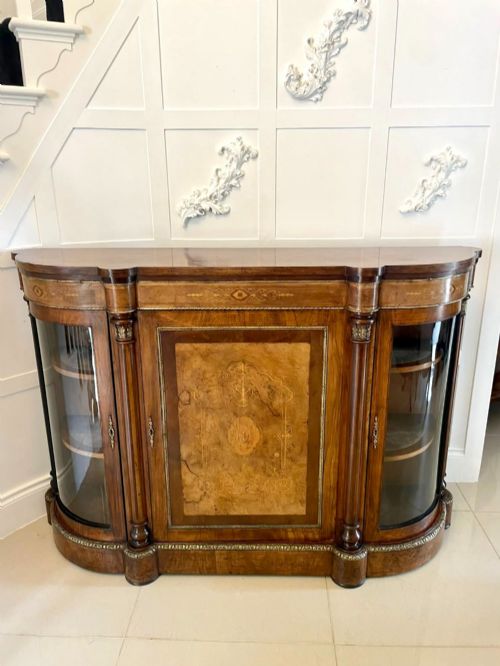
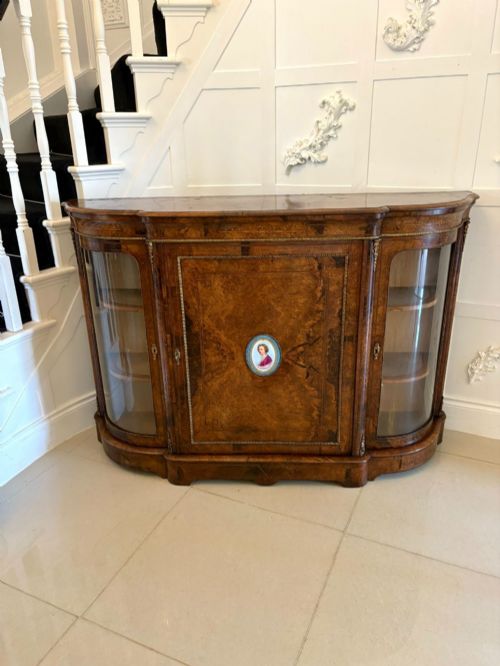
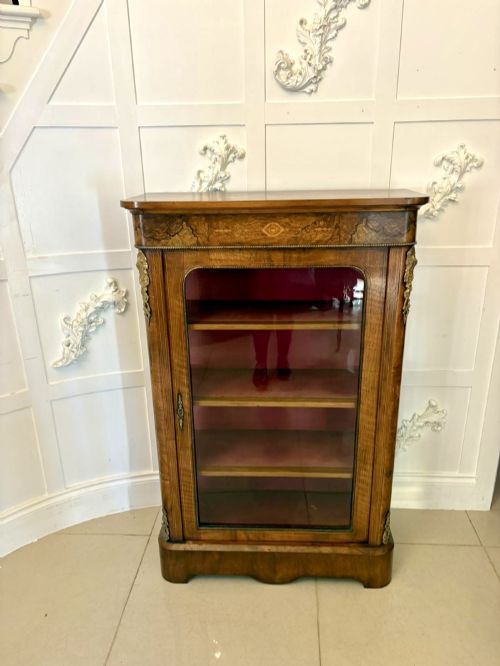
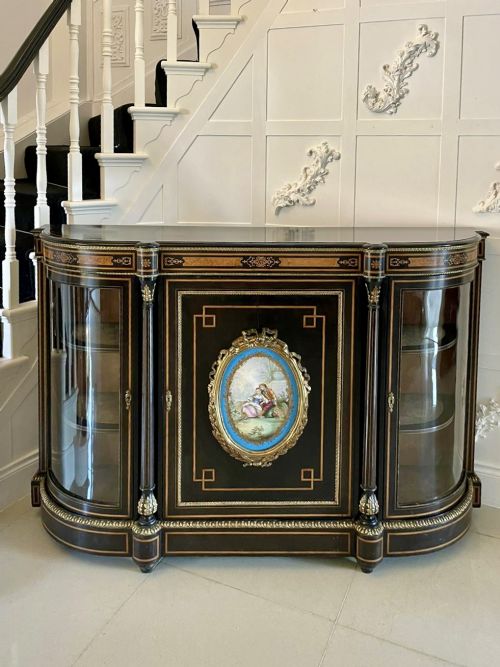
Makers and workshops of the period utilised serpentine shapes, gilt mounts, and porcelain plaques to enhance the visual weight of these low cabinets. Buyers encounter various formats, from three-door side cabinets to narrow pier cabinets and expansive bookcase credenzas.
Materials and construction
Makers constructed these cabinets using dense timbers such as burr walnut, rosewood, and mahogany as a base, applying contrasting veneers and fine marquetry inlay to the exterior surfaces. Floral and geometric patterns utilise satinwood, ebony, and various fruitwoods.
Ormolu mounts, cast in brass or gilt bronze, frame the doors, corners, and plinths, while glass panels enclose the display sections. Interior shelving is often lined with velvet, and some pieces incorporate porcelain plaques mounted directly into the woodwork.
Some nineteenth-century makers concealed tiny velvet-lined compartments within these credenzas, built specifically for hiding precious portrait miniatures.
Judging quality
Quality in a marquetry display credenza rests on the crispness and complexity of the wood inlay and the weight and chasing of the ormolu mounts. Finer pieces display intricate floral or scrollwork marquetry that retains sharp definition across contrasting timbers.
The choice of primary timber creates a significant distinction, with richly figured burr walnut and exhibition-quality satinwood commanding attention. Furthermore, the integration of components such as serpentine-shaped doors and heavy gilt-bronze mounts separates standard production items from workshop masterpieces.
Collinson and Lock·Gillows·Lamb of Manchester·Edward Holmes Baldock·Maison Gagneau·James Hicks·Edwards and Roberts
The Marquetry Display Credenza Glossary
- Marquetry
- The art of forming decorative patterns on a wooden surface by fitting together small pieces of veneer of different colours and grains. This technique defines the surface decoration of many nineteenth-century display cabinets.
- Ormolu
- Gilt-bronze mounts applied to furniture for decorative enrichment. These metallic ornaments frame doors and corners on Victorian pieces.
- Pier Cabinet
- A narrow upright display cabinet designed to fit the wall space between windows. These are frequent companions to larger credenzas.
- Vitrine
- A glass-fronted cabinet or display case used for showing fine objects. Many pieces incorporate a vitrine top section above the main credenza base.
- Burr Walnut
- Wood taken from a walnut tree growth containing swirling grain patterns. It provides a highly decorative surface veneer for Victorian furniture.
Marquetry Display Credenza: Frequently Asked Questions
What is a marquetry display credenza?
A marquetry display credenza is a low nineteenth-century cabinet featuring decorative wood inlay and glass panels for showing valued items. These pieces combine closed storage with display space.
They emerged strongly during the Victorian era, drawing on French and English design revivals to anchor formal reception rooms.
How do I care for burr walnut and marquetry?
Protect the wood and delicate veneer work by keeping the cabinet away from direct sunlight and sudden temperature changes. Dust gently with a dry, soft cloth.
Avoid liquid polishes and wax the surface sparingly to preserve the natural sheen of the burr walnut and inlaid details.
How do I distinguish between periods?
Mid-nineteenth-century pieces often feature rich burr walnut veneers and heavy ormolu mounts, typical of the 1850s and 1860s. Later examples from the 1880s and 1890s introduce Aesthetic Movement influences or lighter satinwood inlay.
Stylistic markers such as serpentine shapes point towards French revival influences popular under Napoleon III.