

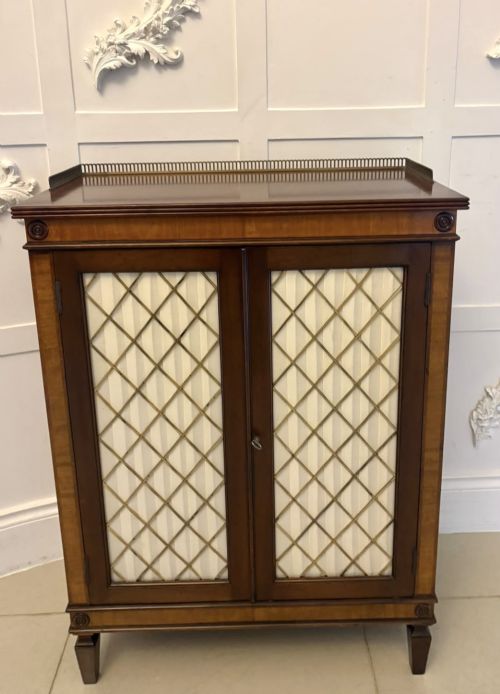
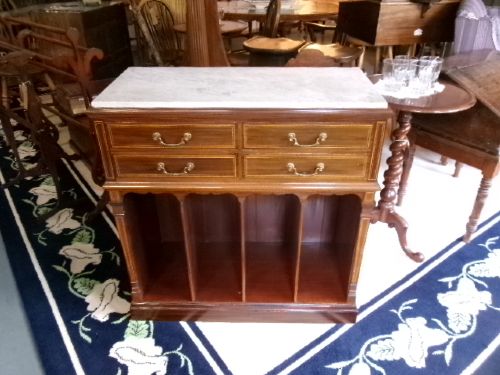
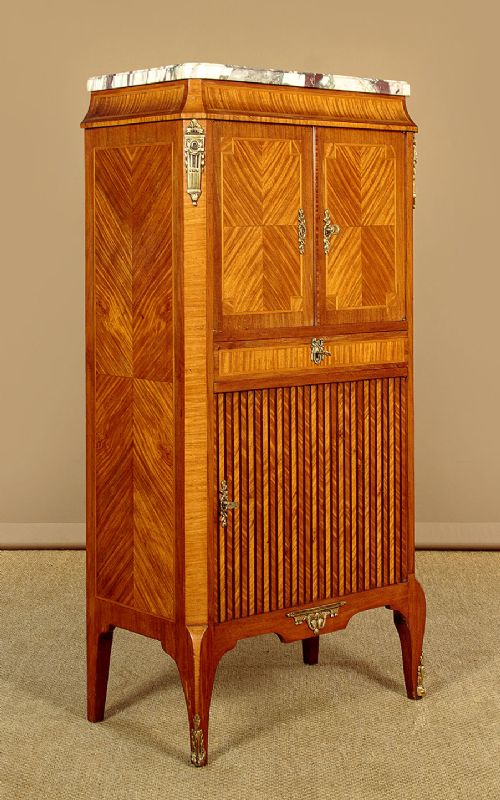
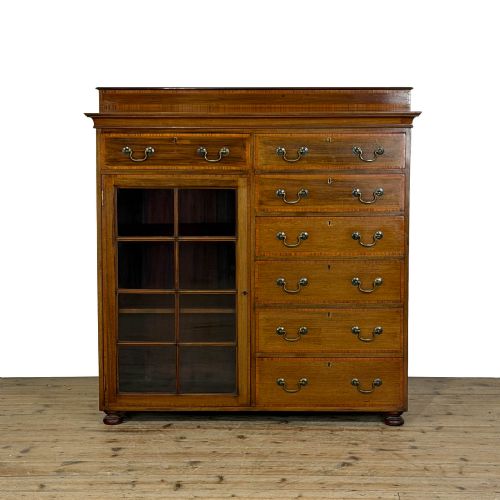
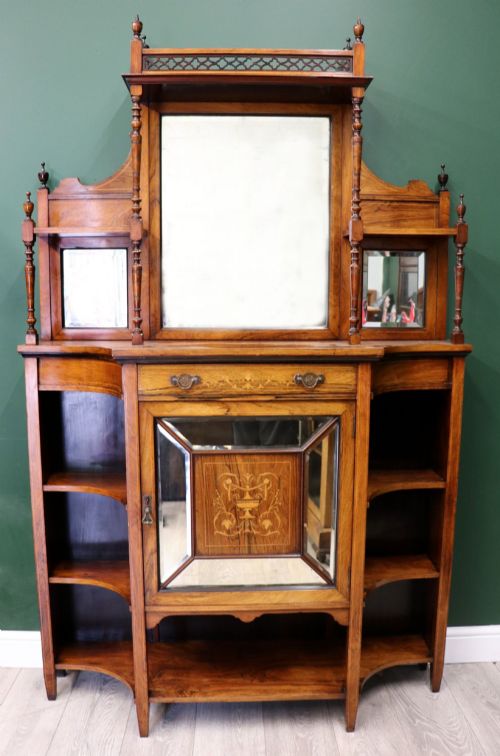
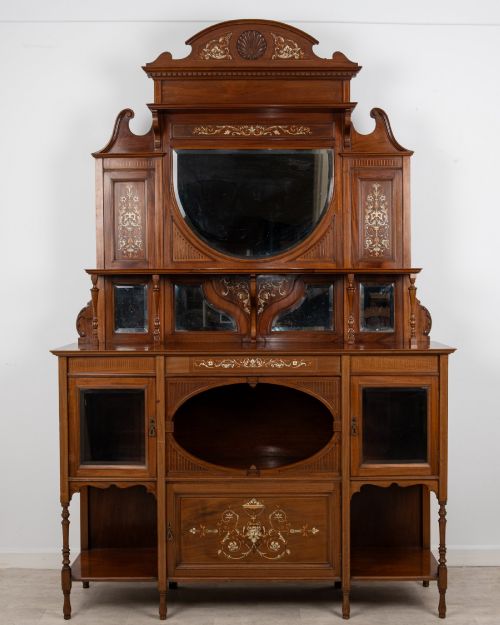

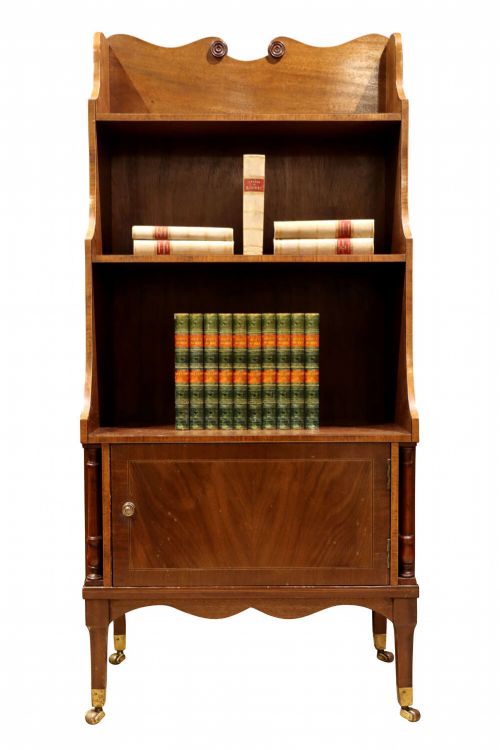


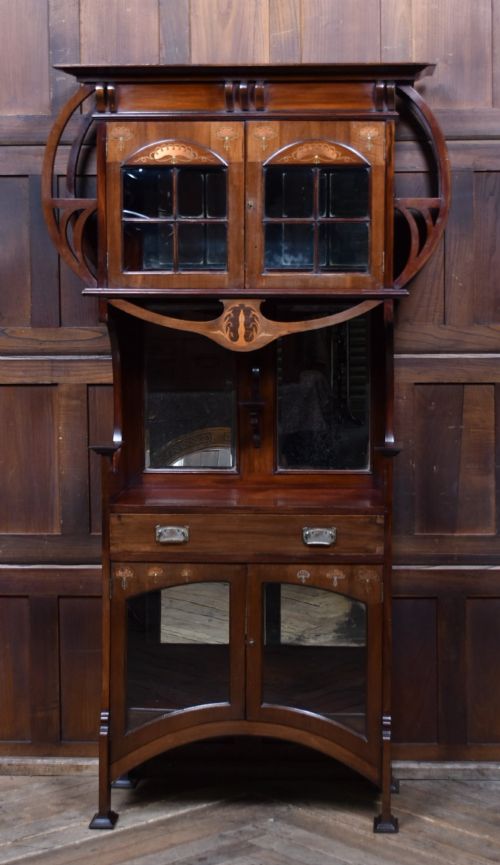



Brown Inlaid Chiffonier
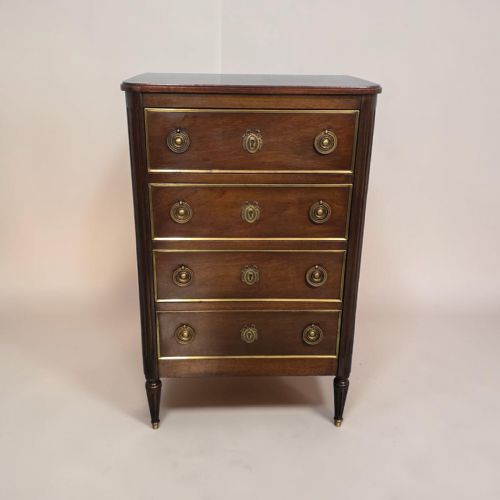
A brown inlaid chiffonier brings rich timber and delicate stringing together to anchor a room with period utility.
Brown Inlaid Chiffonier
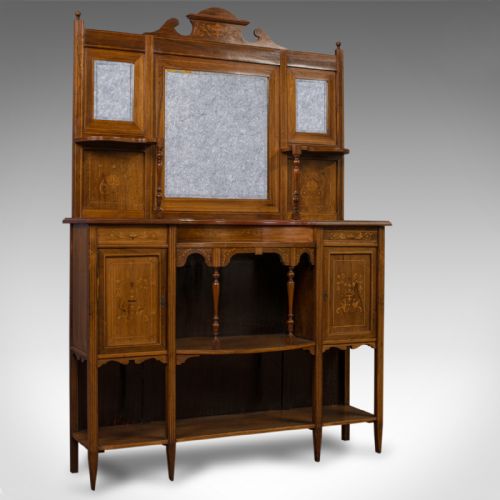
A brown inlaid chiffonier represents a distinct form of low storage cabinet, typically featuring enclosed lower cupboards paired with upper shelving or mirror backs. These pieces emerge predominantly from the Regency and Victorian eras, carrying deep historical utility into modern interiors.
Makers constructed these cabinets using rich foundational timbers such as mahogany, rosewood, and walnut, often enhanced by contrasting stringing. The pieces seen here encompass variations from simple two-door cupboards to elaborate mirror-backed sideboards.
Buyers seeking a brown inlaid chiffonier will encounter forms that bridge the gap between a side cabinet and a small sideboard. They serve well in dining spaces and living rooms for displaying glassware or storing linens.
Materials and construction methods
Cabinet makers relied on dense hardwoods like mahogany and rosewood as the primary structural bodies, applying finely figured veneers to large surfaces. Boxwood provided the contrasting lighter tones necessary for intricate stringing and linear inlay work.
Brass hardware, including castors and key escutcheons, frequently complemented the dark timber and bright inlay. Mirror glass appeared in later Victorian iterations, fitted into carved wooden backs above the main cabinet surface.
Brown Inlaid Chiffonier Retail Price Guide 2026
Typical asking prices for brown inlaid chiffonier among the pieces listed under this phrase on Sellingantiques today, from the lower quarter to the upper quarter. They describe what is for sale here now, not the wider market.
Castors roll quietly across the floor, ready to reposition a heavy mahogany cabinet when the cleaning fairy visits.
Distinctions in quality and finish
Quality rests heavily on the crispness of the boxwood inlay and the stability of the underlying timber veneers. Finer examples display precise hand-cut marquetry rather than simpler stamped or painted alternatives.
The choice of primary wood dictates much of the visual weight, with well-figured rosewood and burr walnut demanding greater skill from the joiner. Original brass fittings and sound structural joinery further separate standard workshop output from exceptional cabinet work.
Edwards and Roberts
The Brown Inlaid Chiffonier Glossary
- Chiffonier
- A low cabinet with drawers and doors, developed in the early nineteenth century for dining and drawing rooms.
- Inlay
- A decorative technique where contrasting materials are inserted into recessed portions of a wooden base.
- Marquetry
- Elaborate veneer work arranged in pictorial or geometric patterns across furniture surfaces.
- Stringing
- Thin lines of contrasting timber inlaid into the surface of furniture to create borders and geometric panels.
- Burr walnut
- Wood taken from a tree growth featuring swirling grain patterns, highly prized for decorative cabinet surfaces.
Brown Inlaid Chiffonier: Frequently Asked Questions
What is a brown inlaid chiffonier used for?
These cabinets served historically to store dining silver, linens, and glassware while providing a surface for serving or display.
Today they function effectively in hallways and living spaces as statement storage pieces with display capacity.
How do I date a chiffonier?
Dating relies on identifying the primary timber, cabinetry construction, and decorative motifs such as brass inlay or mirror backs.
Regency pieces often display simpler architectural lines, while Victorian examples frequently incorporate marquetry and elaborate mirror frames.
Are these cabinets made from solid wood?
Most examples use solid timber for internal framing and structural elements while applying choice veneers to the exterior panels.
This technique prevented warping in large surfaces and allowed makers to showcase figured grains like rosewood and burr walnut.
How should I care for inlaid wood?
Maintain the timber by keeping the cabinet away from direct sunlight and sudden changes in household humidity.
Apply traditional paste wax sparingly to nourish the polish and protect the delicate boxwood stringing from drying out.