



Marquetry Bureau De Dame
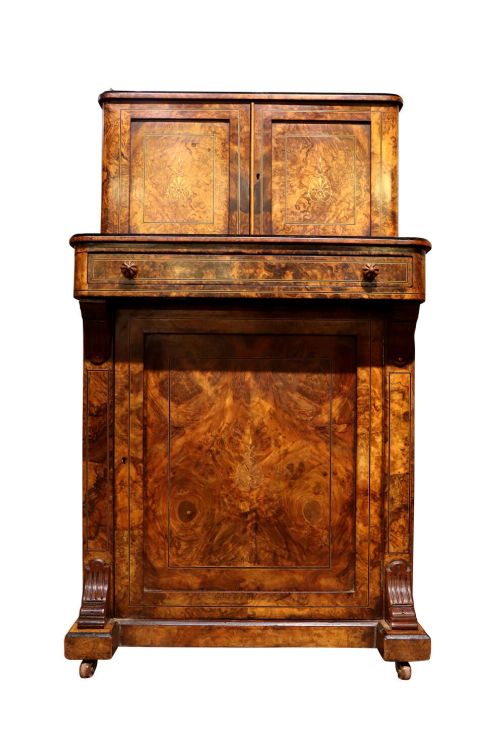
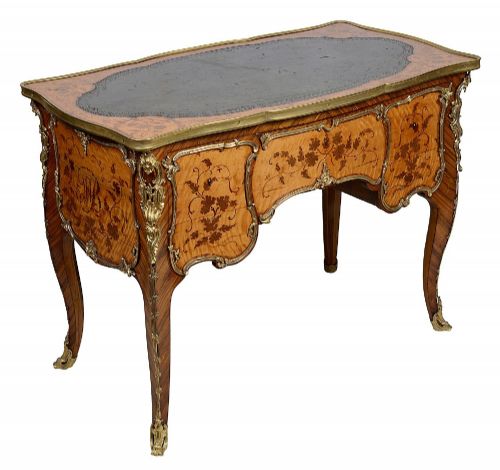
These marquetry bureau de dame writing desks bring French elegance into the home, offering compact workspaces dressed in rich veneers.
Marquetry Bureau De Dame
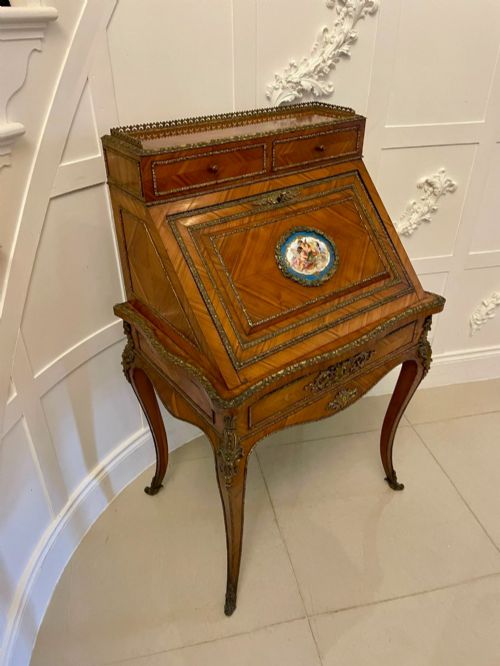
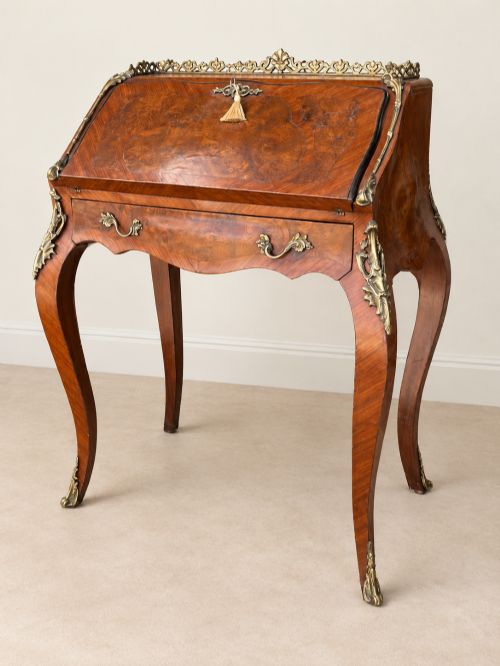
A marquetry bureau de dame is a ladies writing desk designed for private correspondence and light paperwork, emerging predominantly in nineteenth-century French revival pieces. Buyers looking at this page encounter compact writing furniture, often styled in the Louis XV manner or as a bonheur-du-jour.
The prevailing examples span the Victorian era and the broader nineteenth century, frequently incorporating slender cabriole legs and fitted upper tiers. These desks served intimate chambers and boudoirs, functioning as both practical writing surfaces and decorative showpieces.
Most entries reflect French taste, whether made abroad or imported for the Victorian drawing room. The selection focuses tightly on ladies desks and related writing tables utilising walnut, rosewood and kingwood timbers.
How they were made
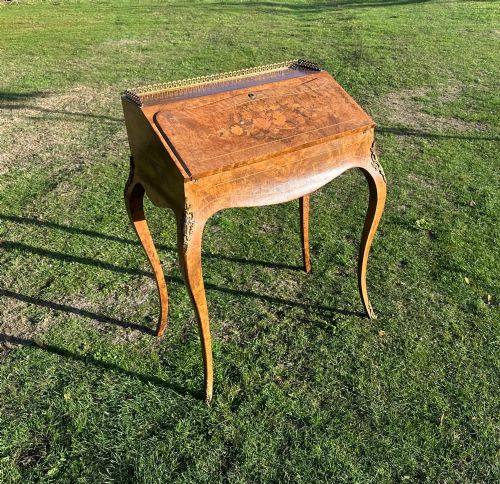
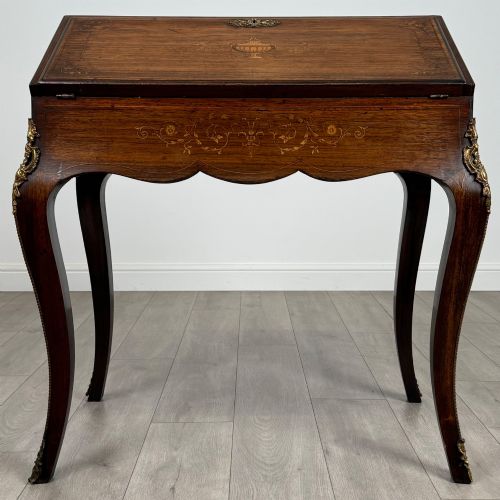
Cabinet makers built these desks using foundational carcases of walnut or mahogany, overlaid with figured veneers such as burr walnut, kingwood and rosewood. Floral and geometric marquetry inlay added pictorial interest across the fall front and writing surfaces.
Ormolu mounts, gilt metal details and brass inlays were cast and applied to accentuate the serpentine outlines and protect vulnerable corners. These metallic accents define the French rococo revival aesthetic seen across the selection.
Marquetry Bureau De Dame Retail Price Guide 2026
Typical asking prices for marquetry bureau de dame among the pieces listed under this phrase on Sellingantiques today, from the lower quarter to the upper quarter. They describe what is for sale here now, not the wider market.
What varies in quality
Quality rests in the crispness of the marquetry cutting and the choice of timber figures, where exhibition pieces display meticulously matched grains and detailed floral motifs. Lesser examples rely on simpler geometric stringing and standard veneer selections.
The weight and finish of the ormolu mounts also set pieces apart, with finer desks showing chased details rather than plain cast metal. Structural harmony in the serpentine curves and the integration of the interior pigeonholes further distinguish workshop standards.
Paul Sormani
The Marquetry Bureau De Dame Glossary
- Bureau de dame
- A ladies writing desk, typically featuring a sloping fall front that conceals small drawers and pigeonholes. These items originated in France and gained popularity during the nineteenth century.
- Marquetry
- The art of applying small pieces of veneer to a structure to form decorative patterns or pictures. Craftsmen use contrasting timbers to create floral or geometric designs.
- Ormolu
- Gilded bronze mounts applied to furniture for decorative effect and edge protection. This technique is prominent in French revival pieces.
- Bonheur-du-jour
- A small light desk featuring a tiered superstructure with shelves or small drawers above the main writing surface. It became a fashionable form of lady's writing furniture in the nineteenth century.
- Kingwood
- A dense, richly grained tropical timber utilised for contrasting veneers in fine cabinet making. It displays dark violet and brown tones.
Marquetry Bureau De Dame: Frequently Asked Questions
What is a bureau de dame?
A bureau de dame is a small ladies writing desk featuring a sloping lid that opens to reveal internal compartments. They were designed for private correspondence in boudoirs and drawing rooms.
These pieces combine functional storage with decorative cabinetry, often incorporating fine veneers and metallic mounts.
How do I date a bureau de dame?
Dating relies on timber choices, construction methods and stylistic revivals seen in the piece. Nineteenth-century examples frequently draw upon Louis XV forms and incorporate specific veneer combinations.
Examine the secondary woods inside the drawers and the style of the brass mounts to narrow down the decade.
Where were these desks used?
These desks were originally intended for private sitting rooms, bedrooms or ladies boudoirs rather than grand libraries. Their neat proportions allowed them to sit comfortably against drawing room walls.
Today, they function well as compact writing tables or feature pieces in modern residential spaces.
What is the difference between a bureau and a bonheur-du-jour?
A standard bureau relies on a sloping fall front to cover the writing surface and interior compartments. A bonheur-du-jour typically incorporates an open or shelved superstructure above a flat writing table.
Both forms served similar social functions for ladies correspondence during the Victorian period.