






Maritime Wall Display
These maritime wall display pieces bring the sea indoors through dioramas, folk art, and salvaged ship timber from the nineteenth and early twentieth centuries.
Maritime Wall Display
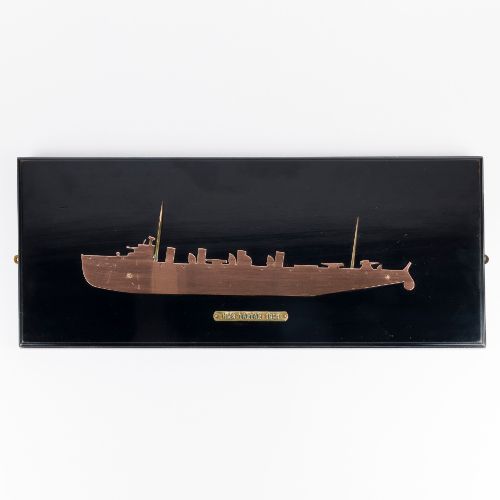
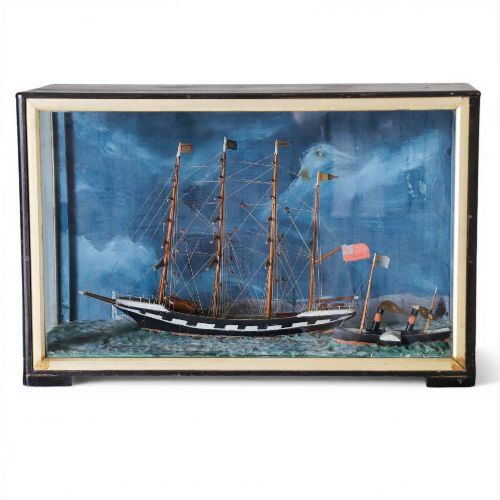
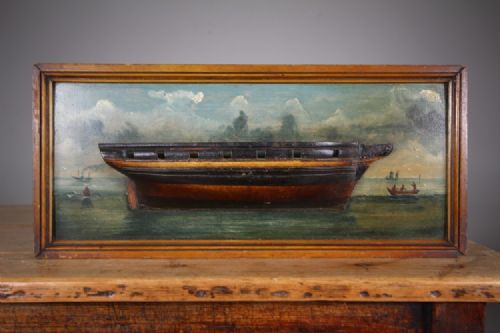
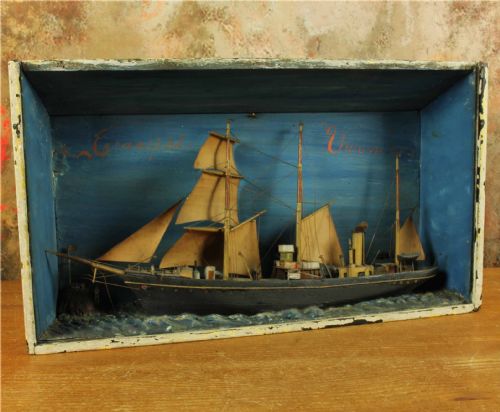
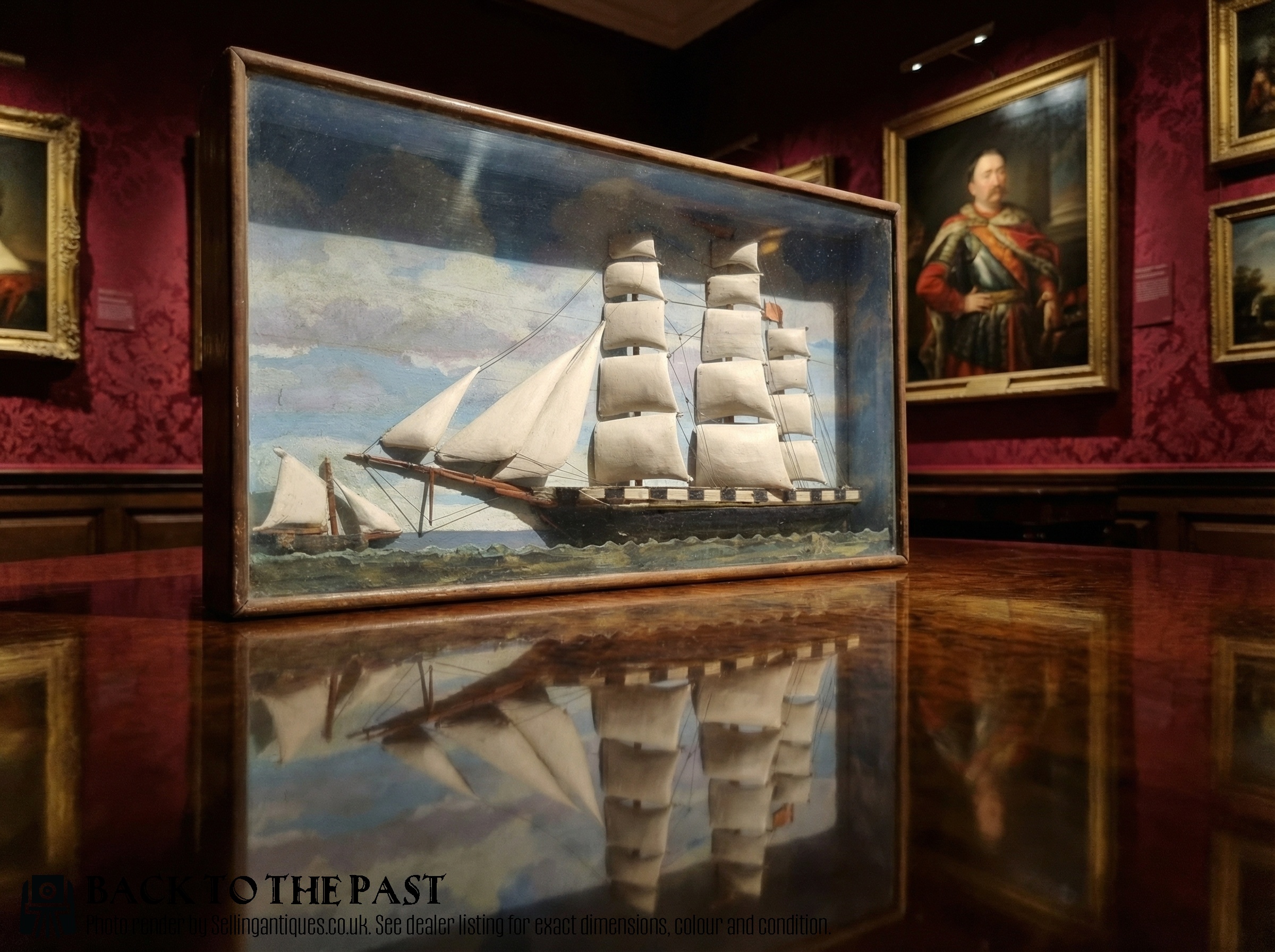
A maritime wall display encompasses shadow box dioramas, ship models in cases, and folk art created during the nineteenth century and the Edwardian period. Buyers look to these pieces to anchor a nautical theme in a room using authentic wooden and canvas constructions.
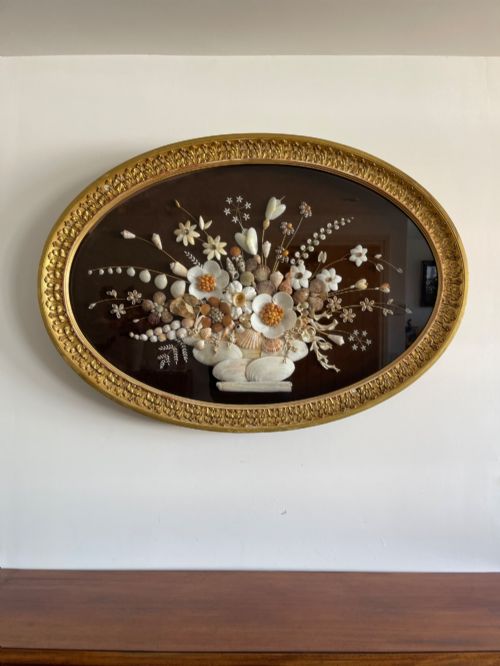
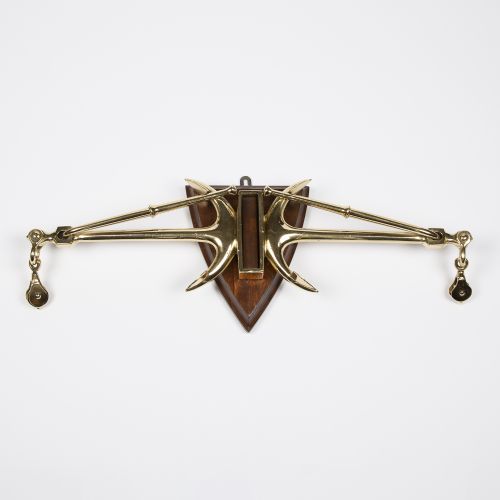
The selections available here rely heavily on shadow box dioramas featuring sailing vessels, alongside related wall decor such as carved tillers, shellwork pictures, and decorative plates. These objects emerge from both British workshops and continental European makers.
Pieces span eras from the eighteen-sixties through the nineteen-thirties, reflecting diverse maritime traditions from naive folk art creations to detailed depictions of named vessels like HMS Tartar. Each item serves primarily as wall-mounted decoration with a distinct nautical history.
Materials and construction
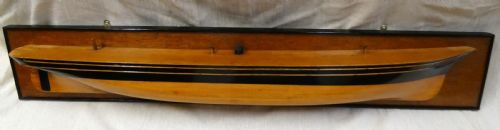
Makers utilised native and imported hardwoods such as mahogany and oak to build shadow boxes, cabinet sections, and model hulls. Brass fittings, copper elements, and glass glazing protect the delicate paper, canvas, and painted seascapes contained within.
Artisans applied oil paint to canvas backgrounds to create Turneresque seascapes, complementing carved wooden ship models rigged with fine thread. Shellwork pictures and naive painted elements demonstrate traditional handicraft techniques employed across the nineteenth century.
Listings feature materials spanning wood, glass, paint, brass, plaster, canvas, mahogany, and copper across Victorian and Edwardian periods.
Distinctions in quality
Superior quality in a maritime wall display rests upon the intricacy of the ship model and the preservation of its original painted backdrop. Finely rigged vessels housed within deep wooden shadow boxes command greater appreciation than simpler plaque forms.
The handling of materials separates masterworks from naive folk art, though both hold distinct appeal. Original glass panes, stable mahogany frames, and documented vessel names elevate the standing of a diorama within a collection.
The Maritime Wall Display Glossary
- Shadow Box Diorama
- A deep, glazed wooden frame enclosing a three-dimensional model set against a painted maritime backdrop. This construction protects delicate rigging and canvas elements from dust and damage.
- Maritime Folk Art
- Decorative objects created by self-taught makers or sailors using readily available materials such as wood, canvas, and shells. These pieces emphasise practical resourcefulness over formal academic training.
- Delft Charger
- A large earthenware plate decorated with tin glazes, often featuring blue painted scenes. Such plates were frequently displayed on walls in maritime households.
- Tiller Yoke
- A steering component attached to a boat's rudder mechanism, repurposed as a wall-mounted item. These wooden pieces display the wear of active marine service.
- Shellwork Picture
- A decorative composition arranged using various small shells to form pictorial designs. These works gained popularity during the nineteenth and early twentieth centuries.
Maritime Wall Display: Frequently Asked Questions
How do I hang a heavy diorama safely?
Shadow box dioramas and wooden ship models carry substantial weight due to their glass fronts and hardwood frames. Secure fixings driven directly into wall studs provide the necessary support for safe display.
Positioning the piece at eye level ensures optimal viewing of the internal ship models and painted seascapes without straining the mounting hardware.
What periods do these pieces represent?
The inventory spans the nineteenth century through the nineteen-thirties, encompassing Victorian maritime traditions and Edwardian craftsmanship. Dates range from eighteen-sixty items up to nineteen-thirty shellwork.
Specific eras are identified through construction techniques, materials like oak and mahogany, and stylistic markers associated with Victorian folk art and industrial gauges.
How should I clean the glass on a diorama?
Glass fronts on shadow boxes require gentle cleaning with a soft cloth and mild glass cleaner applied to the cloth rather than the wood. This prevents moisture from seeping into aged wooden frames and damaging internal canvas paintings.
Regular dusting with a dry feather brush keeps the exterior frames and brass fittings clear without risking the delicate interior rigging.
Are these pieces from British makers?
Many items originate from British workshops and naval traditions, including pieces fashioned from named vessels like HMY Osbourne. Continental European examples, such as French handmade boat models, also appear within the selection.
Provenance is indicated through materials, subjects like British sailing ships, and regional folk art styles characteristic of nineteenth-century coastal communities.