




Maritime Vessel Oil Canvas
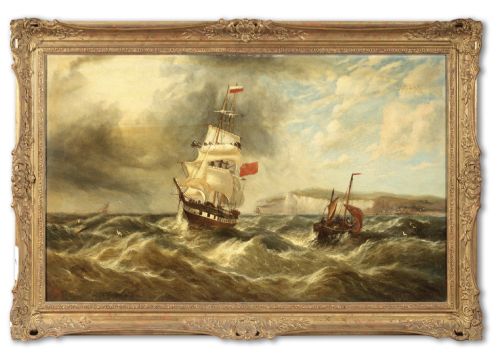
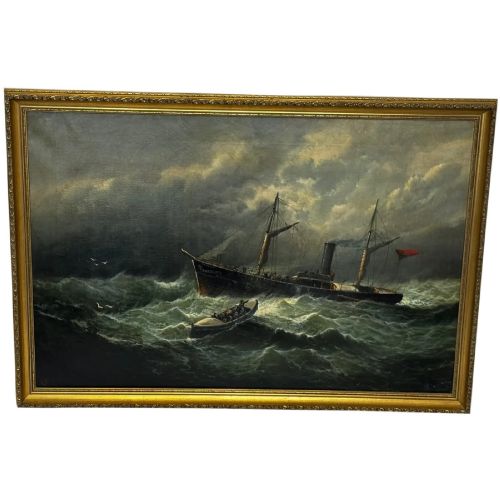
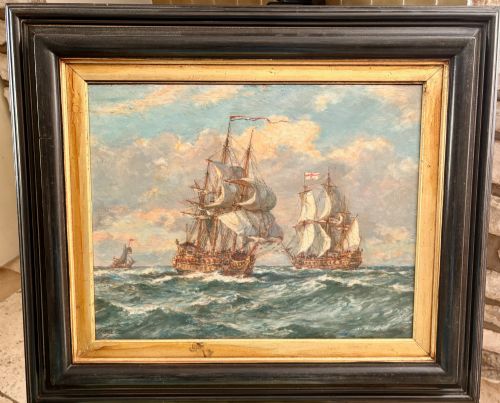
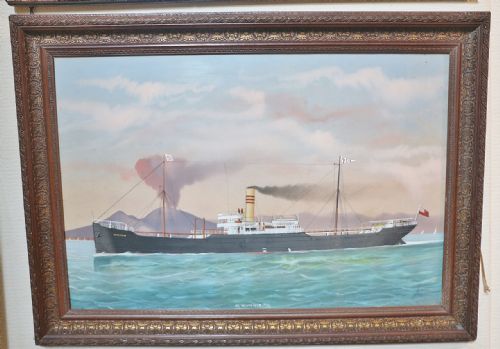
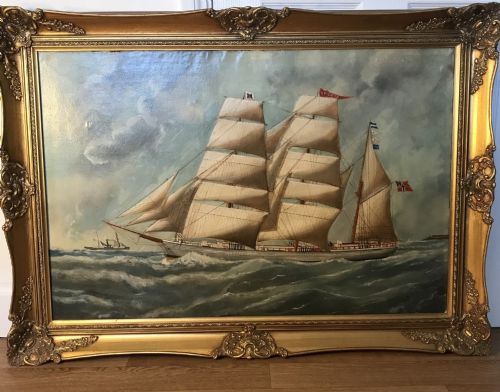
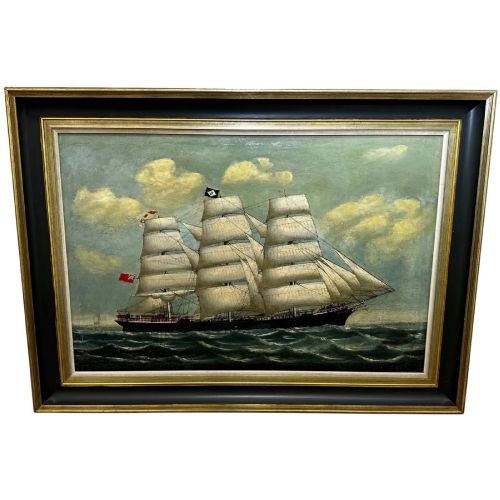
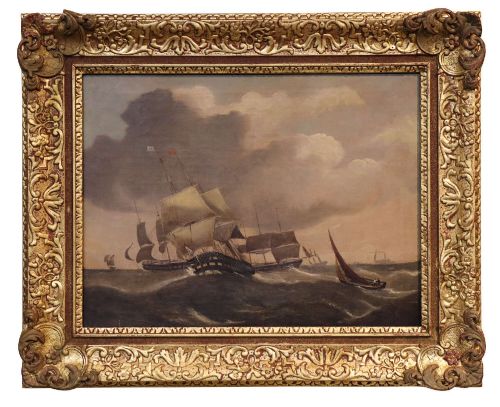
A maritime vessel oil canvas captures the turbulent motion of historic sailing ships and steamers across open water.
Maritime Vessel Oil Canvas
A maritime vessel oil canvas depicts historic ships, merchant vessels, and coastal scenes rendered in oil paint on woven fabric supports. These works range from calm harbour portraits to dramatic depictions of ships in heavy seas and gales.
The selections encountered on this page span from the eighteenth century through the Victorian and Edwardian periods into the mid-twentieth century. Nineteenth-century Victorian marine paintings and twentieth-century coastal studies appear frequently across the listings.
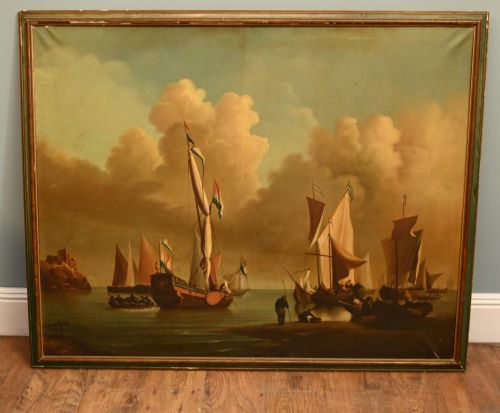
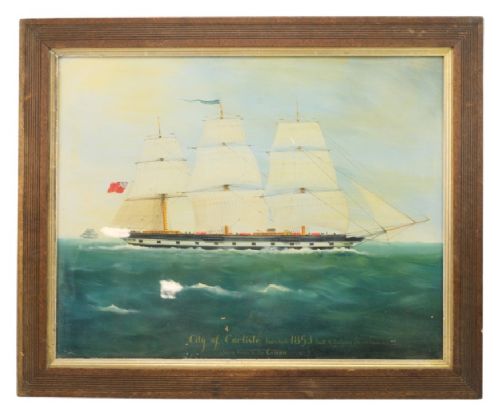
Subjects include named vessels such as the Cutty Sark and the City of Carlisle, alongside merchant barques, fishing trawlers, and naval cruisers. Painters record specific historical vessels alongside anonymous English, Dutch, and European school works.
Materials and construction
Artists apply oil paint directly onto stretched canvas supports using traditional brushes and palette knives to build texture in sea foam and storm clouds. The tactile quality of oil paint allows for the depiction of choppy water and rolling waves.
Many surviving pieces retain their original wooden frames, often finished in giltwood, gilt, or gold leaf to complement the maritime subject matter. Wooden stretchers hold the canvas taut, though older works often show historic relining or canvas stabilisation.
Several Victorian captains commissioned pierhead paintings to settle bar bets regarding the exact speed of their clipper ships.
Elements of quality
Quality rests upon the artist's technical command of maritime anatomy, including the correct rigging of three-masted schooners and the accurate perspective of hulls in motion. Master painters capture light on water and atmospheric pressure in stormy skies with precision.
Provenance and documentation elevate certain works, particularly when a painting identifies a specific ship, builder such as Harland and Wolff, or documented captain and route. The handling of water movement, from calm harbour reflections to violent gale force waves, distinguishes accomplished hands from standard pierhead painters.
Reginald Arthur Borstel·John Rose Miles·William Broome·Bernard Gribble·Bonaventura Peeters·Bernard Benedict Hemy·Lai Fong·Daniel Sherrin·George Shaw·Hendrik Willebrord Jansen·Ah Hee Studio·Dion Pears·George Gregory·Marie-Edouard Adam·Ebeneezer Colls·Gustave de Breanski·William Shayer·Joseph Heard·Paul Jean Clays·John Davison Liddell
The Maritime Vessel Oil Canvas Glossary
- Pierhead painting
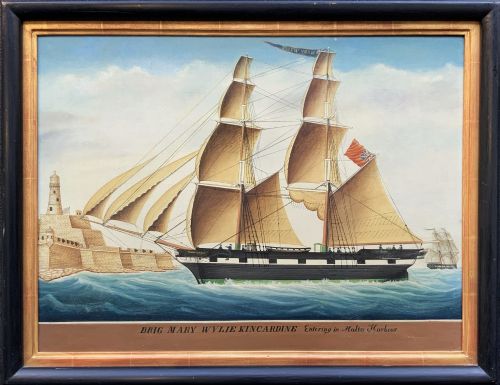
- A specific genre of ship portrait created for sailors and shipowners, typically showing a vessel departing or arriving at a known port. These works prioritize accurate depictions of hull design and rigging over artistic licence.
- Barque
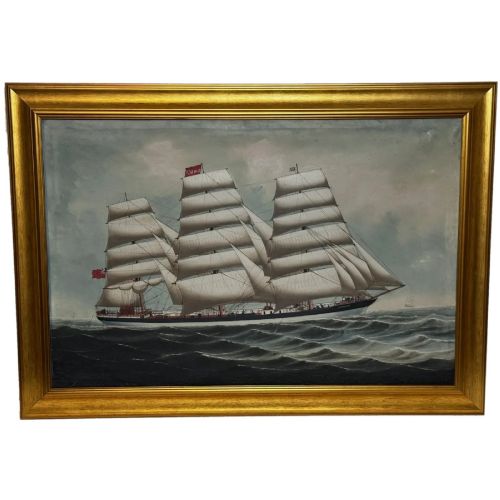
- A sailing vessel with three or more masts having the fore and mainmasts square-rigged and the mizzenmast fore-and-aft rigged. This rig appeared frequently on merchant routes during the nineteenth century.
- Giltwood
- Wood carved and prepared with gold leaf or metallic powder to create a gilded frame finish. Many nineteenth-century marine canvases retain these decorative surrounds.
- Marine art
- Painting or visual representation celebrating ships, sea battles, coastal views, and maritime history. This genre encompasses both calm harbour scenes and violent sea battles.
- Relined
- A conservation process where an older, weakened canvas receives structural support from a new backing fabric attached with adhesive. This process preserves historic oil paintings against sagging.
Maritime Vessel Oil Canvas: Frequently Asked Questions
How do I identify the age of a maritime oil painting?
Examine the canvas preparation, stretcher construction, and the specific rigging style of the depicted vessels. Eighteenth and nineteenth-century works often utilise hand-woven linen canvas and period-specific wooden stretchers.
Clothing styles on any visible figures and the architectural details of coastal buildings or lighthouses in the background provide further chronological markers.
What is a pierhead painting?
A pierhead painting is a traditional ship portrait commissioned by captains or shipowners to record a specific vessel. These works usually feature the named ship shown broadside near a recognizable harbour or lighthouse.
Artists working in this genre focused on accurate technical details regarding masts, sails, and hull proportions rather than idealized atmospheric effects.
How should I hang an antique oil painting?
Select a wall space away from direct sunlight, heating vents, and damp conditions to protect both the oil paint and the canvas support. Ensure the hanging wire and wall fixings match the weight of the heavy giltwood frame.
Maintain stable indoor humidity levels to prevent the canvas from expanding or contracting excessively over time.
Why do some marine paintings show rough seas?
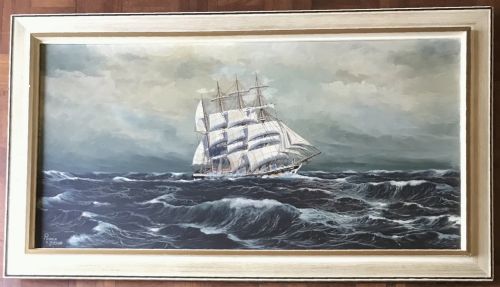
Stormy seas and gales allowed artists to demonstrate their mastery of dramatic light, turbulent water, and atmospheric tension. Shipwrecks and heavy weather scenes were commercially popular during the Victorian era for their emotional impact.
These compositions also highlighted the resilience of merchant vessels and rescue crews facing treacherous coastal waters.