



Maritime River Landscape
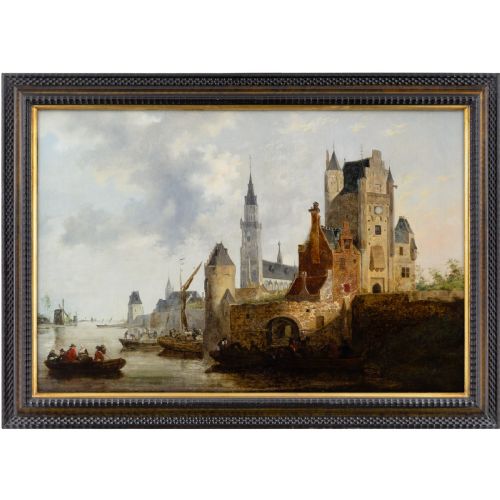
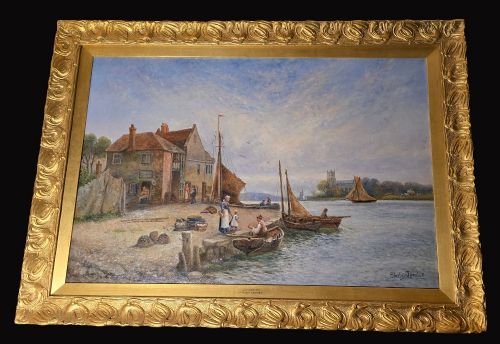
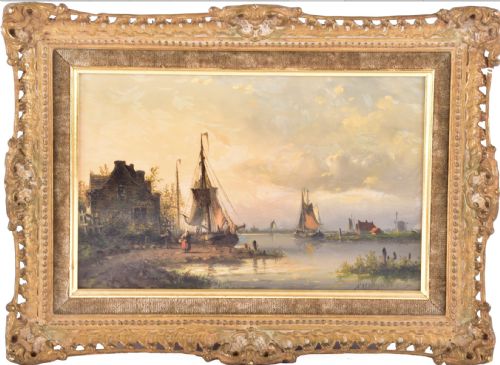
These maritime river landscape works capture working waterways and historic ports through nineteenth and twentieth century brushwork.
Maritime River Landscape
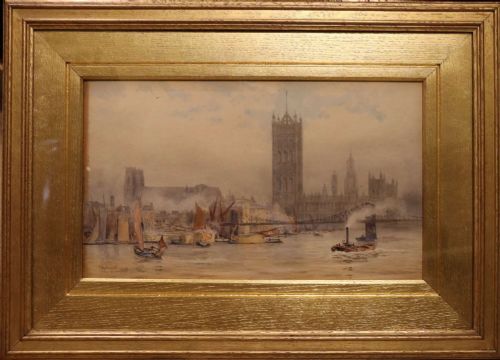
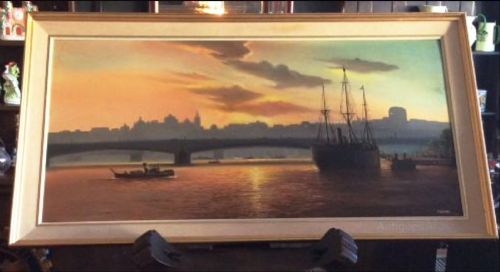
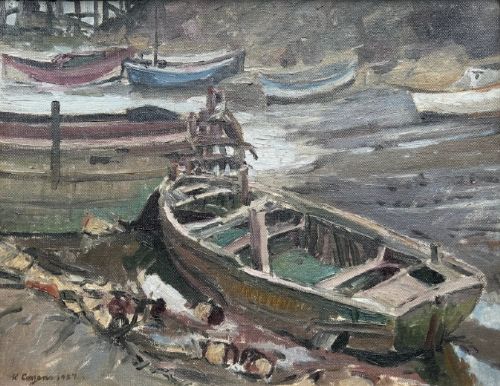
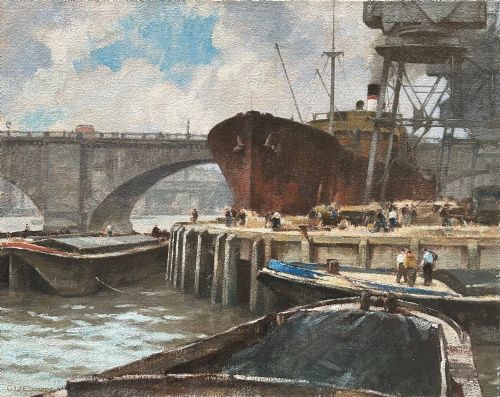
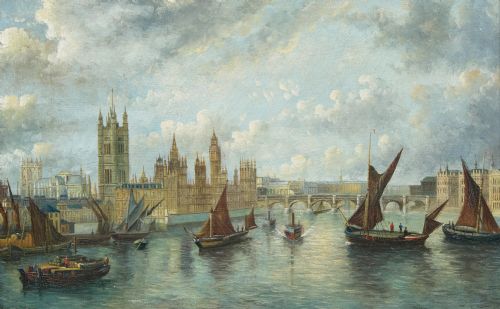
A maritime river landscape depicts working waterways, tidal basins, and urban quaysides, capturing vessels from traditional barges to sailing clippers against the backdrop of bridges and city skylines. When exploring this genre, buyers encounter works spanning from the early nineteenth century through the mid-twentieth century, with Victorian pieces holding a strong presence.
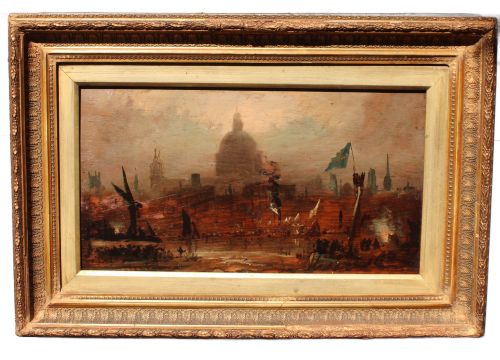
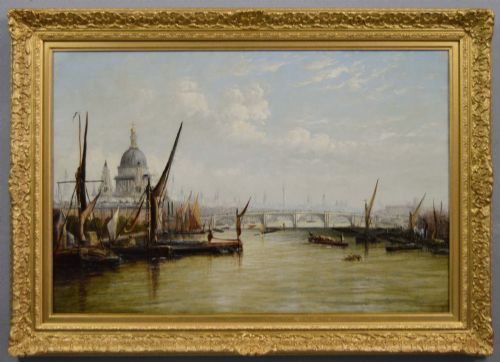
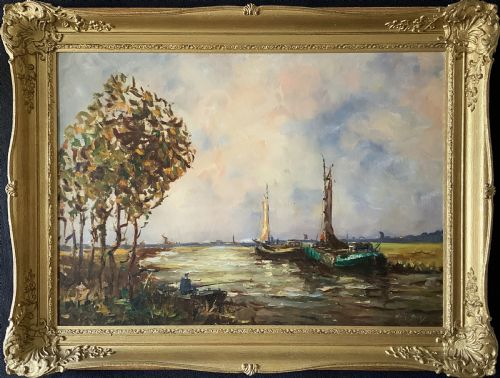
The compositions range from panoramic watercolours of the River Thames in London to continental canal scenes and harbour views in Yorkshire and Holland. Works frequently record specific historical locations, such as the Houses of Parliament, St Paul's Cathedral, and various bustling industrial pools.
Collectors find that these paintings serve as both historical records of changing ports and evocative studies of light upon water. The typical offerings on this page combine topographical accuracy with the atmospheric painting styles of British and continental artists.
Quality Variations
Quality in these maritime scenes rests upon the artist's command of perspective, handling of light, and ability to render water moving beneath vessels and bridges. Superior examples demonstrate confident brushwork and precise topographical draughtsmanship rather than mechanical reproduction.
The distinction between standard works and finer pieces also lies in the atmosphere achieved, where skilled artists balance the solid weight of industrial shipping with the fluid, shifting conditions of weather and tide.
Maritime River Landscape Retail Price Guide 2026
Typical asking prices for maritime river landscape among the pieces listed under this phrase on Sellingantiques today, from the lower quarter to the upper quarter. They describe what is for sale here now, not the wider market.
Several artists clearly braved chilly towpaths to capture frozen quays and misty river traffic before the morning fog lifted.
H. Medlycott·Kenneth Cozens·Francis Moltino·Willem Bos·William Frederick Settle·Charles William Wyllie·Thomas Bush Hardy·Edward Henry Eugene Fletcher·Charles Harmony Harrison·William Wyld·Armand Guillaumin·Henry Barlow Carter·Frank W. Scarborough·Robert Anderson·Hubert Thornley·Fred Lawson·Ludwig Hermann·Godwin Bennett
The Maritime River Landscape Glossary
- Watercolour
- A painting method where fine pigment is suspended in a water-based, translucent solution applied to paper. It allows for luminous, rapid studies of changing river light.
- Oil on Canvas
- A traditional technique utilising pigments bound in drying oil applied to stretched fabric. This medium provides deep tonal variation and durable texture.
- Seascape
- A work depicting the sea, ocean, or tidal river views, often focusing on shipping and coastal weather. These pieces frequently record specific maritime vessels.
- Townscape
- A painting or watercolour focusing on urban views, bridges, and quaysides alongside waterways. These provide valuable historical records of nineteenth-century city architecture.
- Impressionism
- An art style characterised by relatively small, thin yet visible brush strokes and open composition. It emphasises accurate depiction of light and its shifting qualities.
Maritime River Landscape: Frequently Asked Questions
What subjects appear in maritime river landscapes?
These works feature working rivers, bustling ports, historic bridges, and various shipping vessels ranging from Thames barges to sailing clippers. Artists often set these scenes against recognizable urban landmarks and quaysides.
Views span from London and Yorkshire waterways to continental canals and harbours in Holland, France, and Spain, recording the daily activity of historic trade routes.
How do I date a river landscape painting?
Dating relies upon visible architectural details, such as bridges or demolished buildings, alongside the clothing styles of figures on the quays. Costume and vessel types often provide reliable clues to the decade.
Signatures, artist exhibition records, and framing materials further help narrow the timeframe, particularly for Victorian and early twentieth-century works.
Where should I hang these paintings?
These atmospheric watercolours and oil paintings suit traditional studies, living rooms, or hallways where natural light can enhance their subtle tones. Proper placement avoids direct sunlight to protect watercolours and canvas from fading.
Pairing them with period wooden furniture or neutral walls allows the maritime subject matter and historical character to stand out clearly.
Are watercolours as durable as oils?
Watercolours require framing behind glass with acid-free mounts to protect the paper and pigments from moisture and ultraviolet light. When properly housed, they remain remarkably stable over generations.
Oil paintings on canvas offer greater physical resilience against environmental factors, though both mediums benefit from stable indoor humidity and temperature.