





Maritime Fishing Boat Painting
A maritime fishing boat painting captures the raw energy of coastal life, offering collectors a direct window into nineteenth and twentieth-century seafaring traditions.
Maritime Fishing Boat Painting
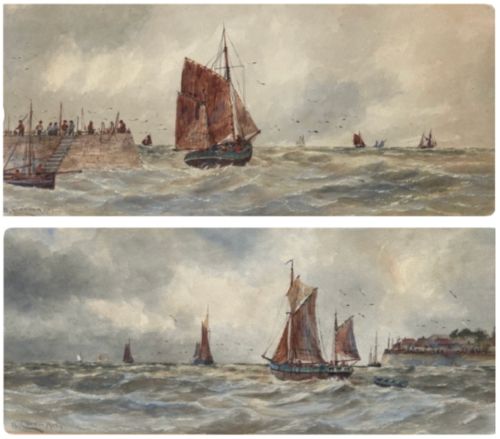
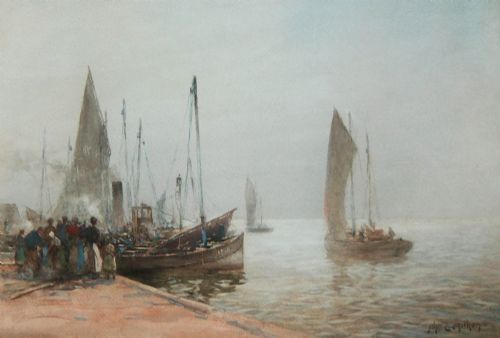
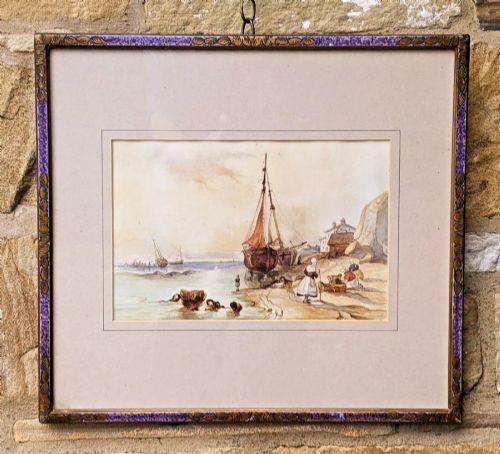
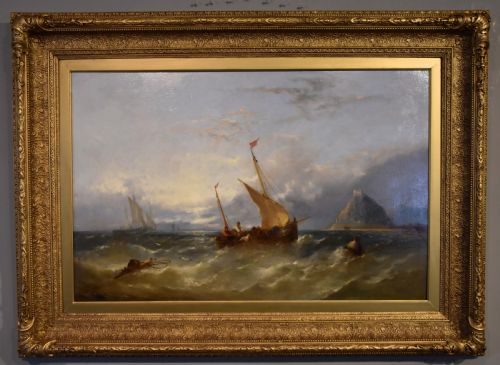
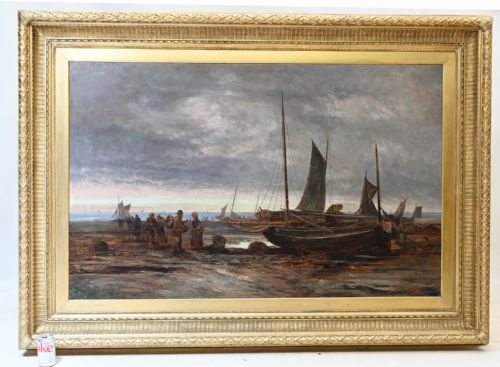
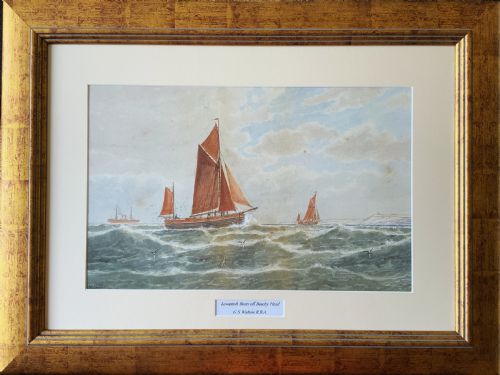
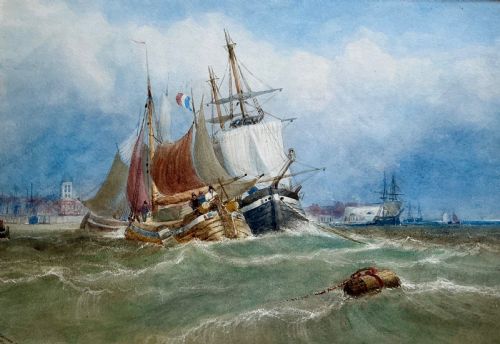
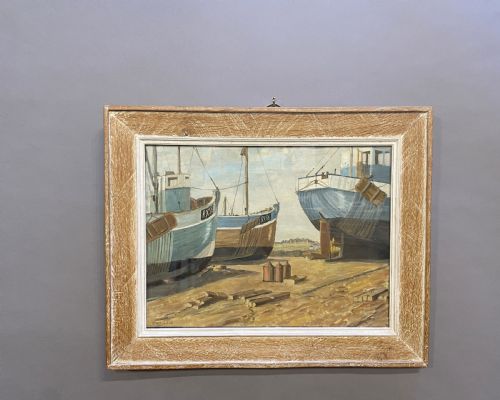
A maritime fishing boat painting depicts working vessels navigating coastal waters, harbours, and choppy seas, capturing the daily labour of fishermen. These works range from intimate watercolours to large-scale oil paintings on canvas and board.
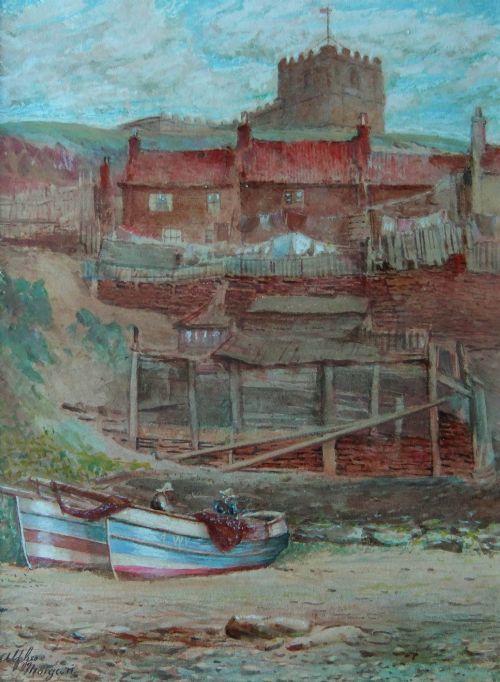
The selections available here lean heavily into Victorian and Edwardian marine art, alongside early to mid-twentieth-century British and continental interpretations. Buyers frequently encounter depictions of named fishing ports such as Whitby, St Ives, and Scarborough.
The tradition spans from detailed nineteenth-century academic recordings to looser post-impressionist and British Impressionist brushwork. Most pieces focus closely on the hulls, sails, and rigging of working vessels against shifting coastal skies.
Materials and Technique
Artists relied primarily on oil paint applied to canvas, wood panels, or card to build rich textures that could convey the weight of heavy seas and weathered wooden hulls. Watercolour pigment on paper was utilised extensively for lighter, more luminous atmospheric effects in coastal scenes.
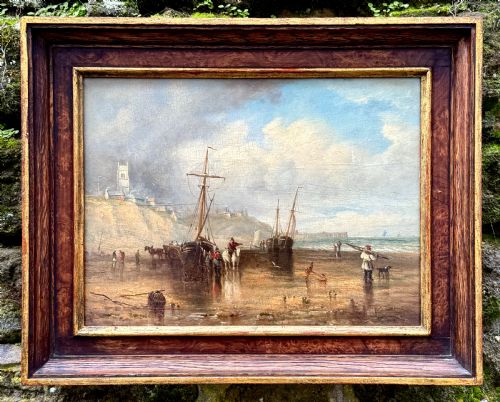
Brushwork varies from tight, academic precision recording every rope and sail to vigorous, impasto applications capturing the movement of wind and water. Many works are preserved within their original giltwood or moulded frames, which complement the maritime subject matter.
Recorded locations include named British harbours such as Whitby, St Ives, and Scarborough alongside continental ports.
Assessing Quality
Quality rests upon the artist's command of maritime atmosphere, anatomy of rigging, and spatial depth within the choppy water. Superior examples demonstrate a confident handling of light reflecting off wet surfaces and sails filled with wind.
Compositional balance separates standard decorative pieces from finer works, where the placement of the fishing boat anchors the entire seascape and guides the viewer's eye across the canvas.
James Orrock·George Stanfield Walters·Charles Napier Hemy·Thomas Bush Hardy·Gustave De Bréanski
The Maritime Fishing Boat Painting Glossary
- Impasto
- Paint applied thickly to a canvas or board, standing out in relief to give a three-dimensional texture to breaking waves or rough seas. This technique adds tactile energy to the surface of the painting.
- Giltwood
- Wood carved and covered with a thin layer of gold leaf, commonly used for traditional frames on nineteenth-century oil paintings. It provides a warm, reflective border that enhances the colours within the artwork.
- Wash
- A thin, translucent layer of diluted watercolour pigment applied to paper to create smooth skies or transparent layers of water. Artists control the water content to achieve soft gradients.
- Board
- A rigid flat surface made of wood or compressed material used as a substitute for stretched canvas. Many twentieth-century painters favoured this substrate for its stability and immediate tooth.
Maritime Fishing Boat Painting: Frequently Asked Questions
How do I date a marine painting?
Dating relies on stylistic clues, costume details of any figures on board, and the rig of the fishing vessels depicted. Frame styles and artist signatures or exhibition labels on the reverse also provide solid chronological markers.
Material analysis of the canvas support and pigments can further narrow down the decade of creation when documentation is scarce.
Where should I hang a large maritime painting?
These works demand a prominent wall with stable environmental conditions, away from direct sunlight and excessive humidity. Large oil paintings require secure wall anchors to support the weight of the canvas and heavy frame.
Placing the piece at eye level in a principal room allows the dynamic coastal brushwork and atmospheric depth to be properly appreciated.
Are watercolours more fragile than oil paintings?
Watercolour paintings on paper are more sensitive to light exposure and moisture than oil paintings on canvas or wood. They require protective framing behind glass with acid-free mounts to prevent fading and paper degradation.
Oil paintings possess a durable surface that withstands ambient room environments more resiliently, though both mediums benefit from stable indoor climates.
What distinguishes British marine art from continental schools?
British marine art frequently captures the specific grey-blue light, tidal variations, and rugged cliffs of local shores like Cornwall and Yorkshire. Continental works often introduce different atmospheric tones and architectural styles characteristic of European ports.
Brushwork and colour palettes vary to reflect the distinct weather patterns and maritime traditions of different coastal regions.