



Maritime Figure Sculpture
Maritime figure sculpture captures centuries of seafaring life in carved wood, bronze, marble, and shell, offering a tangible link to maritime heritage.
Maritime Figure Sculpture
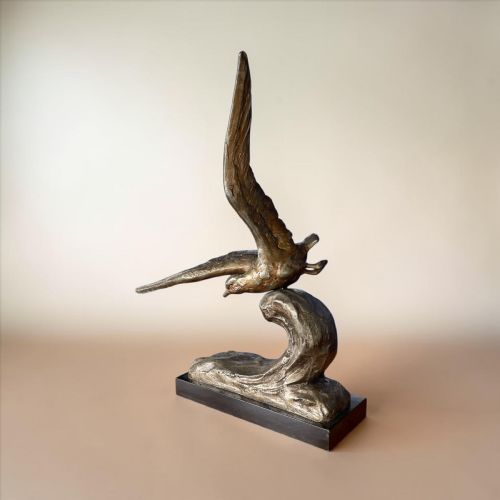
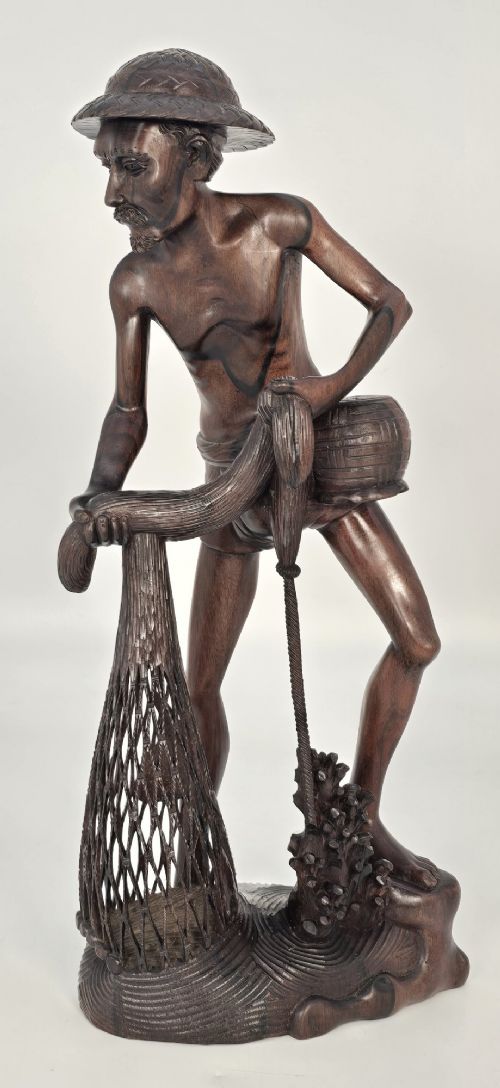
Maritime figure sculpture encompasses three-dimensional representations of sailors, fishermen, naval gentlemen, and sea life created across the nineteenth and early twentieth centuries. These pieces reflect diverse cultural origins, ranging from French sailor sailorwork to Inuit tribal carvings and British folk art. Collectors encounter various forms here, including hardwood carvings of fishermen, bronze studies of albatrosses, and whimsical folk art whirligig signalmen.
The objects span multiple distinct historical periods, featuring items from the nineteenth century alongside later Art Deco examples from 1930. Forms vary widely from practical folk art whirligigs and Pitcairn flying fish to formal bronze busts and ceramic bisque figures on fishing boats. Each piece tells a specific story of coastal life, maritime trade, or naval history through the eyes of period makers.
Materials and construction methods
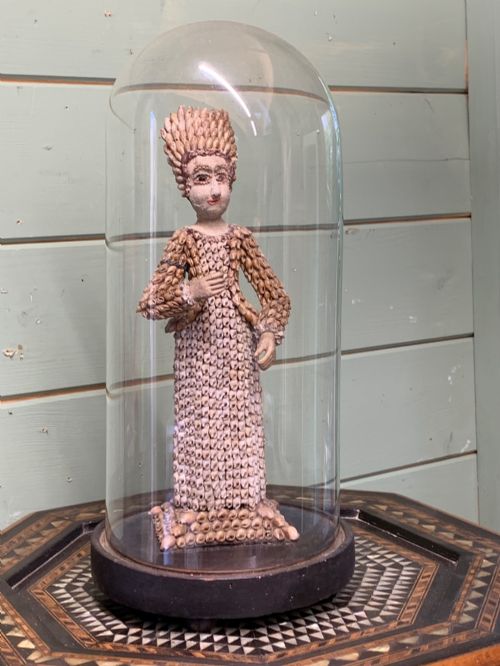
Carvers utilised native and exotic woods such as hardwood and whalebone, shaping figures with traditional hand tools to capture the movement of fishermen and sea creatures. Bronze was cast and mounted on black marble plinths, particularly in later twentieth-century studies of birds on the wing. Other works incorporate unexpected natural media, including delicate seashells painstakingly assembled into sailors' figures.
The listings span the nineteenth century up to 1930, uniting traditional folk carvings with Art Deco bronzes.
Distinctions in quality and execution
Material authenticity and structural integrity heavily influence the standing of any given sculpture. Works utilising unusual mediums, such as whalebone or intricate seashell arrangements, derive distinction from the patience and skill required to preserve fragile components. Original paint surfaces and minimal restoration preserve the historical integrity that discerning collectors prioritise.
The Maritime Figure Sculpture Glossary
- Bisque
- Unglusted porcelain fired to a porous matte state. This finish was frequently utilised for nineteenth-century figurines placed upon decorative ceramic fishing boats.
- Whirligig
- A wind-driven folk art mechanism with moving parts. In maritime contexts, these often depicted sailors or signalmen whose arms rotated in the breeze.
- Plinth
- A heavy base supporting a sculptural study. Many bronze bird sculptures in this field utilise contrasting black marble plinths to elevate the composition.
Maritime Figure Sculpture: Frequently Asked Questions
What materials were used?
Carvers and sculptors utilised a broad spectrum of materials depending on regional traditions and the period of creation. Common mediums include hardwood, whalebone, bronze, plaster, and ceramic bisque.
Some specialised pieces incorporate organic coastal elements such as seashells, while display pieces often feature contrasting stone bases like black marble.
How do I date a piece?
Dating relies upon stylistic markers, material analysis, and construction methods associated with specific decades between the early nineteenth century and 1930. Art Deco bronzes exhibit streamlined forms characteristic of the 1930s, whereas folk art pieces often display nineteenth-century hand-carving techniques.
Examining the wear on original paint surfaces and the ageing of materials like hardwood or whalebone provides additional chronological clues.
Where did these carvings originate?
Origin points vary widely, encompassing European coastal workshops, remote islands, and indigenous Arctic communities. Examples include French sailor creations, Pitcairn Island carvings, and Inuit tribal works from northern regions.
Each geographic source imparts distinct cultural techniques and material preferences directly onto the finished sculpture.