


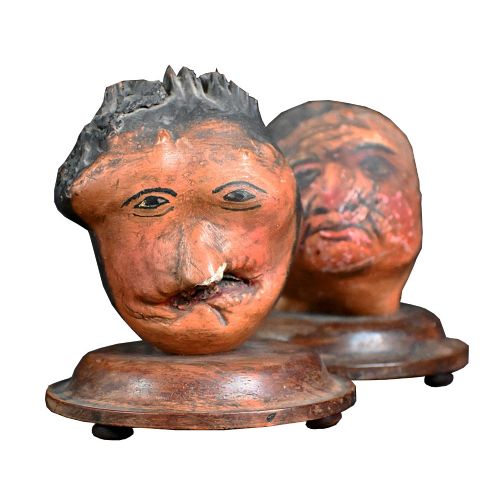


Painted Terracotta Busts
Painted terracotta busts bring character and striking colour to an interior, offering sculptural presence through centuries of artistic tradition.

Painted Terracotta Busts
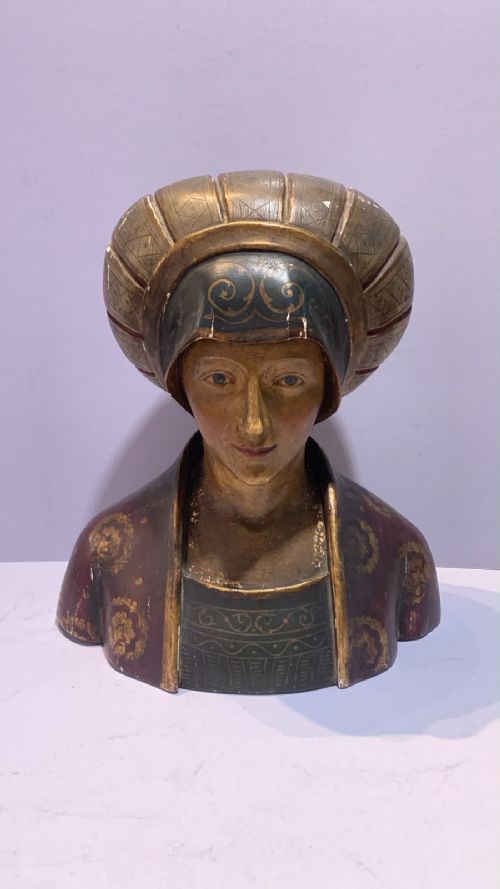
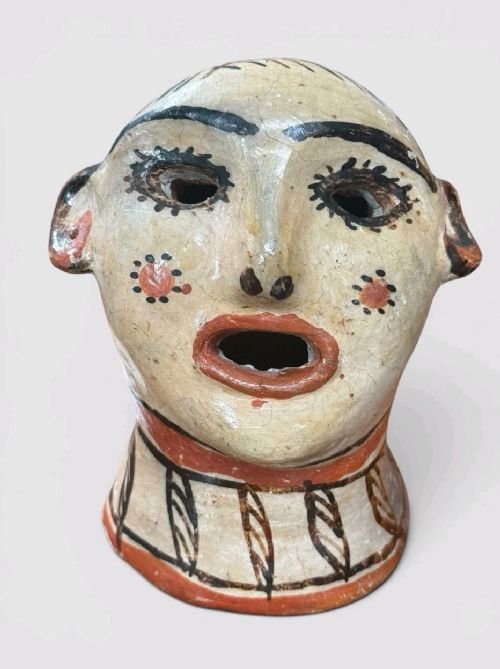
Painted terracotta busts span diverse eras and regions, from classical revivals to folk traditions and ancient tomb figures. When exploring painted terracotta busts, buyers encounter sculptural objects modelled in clay and finished with surface pigments, gesso, or polychrome. The selection ranges from nineteenth-century grand tour portraits and art nouveau figures to Peruvian clay heads and Indian pole tops.
Nineteenth-century European examples dominate the available forms, often channelling classical revival, neoclassical, or renaissance styles. These pieces capture historical subjects, noblewomen, and literary characters like Daphne, rendered with applied colour or bronzed finishes. Alongside these sit regional folk art pieces and earlier archaeological iterations.
Materials and construction
Makers shaped these sculptures primarily from clay or terracotta, sometimes combining the medium with plaster or supporting elements of wood and metal. The raw clay was modelled or cast before drying and firing to achieve a durable ceramic base.
Listings feature terracotta alongside applied paint, pigment, plaster, gesso, and gold leaf across multiple centuries.
Evaluating quality and execution
The preservation and application of the original surface pigment also dictate standing. Skilled polychrome work and intact historical paint layers elevate a sculpture, while later overpainting or heavy surface loss alters the visual integrity of the piece.
Ernst Wahliss·Bernard Bloch
The Painted Terracotta Busts Glossary
- Terracotta
- Fired unglazed clay of a brownish-red colour. It serves as the primary structural material for these sculptural busts and figures.
- Gesso
- A plaster mix applied as a smooth base for painting or gilding. Artisans used it to prepare the clay surface before adding pigments.
- Grand Tour
- A cultural journey undertaken by nineteenth-century europeans seeking classical art and antiquities. Busts from this tradition often copy ancient models.
- Mingqi
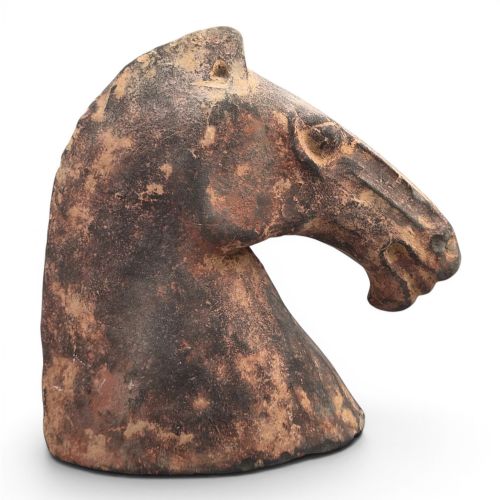
- Chinese burial goods made for the afterlife, including tomb figures and animal heads. These early ceramic pieces form part of the broader sculptural record.
Painted Terracotta Busts: Frequently Asked Questions
How do I clean painted terracotta?
Dust these sculptures gently with a soft, dry brush to protect the delicate surface pigments and painted layers.
Avoid using water, liquid cleaners, or abrasive cloths, as moisture can soften the clay or lift historical paint.
Are these busts heavy?
Terracotta objects possess substantial weight due to the dense fired clay construction.
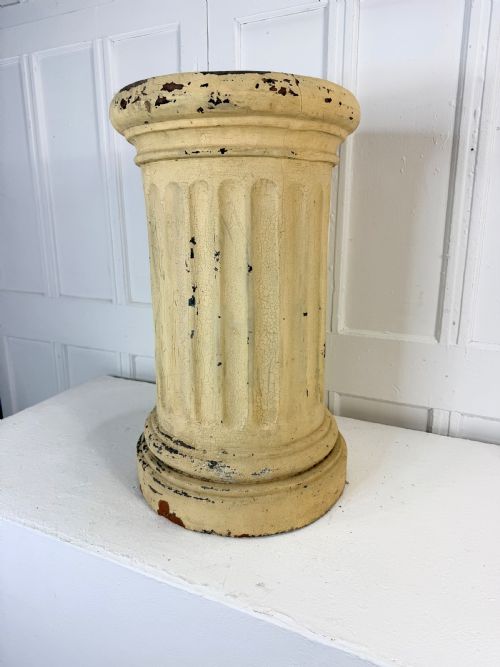
Ensure you place them on sturdy display columns, shelves, or furniture capable of supporting heavy ceramic sculpture.
Where should I display my bust?
Position your sculpture away from direct sunlight and high humidity to prevent the paint and clay from degrading over time.
An interior mantelpiece, bookcase, or dedicated display pedestal offers a stable environment for viewing the piece.
How can I tell the period?
Examine the styling, surface wear, and material characteristics to understand the likely era of creation.
Nineteenth-century grand tour pieces often feature distinct classical revival motifs, whereas folk art traditions display regional stylistic traits.