


Maritime Collectable Ship
These maritime collectable ship pieces bring the tangible spirit of the sea indoors, capturing centuries of naval history and vernacular craftsmanship.
Maritime Collectable Ship
When you search for a maritime collectable ship, you are looking at items that encompass detailed scale models, folk art dioramas in bottles, and larger nautical furnishings like ship's wheels. These objects range from early Victorian iterations to pieces originating in the early twentieth century, reflecting naval and civilian maritime traditions.
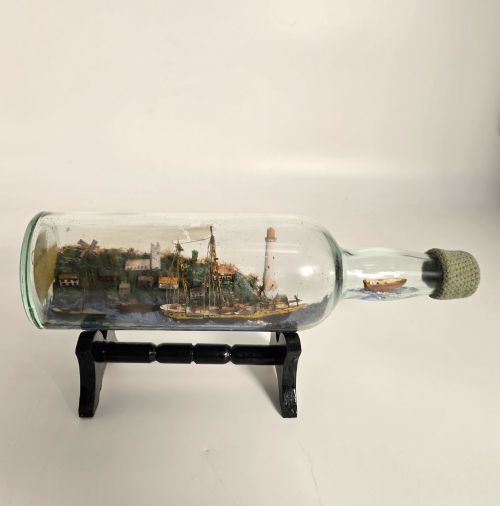
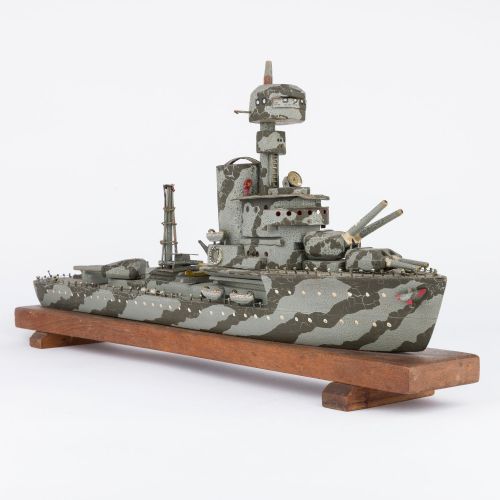
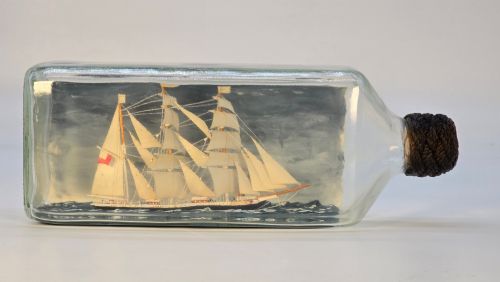
The version you are most likely to meet on this page is the ship in a bottle diorama, often dated around the 1920s or originating from the nineteenth century. Alongside these bottled scenes, scale models of wooden boats, battleships, and steam ships appear frequently, frequently rendered in a folk art style.
How they were made
Makers utilised wood as the primary structural material for hulls, plinths, and wheels, often combining it with metal, brass, and thread to rig the miniature sailing vessels. Glass bottles served as protective enclosures for intricate dioramas, sealed with putty and painted to simulate the sea.
Techniques relied heavily on scratch building and maritime folk art traditions, where makers worked by hand to capture the likeness of three-masted sailing ships, steam ships, and Royal Navy battleships. Paint added surface detail to both the models inside bottles and decorative elements such as pocket watch dials.
Materials documented across the inventory include oak, brass, glass, paint, putty, thread, and rope.
What varies in quality
Quality in a maritime collectable ship depends upon the intricacy of the execution and the preservation of the original materials. Finely rigged miniature vessels with accurate scale proportions demonstrate a higher level of maker skill than simpler, more naive representations.
The integrity of the construction materials also dictates value, particularly in items like ship's wheels or bottled dioramas where undisturbed surfaces and period components remain intact. Pieces that retain their original paint, thread rigging, and glass enclosures without modern intervention represent the upper tier of the range.
Elkington and Co
The Maritime Collectable Ship Glossary
- Maritime Folk Art
- Objects created by self-taught makers or sailors depicting nautical subjects using accessible materials. This style defines many of the bottled dioramas and scratch-built models found in this category.
- Diorama
- A three-dimensional scene enclosed within a container, most notably glass bottles in this category. Makers constructed these to depict sailing ships and steam ships on painted surfaces.
- Scale Model
- A physical representation of a vessel built to accurate proportions relative to the original watercraft. These range from early twentieth-century naval battleships to nineteenth-century wooden boats.
- Scratch Build
- A model constructed entirely from raw materials rather than from a commercial kit. This method underscores the individual maker's ingenuity and hand-working techniques.
- Ship's Wheel
- A large mechanical device utilised aboard vessels to control the rudder and steer. Examples from the nineteenth century often feature robust wooden construction and patinated metal components.
Maritime Collectable Ship: Frequently Asked Questions
How did they fit ships in bottles?
Makers constructed the masts and rigging with hinges or collapsible threads so the entire ship could pass narrowly through the bottle neck. Once inside, strings pulled through the base raised the masts into an upright position.
Permanent adhesives and putty then secured the vessel to the bottom of the glass vessel, creating a stable diorama scene.
How should I display a ship diorama?
Bottled dioramas typically rest on dedicated wooden plinths that keep the cylindrical glass stable on a flat surface. Placing them away from direct sunlight protects the internal painted elements and thread rigging from fading.
Larger items like ship's wheels require secure wall mounting or heavy floor placement to support their substantial wooden and brass weight.
How do I date an antique model ship?
Dating relies on examining the vessel type, such as distinguishing between a nineteenth-century sailing ship and a twentieth-century steam ship or WWI battleship. Construction materials like early glass, handmade brass fixtures, and period paint also provide chronological clues.
Documentation or inscriptions on the wooden plinths occasionally record specific years of completion by the maker.