


Folk Art Ship Model
These folk art ship model pieces bring the texture of maritime history indoors through scratch-built vessels, cased dioramas, and bottles.
Folk Art Ship Model
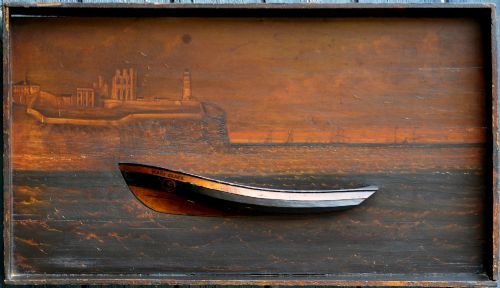
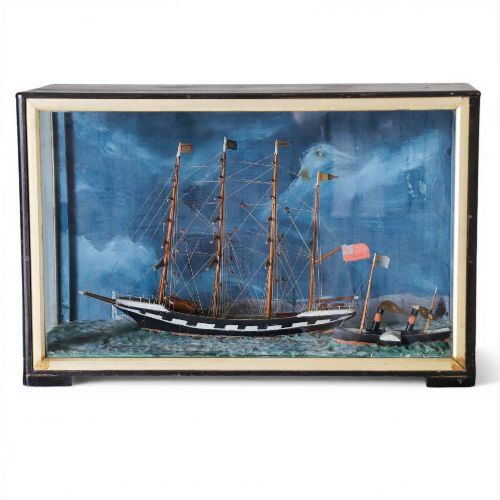
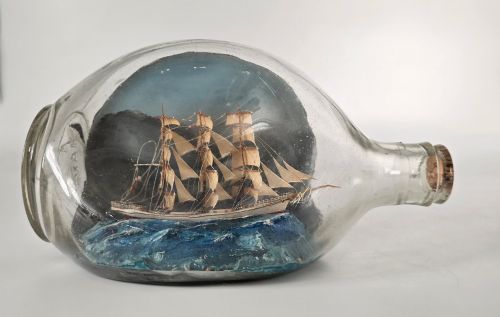
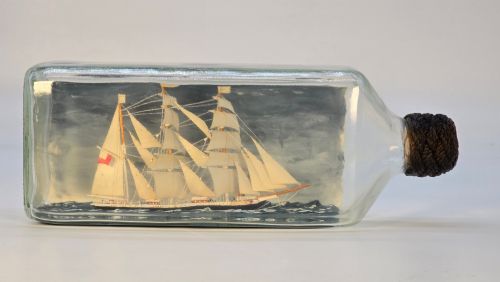
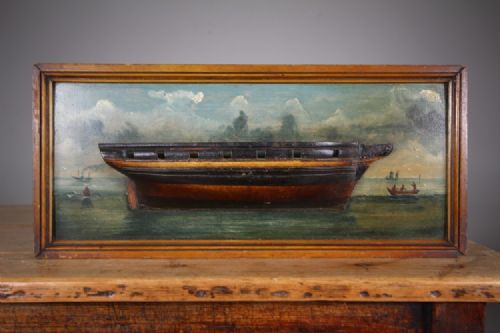
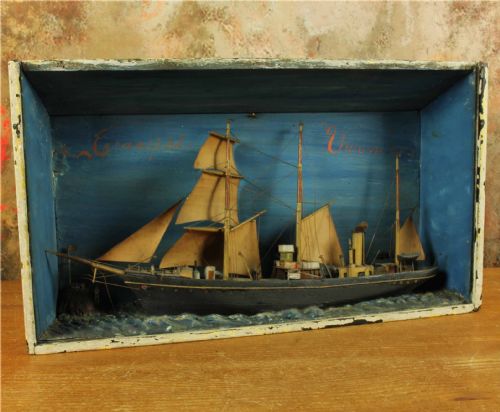
A folk art ship model captures the maritime world through hand-built vessels enclosed in glazed boxes, shadow boxes, and glass bottles. These objects range from nineteenth-century sailing ship dioramas to early twentieth-century scratch-built models on wooden plinths.
The selection here includes multi-masted sailing ships, steam vessels, and racing maritime scenes created by makers working within British, French, and Victorian folk traditions. Pieces often bear specific vessel names such as Sunray, Queen Anne, or Glynllifon, anchoring the work to actual maritime history.
Buyers meet everything from naive wooden hulls to complex enclosed dioramas complete with painted seascapes and canvas sails. These decorative objects preserve vernacular maritime skills passed down through generations of coastal makers.
How they were made
Makers constructed these models using wood, metal, canvas, and thread, often shaping hulls by hand and rigging tiny masts with meticulous care. Painted seascapes provide the backdrop inside shadow boxes and wooden dioramas, giving depth to the enclosed water.
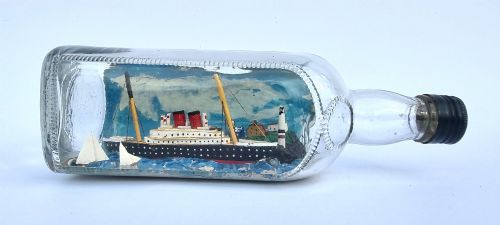
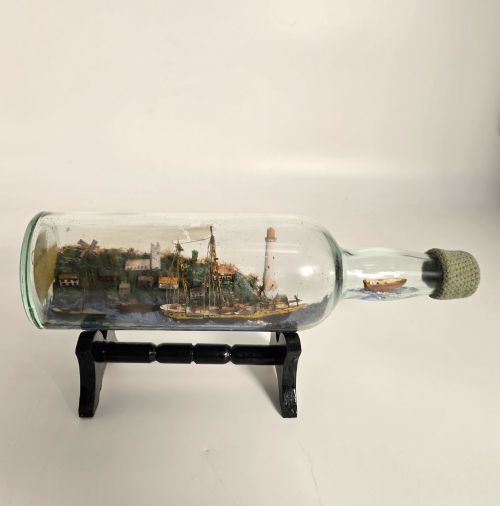
Glass bottles house intricate folding ship models that were assembled through the neck using clever internal mechanisms and thread controls. Putty, plaster, and glass complete the enclosures, sealing the fragile maritime scenes against dust and time.
Several vessels proudly bear real names like Sunray and Queen Anne, proving that even tiny wooden ships enjoy a bit of vanity.
What varies in quality
Quality rests in the precision of the rigging, the complexity of the vessel architecture, and the artistic depth of the painted backdrop. Scratch-built models demonstrating refined detail and original paint surfaces stand apart from simpler vernacular items.
The integrity of the housing container also defines the piece, with well-preserved glass bottles and timber shadow boxes protecting the fragile interior components from alteration.
The Folk Art Ship Model Glossary
- Diorama
- A three-dimensional scene enclosed in a case or box, often featuring a model ship set against a painted maritime backdrop.
- Shadow Box
- A deep, glazed wooden frame designed to display a model ship and create a sense of nautical depth.
- Scratch Built
- A model constructed entirely from raw materials rather than from a commercial kit or pre-fabricated parts.
- Barque
- A sailing vessel with three or more masts having the fore and main masts square-rigged and the mizzen mast fore-and-aft rigged.
Folk Art Ship Model: Frequently Asked Questions
How do I display a ship diorama?
Place your diorama on a sturdy table or shelf away from direct sunlight to protect the painted canvas and delicate thread rigging.
Ensure the room humidity remains stable to preserve the wooden components and glass housing over time.
What periods do these models come from?
The pieces span the nineteenth century through the early twentieth century, encompassing Victorian and Edwardian maritime traditions.
Dates often range from the 1860s up to the 1930s, reflecting changing naval architecture and vernacular crafting habits.
Are ships in bottles difficult to make?
Makers constructed these intricate models with collapsible masts and rigging that could pass through a narrow bottle neck.
Once inside, threads pulled the masts upright and secured the vessel permanently onto a plaster or putty sea base.
How do I identify a folk art ship?
Folk art models display non-standardised, individual construction methods using accessible materials like wood, paint, canvas, and metal.
Makers were often sailors or coastal inhabitants rather than commercial shipwrights, resulting in charmingly naive proportions.