



Marine Vessel Portrait
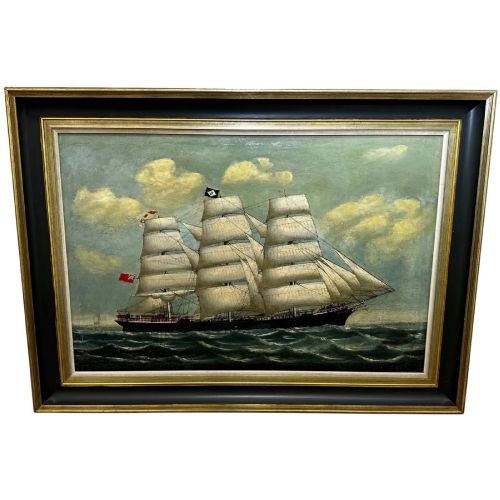
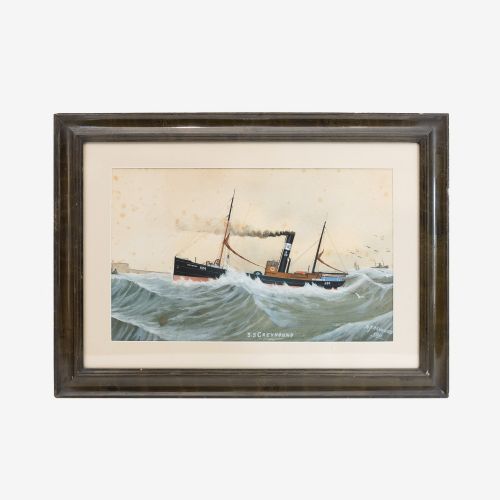
A marine vessel portrait is a specific depiction of a ship, capturing its likeness with the exactitude that owners and captains demanded.
Marine Vessel Portrait
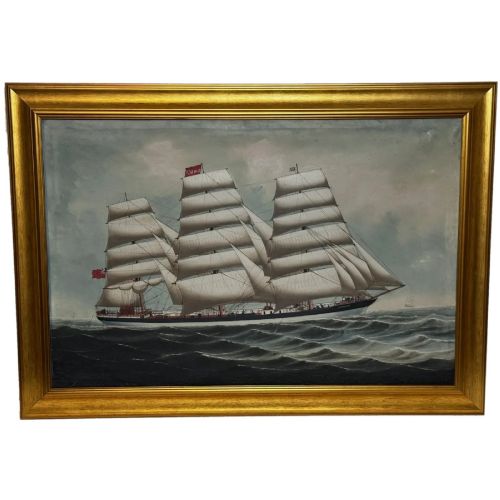
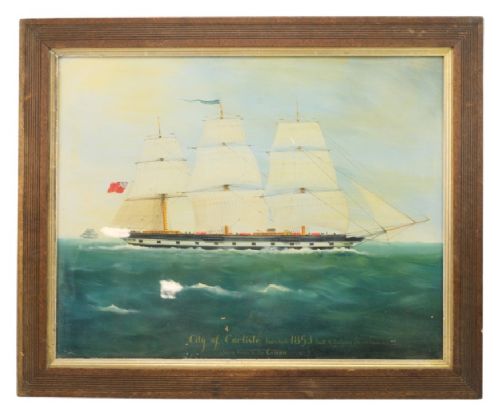
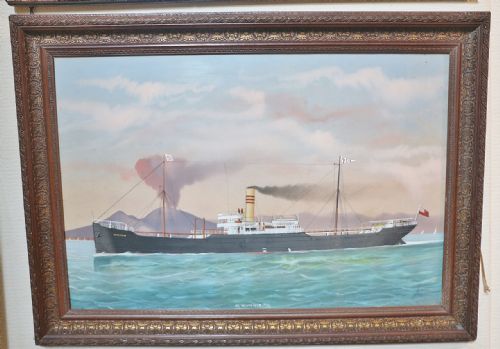
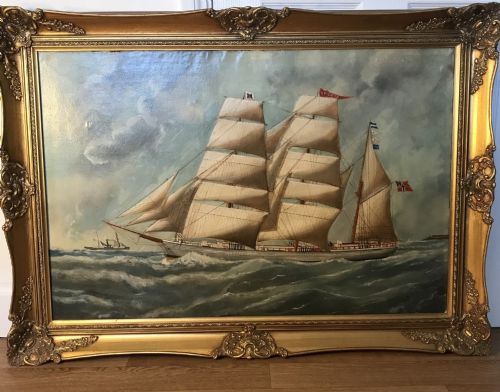
A marine vessel portrait presents a detailed depiction of a named ship, often rendered with architectural precision to satisfy the pride of owners, captains, and crews. These works record specific vessels ranging from steel-hulled liners and ironclad battleships to wooden barques and traditional junks. The selection includes works produced across the nineteenth and twentieth centuries, capturing the evolution of maritime transport through distinct eras.
Most examples encountered here originate from the Victorian and Edwardian periods, alongside early twentieth-century interpretations. These pieces function simultaneously as historical records and works of maritime art, depicting named vessels such as the City of Carlisle or the clipper ship Thermopylae. Buyers find works originating from various global maritime hubs, including British, Neapolitan, and Chinese schools of painting.
The compositions generally focus on the ship itself, often shown under full sail or steam in coastal waters, heavy seas, or foreign harbours like Valletta. Pierhead paintings and formal portraits dominate the selection, prioritising the accurate rendering of rigging, hull shape, and national flags. This focus ensures that each piece serves as a direct visual document of naval and mercantile history.
Materials and Techniques
Artists relied primarily on oil paint applied to canvas or wood panel, utilising the medium's capacity for rich colour and tonal depth to render water, sky, and metallic hulls. Watercolour and gouache on paper also appear frequently, particularly in works produced by port-side artists who needed to capture swift, accurate details for visiting sailors. Giltwood and gold leaf frames frequently enclose these works, providing a formal boundary that enhances the presentation of the subject.
The creation of a convincing ship portrait demanded specialist knowledge of maritime architecture, as rigging, masts, and deck structures had to be rendered with absolute correctness. Painters often worked in busy ports, observing the vessels directly or relying on detailed specifications provided by shipyards like Harland & Wolff. This technical accuracy distinguishes professional marine art from generic landscape painting.
Distinctions in Quality
Quality in a marine vessel portrait rests heavily on the painter's command of ship architecture and maritime perspective. Superior works display a precise understanding of hull lines, sail trim, and the interaction between the vessel and the movement of water. Weaker examples often rely on formulaic waves and generic rigging that fail to convince the eye.
The handling of atmospheric conditions and light further separates accomplished pieces from routine output. The finest paintings capture the specific weight of heavy seas or the clear light of a harbour setting without losing the structural clarity of the ship. The integration of the vessel into its surrounding environment dictates the overall success of the artwork.
Reginald Arthur Borstel·Lai Fong·Alexander Harwood·Vincenzo D’Esposito·Marie-Edouard Adam·Joseph Heard·WF Mitchell·Samuel John Milton Brown·Richard Ball Spencer
The Marine Vessel Portrait Glossary
- Pierhead painting
- A genre of ship portraiture usually commissioned by captains or owners while docked in port, executed by local artists who specialised in accurate vessel likenesses.
- Barque
- A sailing vessel with three or more masts, having the foremast and mainmast square-rigged and the mizzenmast fore-and-aft rigged.
- Gouache
- An opaque watercolour medium used by artists to achieve bright highlights and solid colour areas on paper.
- Giltwood
- Wood that has been coated with a thin layer of gold leaf or gold paint, commonly found on traditional picture frames.
- Seaplane carrier
- A warship designed to carry, launch, and retrieve seaplanes, representing a specific technological phase in naval history.
Marine Vessel Portrait: Frequently Asked Questions
What is a marine vessel portrait?
A marine vessel portrait is a painting or drawing created to record the exact likeness of a specific ship, often commissioned by its owners, builders, or officers.
These works document the maritime history of sail and steam, capturing individual vessels with technical precision.
How were these paintings used?
Ship portraits were typically displayed in shipping company offices, captain's quarters, or family homes to display pride in a specific vessel.
They served as both personal mementoes and official records of mercantile and naval achievement.
How do I identify the ship in the painting?
Many works include the ship's name inscribed directly onto the canvas, within the composition, or on the frame.
Additional clues come from signal flags, port backdrops, and shipping line nomenclature recorded in the title.
Where were these portraits painted?
Artists often worked in major international ports, such as Naples, Hong Kong, or British maritime centres, where ships docked regularly.
Port-side artists observed the vessels directly or relied on shipyard models and commission details.