



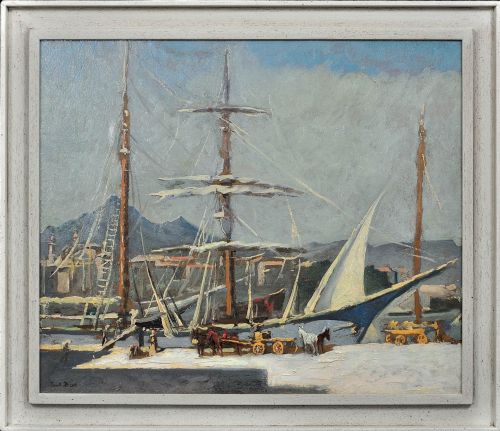
Marine Landscape Art Canvas
A marine landscape art canvas brings the movement of coastal tides and open water directly onto the wall through enduring oil pigment.
Marine Landscape Art Canvas
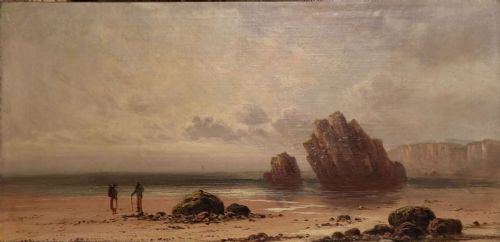
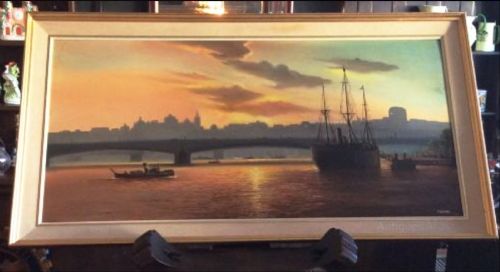
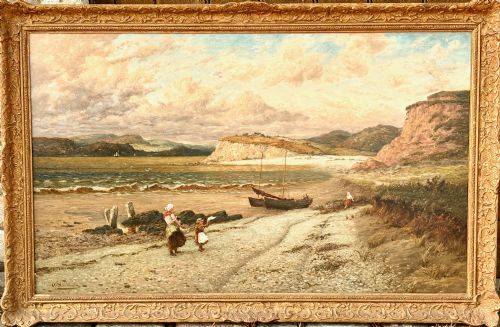
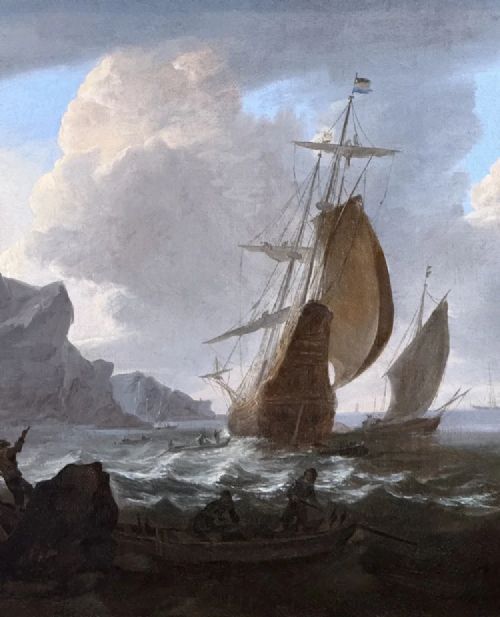
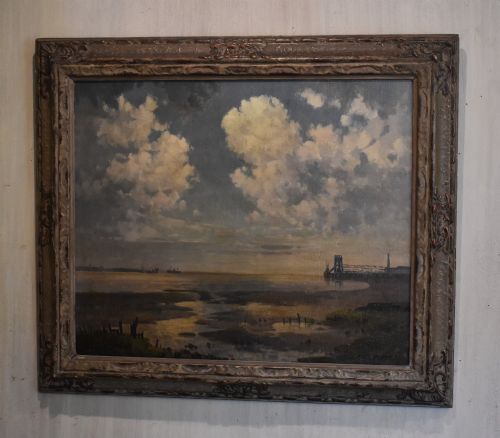
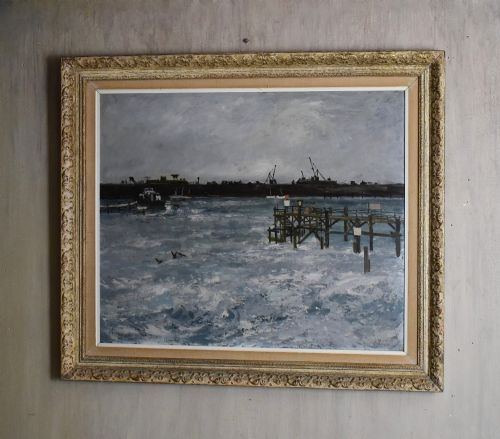
A marine landscape art canvas captures coastal views, open seas, harbour walls, and river estuaries rendered in oil paint. These works span from Victorian academic studies to mid-century modern interpretations of maritime life.
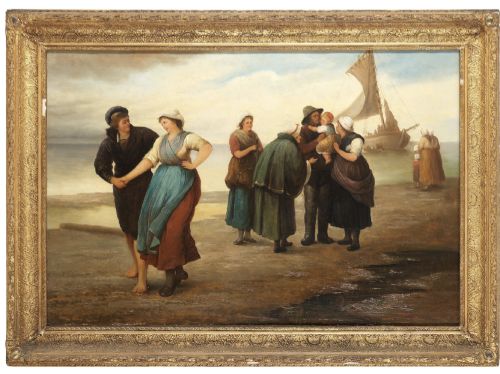
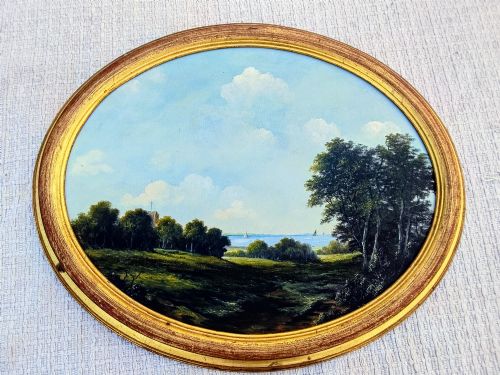
The selections available here range widely across the nineteenth and twentieth centuries, featuring British, French, and Dutch coastal scenes. Buyers will encounter both intimate oval sea views and large panoramic stretches of coastal waters.
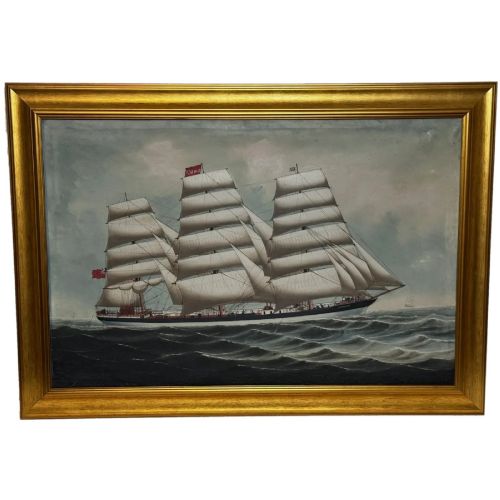
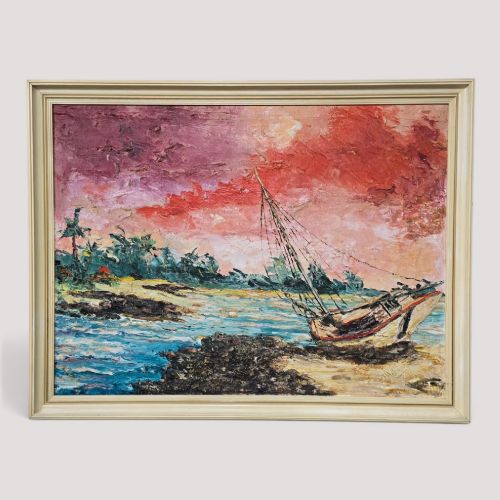
Traditional nineteenth-century maritime pieces often focus on shipping trade and fishing fleets under dramatic skies. Later twentieth-century examples lean toward impressionistic brushwork and abstracted coastal forms.
Materials and construction
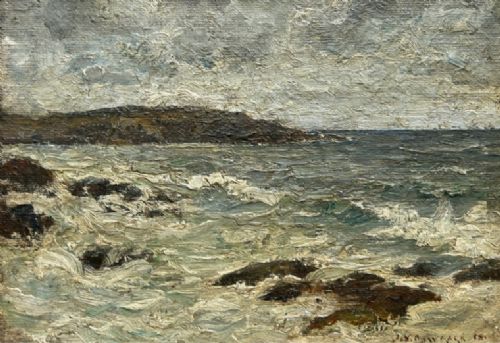
Artists painted these works primarily with oil paint applied to woven canvas supports stretched over wooden frames, occasionally using oil on board. The rich binder of oil allowed painters to build up thick impasto textures to mimic churning waves and spray.
Many of the surviving pieces retain their period gilt or giltwood frames, which provide structural support and a decorative border. The interaction between the oil medium and the canvas ground has preserved these coastal pigments across decades and centuries.
Regional styles represented include British Impressionism, Victorian Marine, and Mid-Century Modern coastal views.
Distinctions in craftsmanship
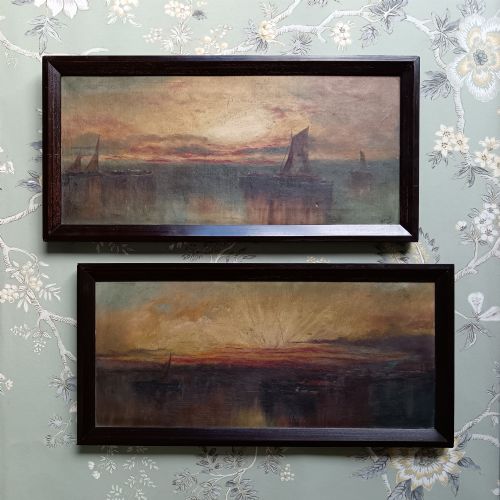
Quality rests upon the artist's command of light, atmosphere, and the fluid motion of water rather than mere scale. Superior works capture the weight of a gale or the subtle luminosity of sunset without relying on heavy-handed outlines.
The preservation of the pigment layer and the stability of the original canvas ground dictate the longevity and visual impact of the piece. Well-kept frames and minimal restoration separate the finest survivals from standard decorative paintings.
Clifford Hanney·Reginald Arthur Borstel·B. Nash·Bonaventura Peeters·Clive Browne·Peter Brannan·Paul Bret·Francis Moltino·Bernard Benedict Hemy·Thomas Creswick·Willem Bos·John Wilson Carmichael·Joseph Farquharson·William Henry Williamson·John Holland·Walter Goodin·Charles William Wyllie·William Edward Webb·Louis Suire·Gustave Vidal·Raymond Picque·Fred Pailhes·Norman Lloyd·Gustave De Bréanski·Adrian Van Porten
The Marine Landscape Art Canvas Glossary
- Impasto
- Paint applied thickly to a canvas, standing out in relief from the surface. This technique gives physical depth and texture to crashing waves and clouds.
- Giltwood
- Wood carved and covered with a thin layer of gold leaf or gold paint. It forms the traditional ornate framing common to nineteenth-century canvases.
- Seascape
- A work of art depicting the sea, coastal views, or marine shipping. These pieces focus primarily on water and atmospheric weather conditions.
- Provenance
- The documented history of ownership of an artwork. A clear record helps establish authenticity and attribution to a specific painter.
- Stretcher
- The wooden frame that holds a canvas taut. Traditional timber stretchers allow the fabric to remain stable over decades.
Marine Landscape Art Canvas: Frequently Asked Questions
What periods do these canvases cover?
The works span from seventeenth-century Dutch maritime scenes through nineteenth-century Victorian pieces up to mid-twentieth-century modernist interpretations.
Most examples cluster around the Victorian era and the early to mid-twentieth century, reflecting diverse regional European schools.
Are these works signed by the artists?
Many canvases feature legible signatures, monograms, or dates applied by the painter, while others remain attributed based on style.
Documentation and archival research often accompany works attributed to known nineteenth and twentieth-century painters.
How do I hang a heavy framed canvas?
Large gilt-framed oil paintings require secure wall fixings anchored directly into structural masonry or studwork.
Picture wire must be checked for strength and stability to support the combined weight of the wood and canvas.