





Marbled Stone Mantel Clock
A marbled stone mantel clock brings solid weight and carved architectural form to a room, driven by Victorian and Art Deco design.
Marbled Stone Mantel Clock
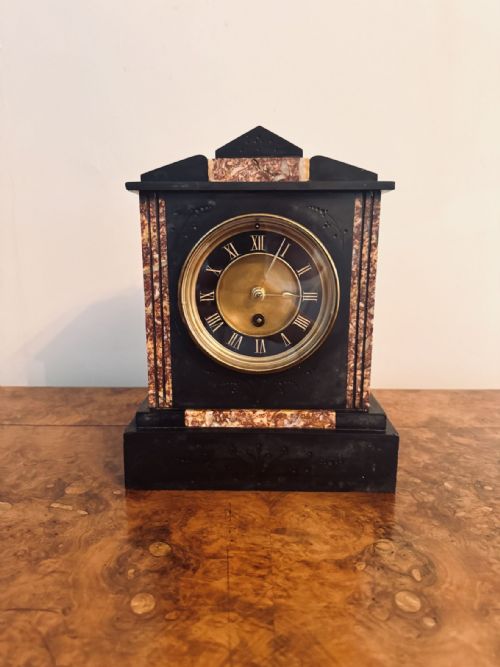
A marbled stone mantel clock is a domestic timekeeper housed in a heavy mineral case, built primarily during the nineteenth and twentieth centuries. Buyers searching for a marbled stone mantel clock encounter robust Victorian and Art Deco examples fashioned from slate, block marble, Sienna marble, and green onyx.
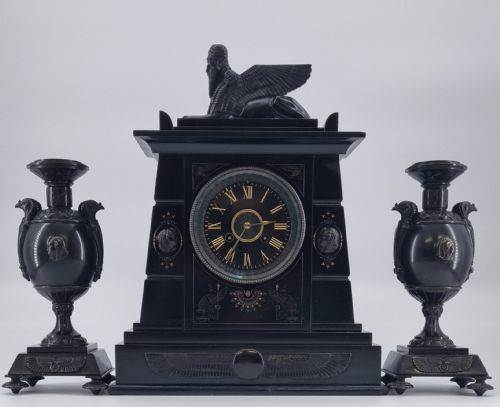
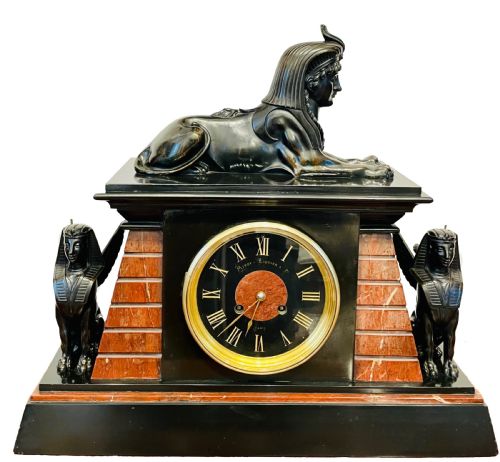
The dominant forms on this page span severe architectural cases and drumhead designs, alongside garniture sets that include matching side pieces. Most pieces date from the Victorian period up through the nineteen-thirties, reflecting diverse revivals from Egyptian influence to classical proportions.
How they were made
Cases rely on dense stones like black slate and varied marbles, shaped into architectural blocks and polished to a smooth finish. Metal elements in brass or bronze provide structural accents, while enamel dials display the numerals.
Movements within these heavy stone housings typically operate on an eight day duration, requiring mechanical winding via visible dial holes. Craftsmen combined heavy mineral masonry with precision gear trains to create stable, weighty timepieces.
Marbled Stone Mantel Clock Retail Price Guide 2026
Typical asking prices for marbled stone mantel clock among the pieces listed under this phrase on Sellingantiques today, from the lower quarter to the upper quarter. They describe what is for sale here now, not the wider market.
Some heavy stone clocks disguise their immense weight so well that unwary guests try to lift them with one hand.
What varies in quality
Quality rests in the selection of the stone and the ambition of the architectural case design. Simple slate cylinders sit at one end, while elaborate Sienna marble or multi-toned block marble assemblies with garnitures represent higher craftsmanship.
The integration of specific decorative motifs, such as Egyptian revival details or fine gilt highlights, elevates certain pieces above standard domestic production. Finer examples also feature named maker signatures on the movement or dial.
Philippes Paris·Elliott·Luxor
The Marbled Stone Mantel Clock Glossary
- Garniture
- A set consisting of a central clock flanked by matching ornamental side pieces for a mantelpiece. These matching sets were popular in Victorian drawing rooms.
- Slate
- A fine-grained metamorphic rock used extensively for heavy clock cases, often painted or polished to imitate black marble. It provides a stable and dense foundation for mechanical movements.
- Drumhead clock
- A clock featuring a circular dial housing shaped like a drum, mounted centrally on a stone plinth. This form is common in Victorian slate and marble designs.
- Enamel dial
- A fused glass surface fired onto metal to form the clock face and numerals. These dials offer a crisp, glossy finish that resists fading over time.
- Egyptian Revival
- A nineteenth-century design style incorporating pharaonic motifs, obelisks, and hieroglyphic symbols into architecture and decorative objects. It appears on select Victorian mantel clocks.
Marbled Stone Mantel Clock: Frequently Asked Questions
How heavy is a marble mantel clock?
These clocks are exceptionally heavy due to the solid stone and slate cases used to house the internal movements. Buyers should ensure the mantelpiece or shelf can support substantial weight.
Placement requires a sturdy surface because shifting or uneven flooring can affect the delicate pendulum balance within the clock.
How do I wind an antique clock?
Winding involves inserting a key into the winding arbours on the enamel dial and turning gently until resistance is felt. Most pieces on this page utilise an eight day movement.
Care must be taken not to overwind the mainspring, which can cause internal damage. Regular maintenance keeps the mechanical gears operating smoothly.
What is a clock garniture?
A garniture is a matched decorative set comprising a central mantel clock and accompanying side ornaments, such as urns or vases. These sets created a symmetrical display on nineteenth-century fireplaces.
Finding a complete set together remains a key consideration for collectors of Victorian architectural pieces.
How do I tell Victorian from Art Deco?
Victorian clocks often display heavy classical revival motifs, architectural columns, and dark slate or Sienna marble. They favour historicist styles and ornate detailing.
Art Deco examples, emerging around nineteen-twenty, lean into clean geometric lines, green onyx, and streamlined modern forms with minimal surface clutter.