






1920s French Clock
These 1920s French clock pieces combine striking design with period craftsmanship, bringing both utility and character to an interior.
1920s French Clock
When you search for a 1920s French clock, you enter a field dominated by the bold geometric forms and stylized motifs of the Art Deco movement. These timepieces served as functional centrepieces for domestic interiors, frequently appearing on mantelpieces or tables as standalone items.
The objects on this page span several decades around the 1920s, including pieces influenced by earlier Belle Epoque aesthetics and French Rococo Revival styles. Mantel clocks and table clocks form the majority of the objects, often accompanied by matching garnitures to create a unified decorative set.
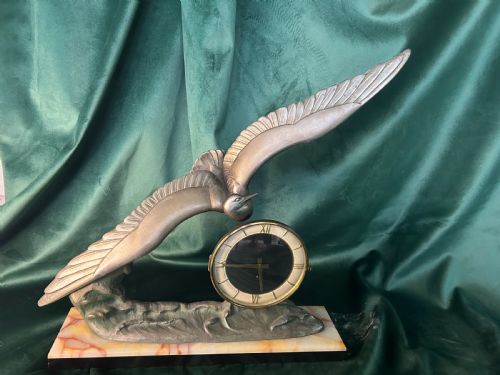
Moulded glass, carved marble, and cast metals provide the primary bodies for these clocks, which range from simple geometric shapes to sculptural figural compositions. Buyers encounter both standard mechanical movements and specialist mechanisms such as Bulle electric systems.
What varies in quality
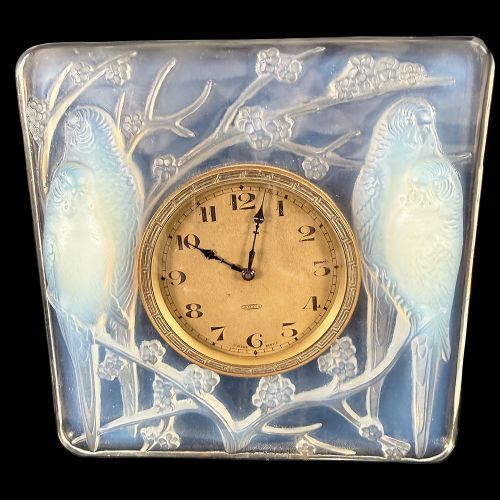
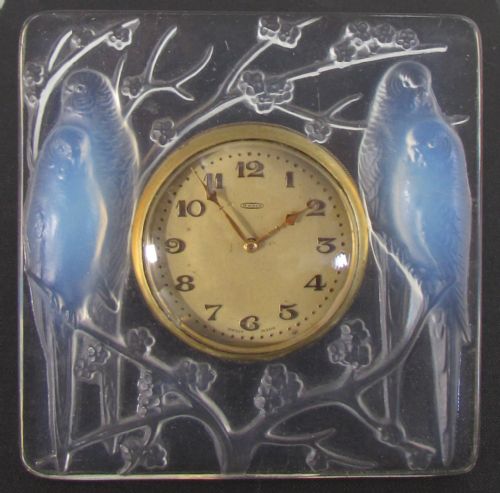
The refinement of the casting and the depth of the material carving set different examples apart. Finely finished bronze mounts and crisp, detailed mouldings in opalescent glass indicate a higher grade of manufacture than plain, mass-produced housings.
The integration of the clock case with its associated garnitures or sculptural figures affects the overall cohesion of the set. Well-executed dials with clean enamel work and engine-turned details demonstrate greater attention to horological finishing.
1920s French Clock Retail Price Guide 2026
Typical asking prices for 1920s french clock among the pieces listed under this phrase on Sellingantiques today, from the lower quarter to the upper quarter. They describe what is for sale here now, not the wider market.
Some clocks feature love birds frozen in opalescent glass, guarding the hours from the mantel.
R Lalique·Chiparus
The 1920s French Clock Glossary
- Garniture
- A set of ornamental objects designed to match a clock, usually comprising a pair of side pieces such as vases or urns. These sets create a balanced decorative display on a mantelpiece.
- Opalescent glass
- Glass that displays a milky, milky-blue, or fire-like appearance due to the inclusion of specific chemical agents during melting. This material was favoured by glassmakers for diffusing light and highlighting sculptural relief.
- Engine-turned
- A decorative technique involving precision mechanical engraving to cut intricate geometric patterns into metal surfaces. This method creates a textured background that catches the light on clock dials and masks.
- Breccia marble
- A composite stone made of broken fragments of rock cemented together by a fine-grained matrix. Its variegated natural patterns provide a distinctive visual texture for clock cases.
- Spelter
- A zinc alloy commonly utilised as a substitute for bronze in decorative figures and clock mounts. It accepted patination well, allowing makers to achieve bronze-like finishes at a lower cost.
1920s French Clock: Frequently Asked Questions
What is a clock garniture?
A clock garniture is a matched set consisting of a central clock flanked by two decorative side pieces, such as urns or matching sculptures.
These sets were designed to sit together on a mantelpiece to create a balanced, symmetrical arrangement in a room.
How do electric clocks work?
Electric clocks from this period utilise early battery-driven mechanisms, such as the Bulle system, to maintain the movement without manual winding.
These pioneering electric movements represent a transitional phase in horological technology.
Are these clocks loud?
The acoustic profile depends entirely on the specific mechanical movement housed inside the individual clock case.
Most mechanical escapements produce a steady ticking sound, while novelty or electric movements may operate differently.
How do I clean marble?
Marble cases require gentle cleaning with a soft, dry cloth to remove dust without damaging the polished stone surface.
Harsh chemical cleaners and excessive moisture should be avoided to preserve the natural finish of the breccia or onyx.