



1930s Onyx Mantel Clock
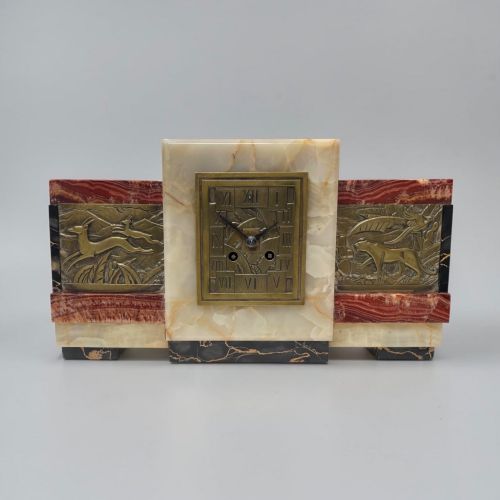
These 1930s onyx mantel clocks bring striking Art Deco geometry and rich stone presence to a mantelpiece.
1930s Onyx Mantel Clock
A 1930s onyx mantel clock is a sturdy timepiece designed to sit prominently on a fireplace shelf, often accompanied by matching side garnitures. When people search for a 1930s onyx mantel clock, they encounter striking geometric forms typical of the Art Deco style that defined the era.
The pieces on this page span the early twentieth century, incorporating materials like green onyx alongside marble and brass accents. Alongside standard mantel clocks, variations include desk clocks, combined barometer and thermometer sets, and sculptural clock sets featuring metal or spelter figures.
French and English workshops dominate the origins of these items, showing how diverse the continental and domestic markets were during the period. Buyers frequently find completegarniture sets where flanking ornaments mirror the central clock's stonework and decorative motifs.
Materials and construction
The foundation of these timepieces relies heavily on natural stone, specifically polished onyx and marble, which are cut and slabbed to form the heavy architectural cases. This stonework is frequently paired with contrasting cast metals, chrome, or brass details to accentuate the sharp angles of the design.
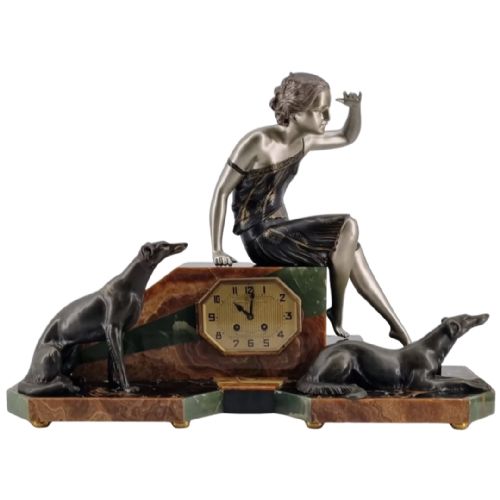
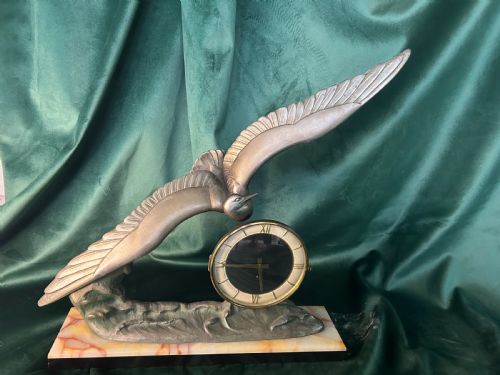
Intricate metal sculptures, sometimes cast in spelter, are integrated directly into the clock bodies or mounted alongside them as garnitures. Glass faces protect the dials, while internal mechanical movements orchestrate the timekeeping behind the heavy stone facades.
1930s Onyx Mantel Clock Retail Price Guide 2026
Typical asking prices for 1930s onyx mantel clock among the pieces listed under this phrase on Sellingantiques today, from the lower quarter to the upper quarter. They describe what is for sale here now, not the wider market.
Several clocks double as animal menageries, featuring heavy stone bases guarded by cast greyhounds, German shepherds, and thoughtful human figures.
Assessing quality and distinction
Quality in these clocks rests on the complexity of the stone composition and the integration of sculptural elements by known makers. Simpler architectural blocks contrast sharply with elaborate ensembles featuring detailed animal or human figures.
The presence of matching garnitures or multi-instrument functions, such as integrated barometers and thermometers, elevates a piece beyond a simple standalone clock. Finer examples display superior stone selection with vibrant green veining and harmonious metal casting.
Elliott·Michel Decoux·Ferdinand Priess·Garrards
The 1930s Onyx Mantel Clock Glossary
- Onyx
- A banded variety of chalcedony quartz used extensively for clock cases in shades ranging from deep honey to green. It provides a heavy, polished surface that reflects light across its natural strata.
- Garniture
- A set of decorative ornaments, typically a clock flanked by two matching side pieces, designed to sit together on a mantelpiece. These sets create a balanced visual display.
- Spelter
- A zinc alloy commonly used as a cost-effective base metal for casting decorative sculptures during the Art Deco period. It is often finished with patination to resemble bronze.
- Art Deco
- The dominant design style of the 1920s and 1930s characterised by sleek geometric shapes, stylised ornamentation, and modern industrial materials. It strongly influences the architectural silhouettes of these clocks.
1930s Onyx Mantel Clock: Frequently Asked Questions
What is a garniture clock?
A garniture clock is a central timekeeper sold alongside a matching pair of decorative side objects, such as vases or sculptural figures. These pieces share the same stone and metal materials to create a unified mantel display.
Originating largely from French workshops, these sets were designed to fill large fireplace surrounds with balanced symmetry and architectural presence.
How heavy are these clocks?
These clocks are exceptionally heavy because they are constructed from solid blocks of natural onyx and marble. The dense stone housing ensures stability on a mantelpiece but requires a sturdy surface for placement.
Additional brass fittings, glass dials, and metal sculptures add further weight to the overall assembly.
Did these clocks include other instruments?
Yes, some advanced desk and mantel pieces combine the clock with useful weather instruments like barometers and thermometers. These multi-function desk accessories housed within the same stone block were popular in England during the period.
They offer a practical desktop or shelf display that goes beyond simple timekeeping.
What metals are used alongside the stone?
Makers incorporated brass, chrome, and cast spelter to accent the polished stone cases and mount accompanying sculptures. These metals provide sharp metallic contrast to the smooth, natural grain of the onyx.
Figurative elements, such as dogs or human figures, are frequently cast in spelter and patinated to complement the clock face.