




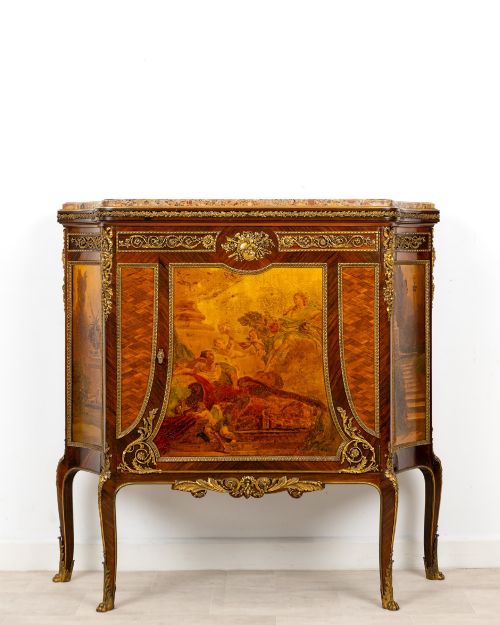
Marble Topped Furniture
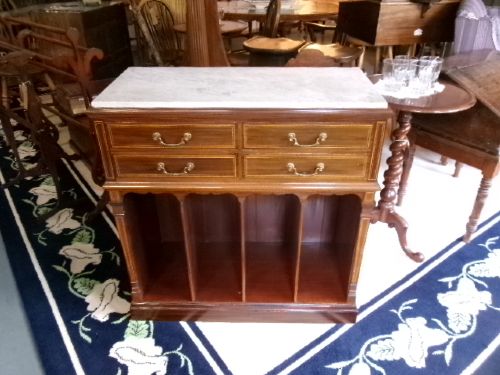
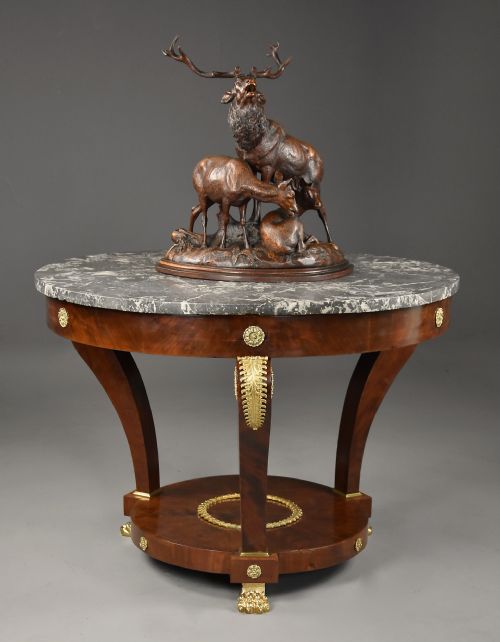
Marble topped furniture brings a cool, enduring stone surface to console tables, commodes, and washstands across 18th-century, Victorian, and Art Deco periods.
Marble Topped Furniture
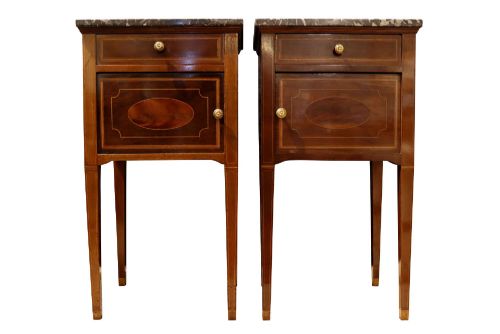
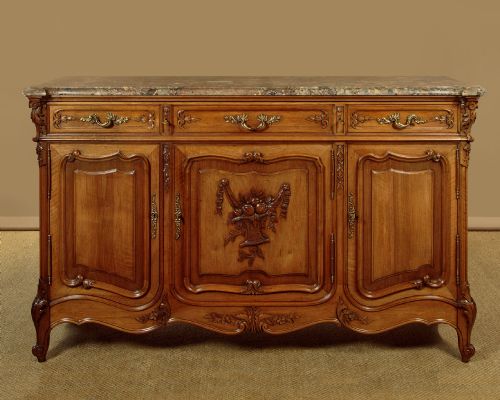
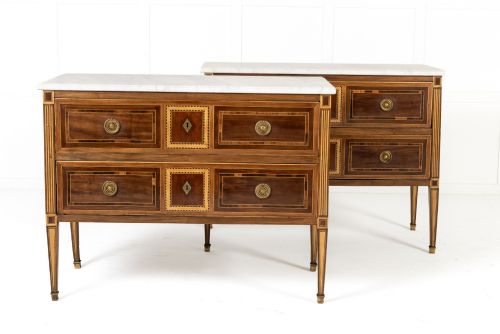
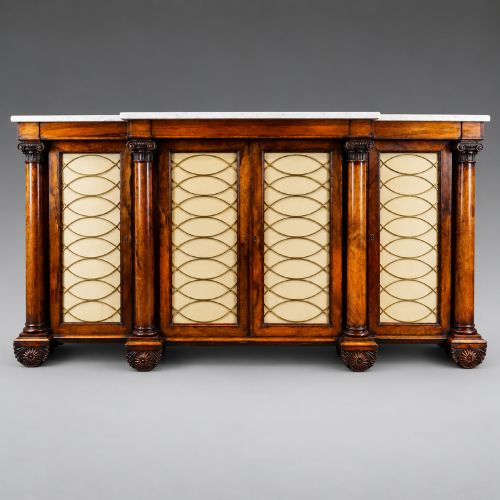
Marble topped furniture primarily comprises console tables, commodes, washstands, and bedside cabinets originating from the 18th century through to the 1930s. Buyers searching for marble topped furniture encounter frequent examples in French Empire, Louis XVI style, and Victorian designs.
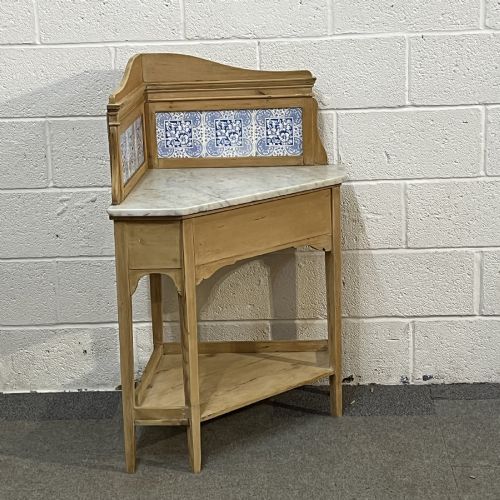
The selection ranges from low Chinese tables and plant stands to large Italian giltwood console tables and French mahogany chests of drawers. Washstands and bedside cabinets form a practical subset designed for domestic chambers with durable stone surfaces.
Continental workshops dominate the inventory, notably French and Italian makers producing giltwood, marquetry, and mahogany pieces. Pieces date from around 1750 up through the Art Deco era, encompassing Regency and Edwardian variations.
Materials and construction
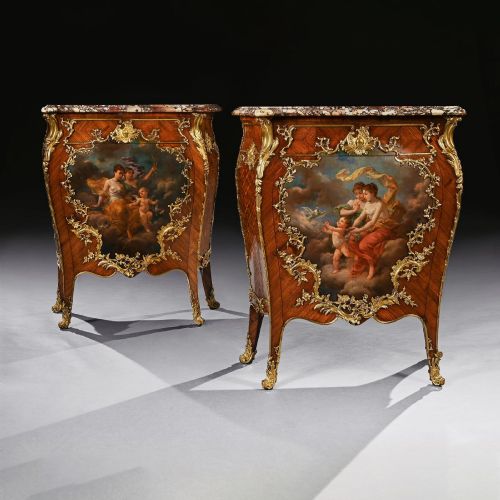
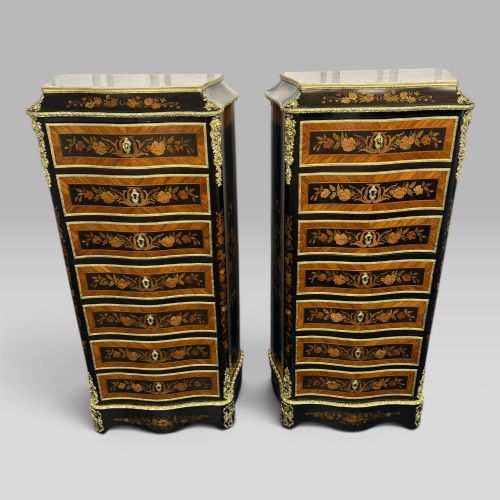
Carpenters built the carcases using dense timbers such as mahogany, walnut, rosewood, kingwood, and amboyna, often incorporating marquetry and painted pine. Ormolu, gilt-bronze, and brass mounts accent the wooden frames of French commodes and console tables.
Slab marble and onyx form the defining upper surfaces, fitted precisely to receive the weight of the stone. Cast-iron supports appear in later 1930s bistro sets and garden tables paired with marble.
Marble Topped Furniture Retail Price Guide 2026
Typical asking prices for marble topped furniture among the pieces listed under this phrase on Sellingantiques today, from the lower quarter to the upper quarter. They describe what is for sale here now, not the wider market.
Original painted apothecary cabinets from the mid-18th century sit comfortably alongside 1930s bistro sets.
Assessing the craftsmanship
Quality rests in the integration of the stone top with the wooden frame, ensuring the heavy marble sits flush and secure without straining the joints. Finer pieces display crisp hand-carving in giltwood or precise marquetry inlay across mahogany and kingwood carcases.
The sophistication of the cast or chased ormolu and gilt-bronze mounts distinguishes standard production from exceptional cabinet work. Signatures from established makers elevate the standing of commodes and side cabinets.
François Linke·Walker and Sons·Maison Millet·Amleto Bertoni
The Marble Topped Furniture Glossary
- Commode
- A low chest of drawers or cabinet, typically French in origin, fitted with a prominent marble top. These pieces served functional storage roles in formal rooms.
- Console table
- A wall-mounted or freestanding table supported by decorative brackets or legs, frequently topped with figured marble. They often match a pier mirror.
- Ormolu
- Gilt-bronze mounts applied to furniture woodwork. This technique provides metallic ornamentation on French Empire and revival pieces.
- Marquetry
- Inlaid wood veneers arranged in decorative patterns across furniture surfaces. Craftsmen utilised contrasting timbers like mahogany and fruitwood.
- Washstand
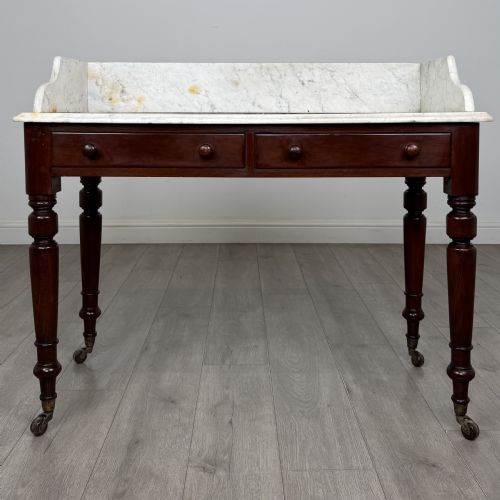
- A domestic table or cabinet designed to hold a basin, distinguished by a marble top that resisted water damage.
Marble Topped Furniture: Frequently Asked Questions
How do I clean a marble top?
Wipe the stone surface using a soft cloth dampened with warm water and mild, neutral soap. Avoid acidic cleaners that etch the polished finish.
Dry the marble thoroughly afterwards to prevent water marks from settling into the porous stone.
Can I use a washstand as a side table?
Washstands adapt well to modern living spaces as hallway tables or side furniture. Their marble tops provide a durable surface for daily use.
Ensure the dimensions fit your intended room layout before placing items upon them.
What woods were used?
Cabinet makers utilised dense hardwoods including mahogany, walnut, rosewood, kingwood, and amboyna. Softer woods like pine received paint or veneer applications.
Giltwood frames relied on carved timber substrates covered in gold leaf.