

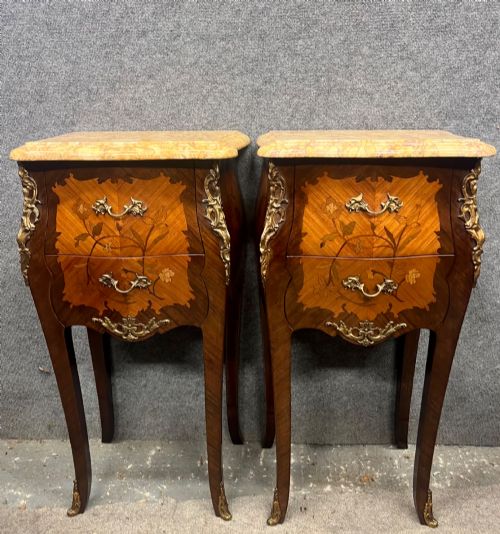
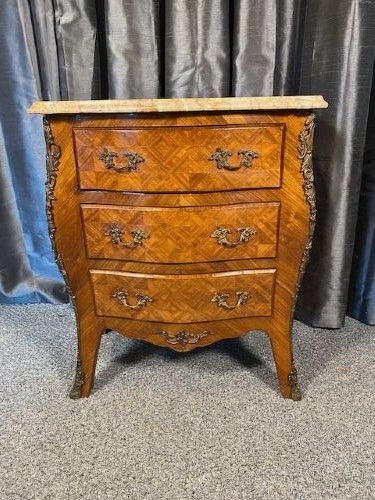
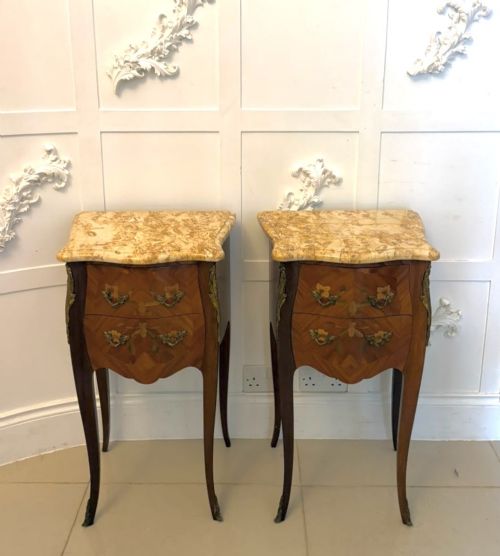
Marble Topped Chest Drawers
A marble topped chest drawers brings substantial weight and a cool, smooth surface to a bedroom or living space, pairing timber storage with carved stone.
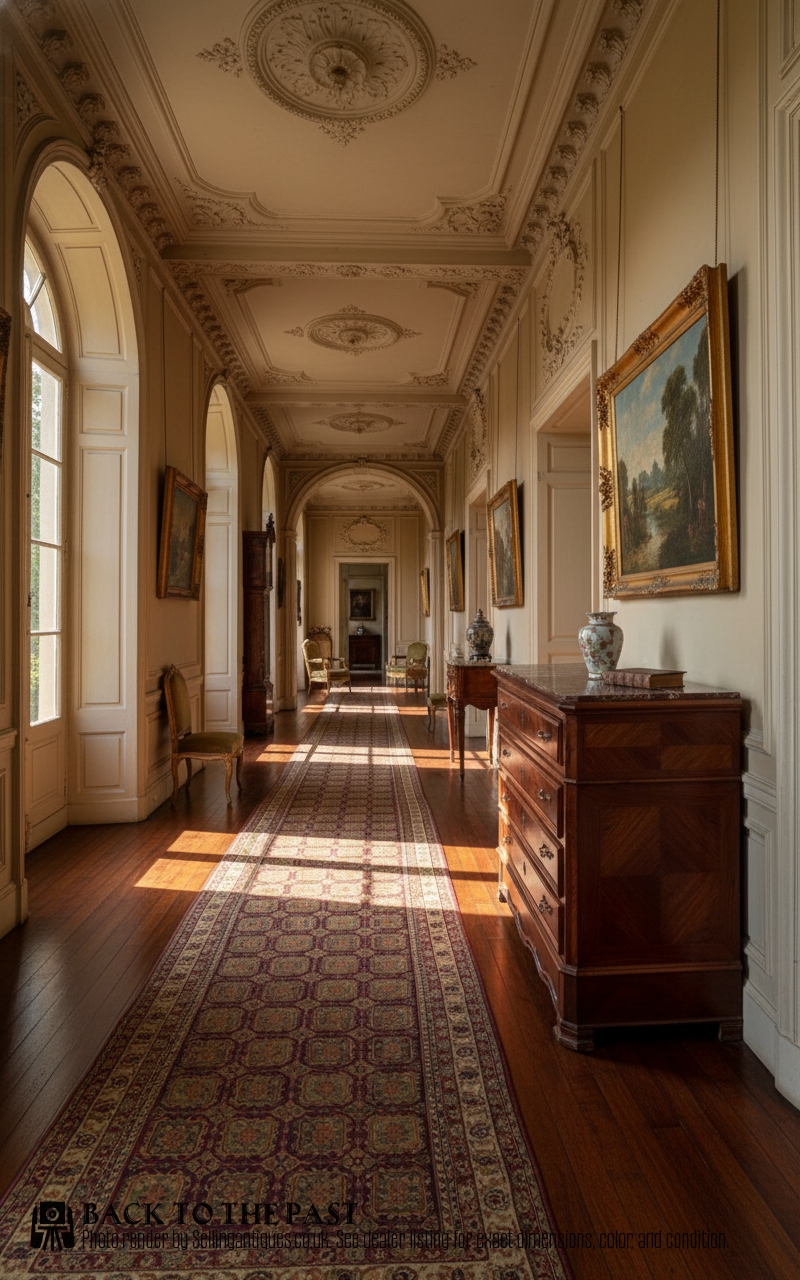
Marble Topped Chest Drawers
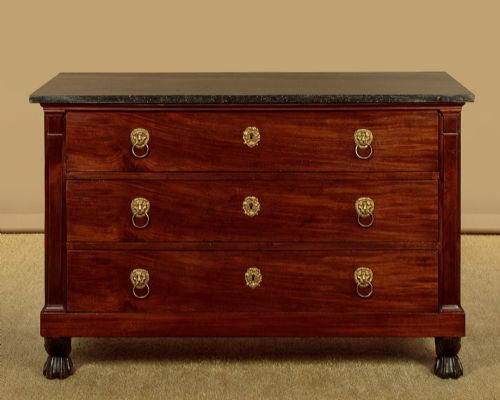
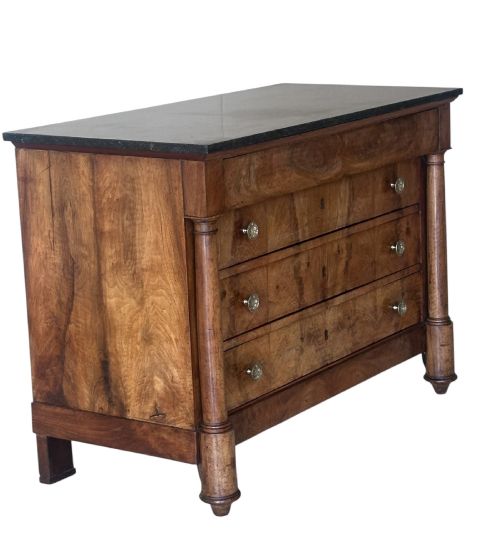
When hunting for a marble topped chest drawers, buyers encounter a lineage dominated by continental commodes, bedside cabinets, and washstands originating from the eighteenth and nineteenth centuries. These pieces combine utilitarian drawer storage with a robust stone slab designed to resist water and wear.
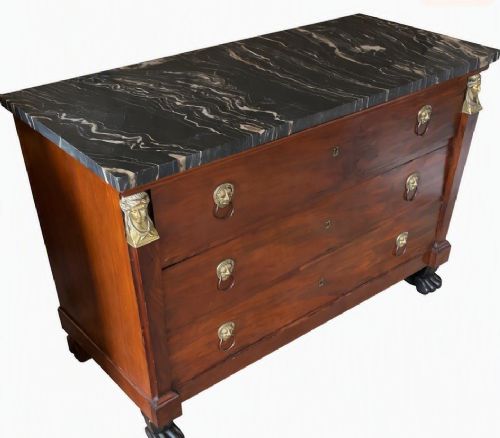
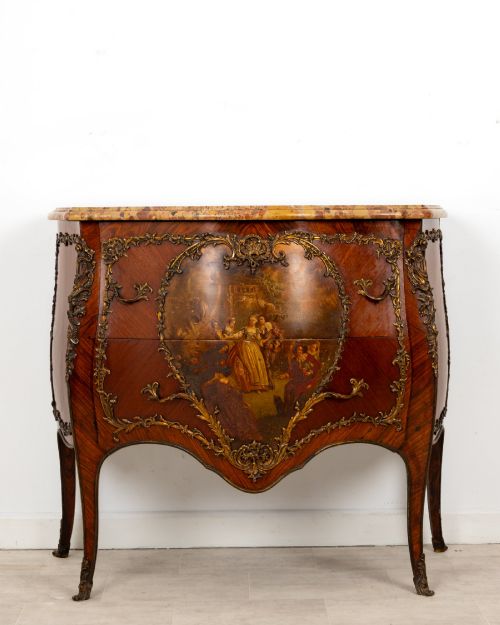
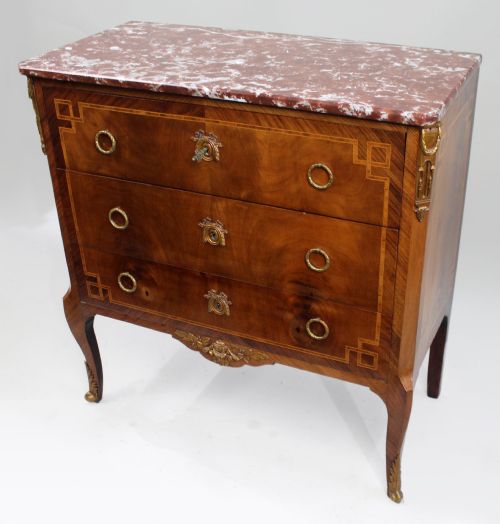
The most common examples on this page are French commodes and bedside tables spanning the Louis periods, the Empire era, and later revivals. Walnut, cherrywood, mahogany, and kingwood carcasses frequently appear beneath grey, white, or rouge marble slabs.
Materials and Construction
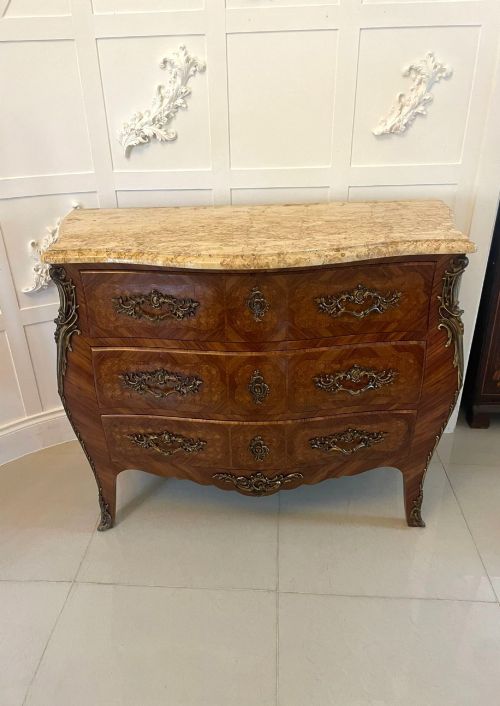
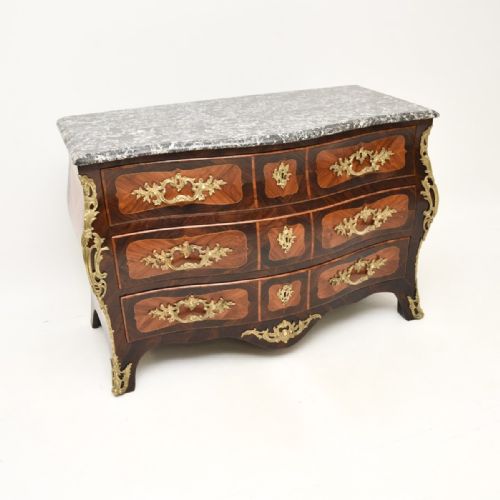
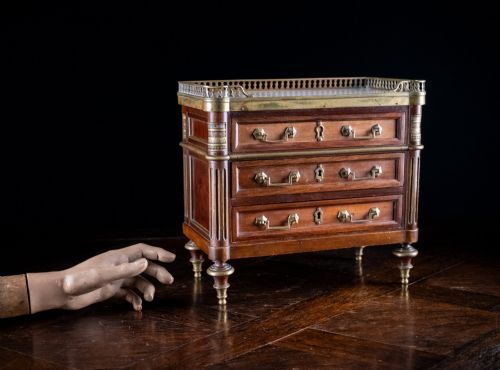
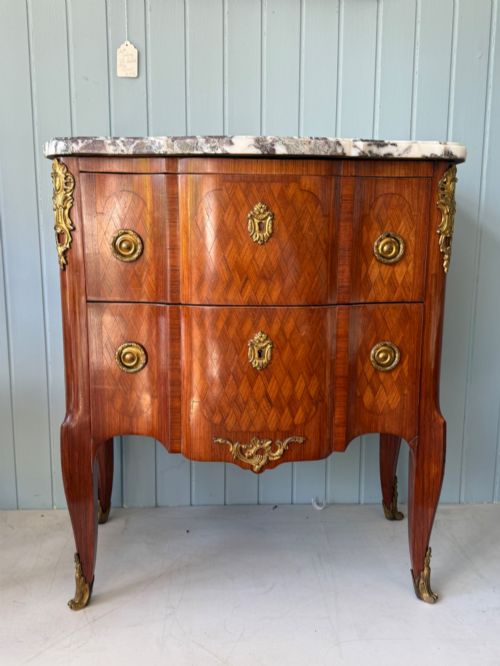
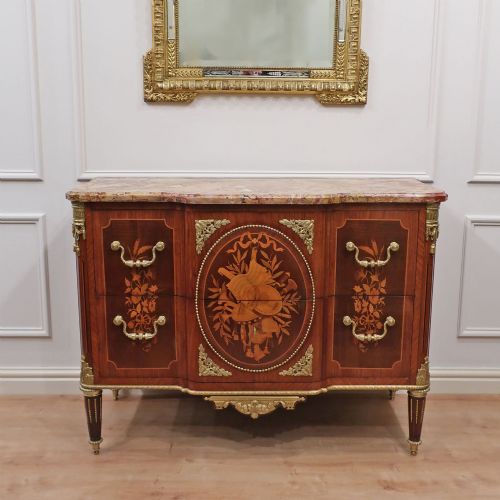
The construction of these pieces relies on solid timber frames veneered in exotic woods such as kingwood, rosewood, and walnut, often laid out in intricate parquetry or marquetry patterns. Carved or cast brass, ormolu, and bronze mounts accent corners, keyholes, and drawer pulls.
Heavy stone slabs sit directly on the wooden carcass, ranging from simple grey utility marble to heavily figured rouge marble. Cabinetmakers joined drawer boxes using traditional dovetail joints, housing them inside solid carcasses of oak, pine, or walnut.
Listings span multiple centuries, ranging from eighteenth-century cherrywood pieces to early twentieth-century Arts and Crafts oak bedroom suites.
Judging Quality and Craftsmanship
Quality rests in the precision of the cabinetmaker's marquetry, the crispness of the bronze or ormolu mounts, and the thickness and figuring of the marble top. Finely chosen timber veneers matched across the drawer fronts indicate a higher tier of production.
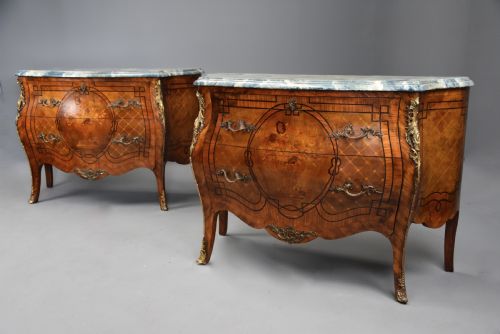
The integration of the stone slab reveals much about the piece's origin, where superior examples feature marble profiled with a precise thumbnail or ogee edge that matches the serpentine or bombe contours of the wooden chest below.
Jacques Bircklé
The Marble Topped Chest Drawers Glossary
- Commode
- A continental chest of drawers, typically lower and wider than traditional English equivalents. It serves as a decorative storage cabinet in bedrooms or reception rooms.
- Bombe
- A swelling, convex curved shape found on the front and sides of certain chests. This undulating profile requires expert veneer work to follow the complex contours.
- Parquetry
- Geometric patterns formed by fitting small pieces of contrasting wood veneer together. It creates a tiled mosaic effect across the drawer fronts and top.
- Ormolu
- Gilt bronze mounted onto furniture as decorative handles, feet, and corner guards. The technique involves applying a mercury and gold amalgam to bronze.
- Marquetry
- The art of applying pieces of veneer to a structure to form decorative pictures or floral designs. Artisans utilise various woods to achieve natural colour variations.
- Rouge marble
- A rich, deep red decorative stone with white and grey veining. It provides a striking, colourful contrast to dark timbers like mahogany and walnut.
Marble Topped Chest Drawers: Frequently Asked Questions
How do I clean the marble top?
Use warm water and a soft cloth, avoiding acidic cleaners or harsh chemicals that can etch the polished stone surface. Wipe dry immediately to prevent water spots.
For stubborn marks, a poultice made from baking soda and water lifts stains without abrading the delicate crystalline structure of the marble.
Where were these chests traditionally placed?
Continental commodes typically stood against bedroom walls for linen storage or flanked the bed as larger bedside cabinets and nightstands. Their water-resistant stone tops also made them practical washstands in grand dressing rooms.
Today, they function equally well in hallways, living rooms, and dining spaces where a flat surface and enclosed drawer storage are required.
How can I tell a Louis XV style from Louis XVI?
Louis XV pieces feature flowing, asymmetrical curves, cabriole legs, and bombe silhouettes that embrace organic Rococo forms. Ormolu mounts accentuate the sweeping contours of the wood.
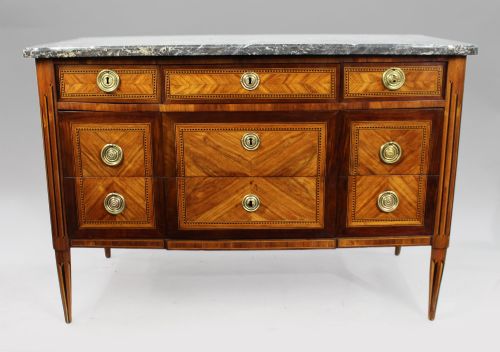
Louis XVI furniture shifts toward straight lines, symmetrical parquetry, fluted columns, and neoclassical restraint, reflecting a return to classical geometric order.