




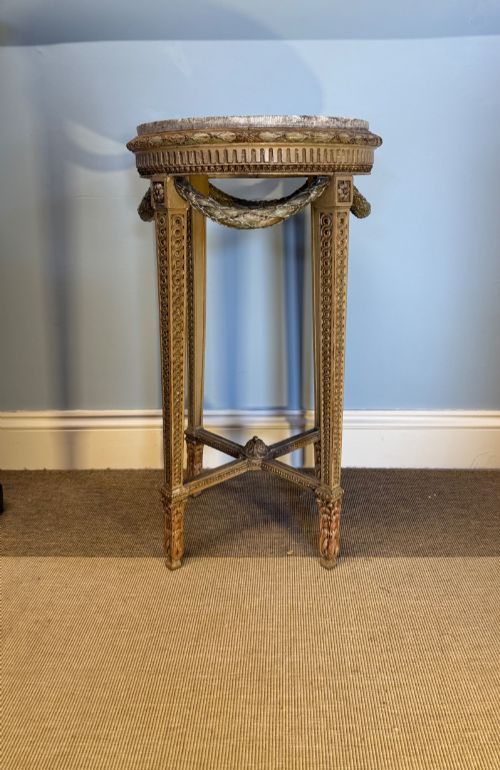
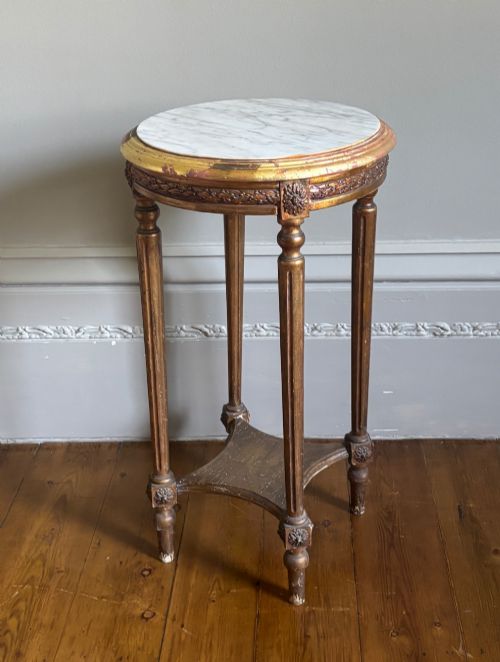
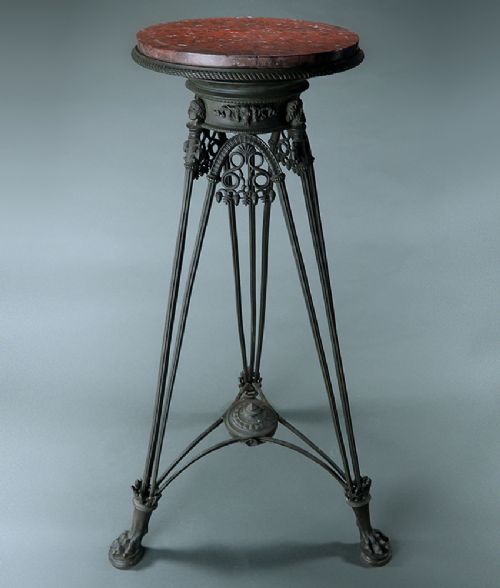
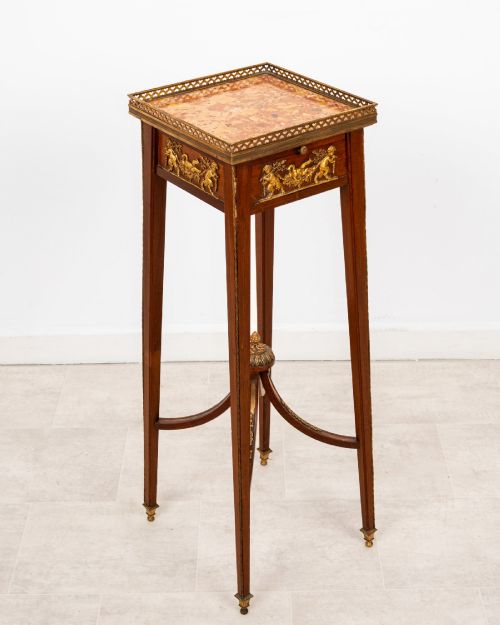
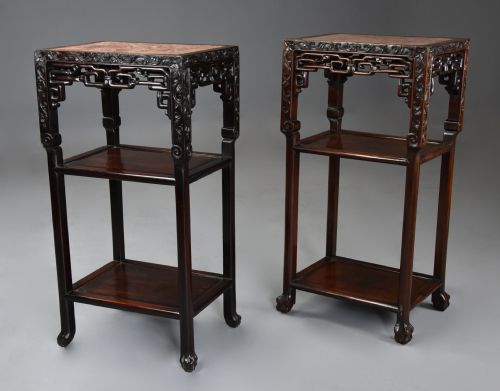
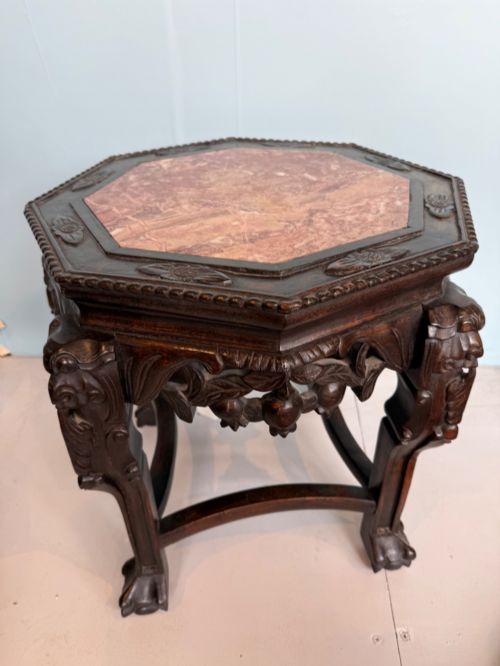
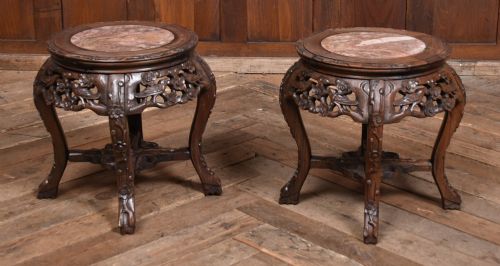

Marble Top Plant Pedestal
A marble top plant pedestal elevates flora and sculpture into architectural focus, bringing solid stone and timber together.
Marble Top Plant Pedestal
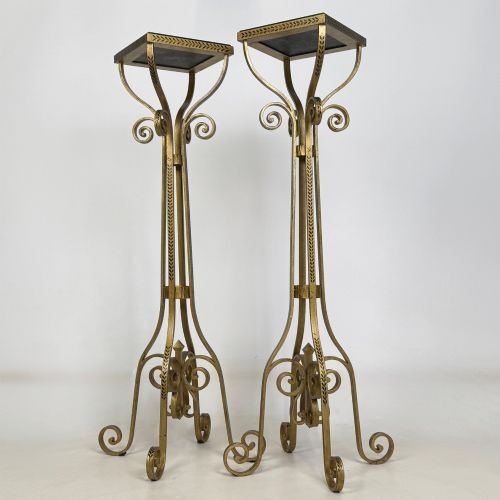
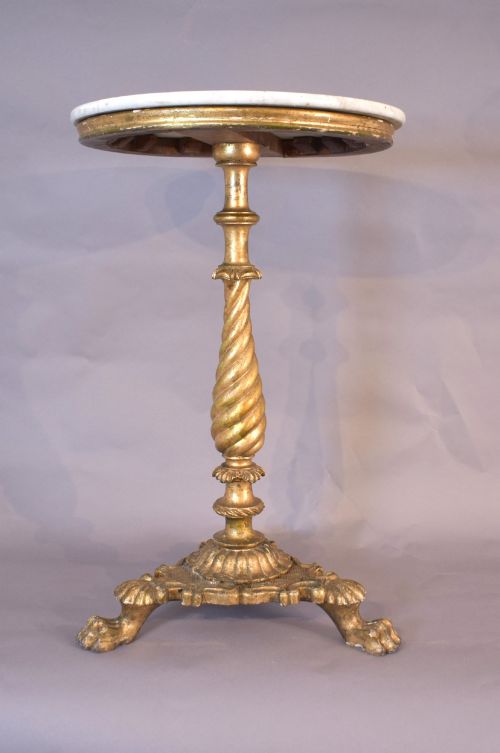
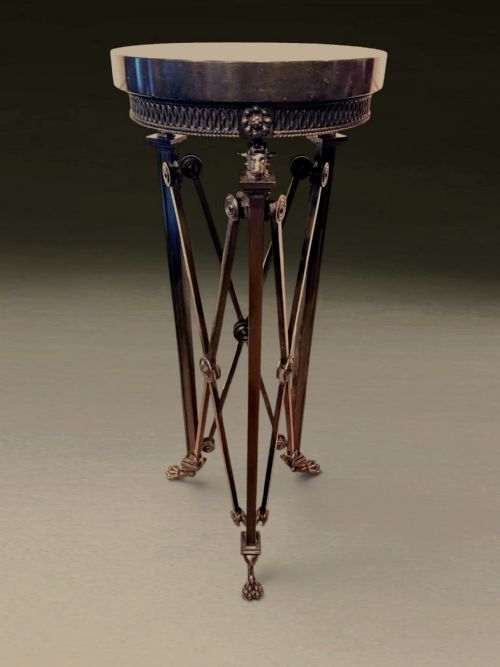
A marble top plant pedestal appears in formats such as plant stands, jardiniere stands, occasional tables, and gueridon tables. These pieces serve to elevate plants, vases, and lamps within a room, combining utility with decorative presence.
The selections span the nineteenth century, the Victorian era, the Edwardian period, and Regency times. Makers applied both British cabinet-making traditions and continental European influences to these forms.
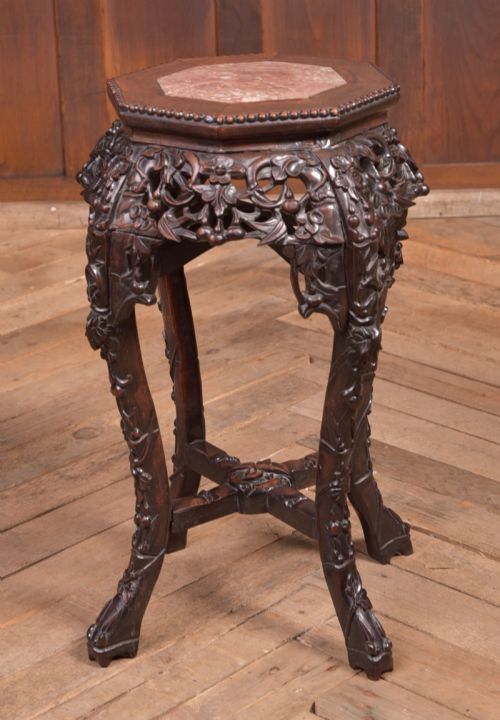
Asian workshops contributed extensively, yielding oriental hardwood, rosewood, padouk, and rootwood stands featuring inset marble or quartz. Chinese export pieces and Qing Dynasty designs sit alongside French Neoclassical, Empire, Rococo, and Louis XVI revival examples.
Markers of distinction in manufacture
Quality rests on the crispness of the timber carving and the weight and figuration of the marble or onyx top. Hand-carved floral mouldings and intricate joinery distinguish superior pieces from simpler utilitarian stands.
The integration of materials dictates standard: precise brass mounts, well-fitted stone inserts, and stable tripod or column supports show greater workshop skill. French ormolu detailing and complex Chinese hardwood carving represent the higher tier of production.
One exceptional Chinese stand uses deep quartz instead of marble, proving that nineteenth-century makers liked to surprise the eye with unusual stone.
The Marble Top Plant Pedestal Glossary
- Gueridon
- A small French table, often round, supported by a central column or tripod base. These frequently feature marble tops and decorative mounts.
- Jardiniere
- A decorative container or stand designed to hold plants or flowers indoors. They often incorporate water-resistant marble or tiled surfaces.
- Ormolu
- Gilded bronze mounted onto furniture or decorative objects. It provides bright metallic contrast against dark hardwoods.
- Padouk
- A dense tropical hardwood prized for its deep reddish colour and durability. It appears frequently in Chinese export stands.
- Vernis Martin
- A type of decorative lacquer finish developed in France, mimicking Asian lacquerwork. It adds translucent depth to furniture surfaces.
Marble Top Plant Pedestal: Frequently Asked Questions
How do I style a plant pedestal?
Place a marble top plant pedestal in a corner or beside seating to hold trailing foliage, ceramic pots, or lamps. The stone surface protects against water spills from plants.
Ensure the scale of the stand matches the plant or object placed upon it. Taller columns suit heavy sculptural forms, while lighter tripod tables support delicate ferns.
What is the difference between French and Chinese stands?
French stands often showcase giltwood, mahogany, or kingwood with neoclassical or rococo motifs like ormolu mounts and carved fluting. They reflect European court styles.
Chinese stands utilise dense hardwoods like rosewood or padouk with inward-curving legs, rootwood elements, and inset marble panels. They emphasise organic carving and deep timber tones.
Can these stands support heavy items?
Most stands are built with sturdy timber frames and heavy stone tops designed to bear substantial weight. Hardwood and bronze models offer high structural stability.
Check the base configuration, as tripod designs and four-column pedestals distribute weight differently. Ensure the piece sits level on the floor before placing fragile items on top.
How do I date a pedestal?
Dating relies on timber choice, carving style, and construction marks. Victorian pieces often use heavy mahogany or walnut with dense floral mouldings, while Regency examples feature classical bronze supports.
Edwardian and later pieces may show machine-assisted joinery alongside traditional hand-finishing. Comparing the stylistic motifs to known nineteenth-century design books helps narrow the decade.