



Marble Top Painted Cabinet
A marble top painted cabinet brings cool stone and decorative brushwork together, offering both a resilient surface and a finished colour scheme for the room.
Marble Top Painted Cabinet
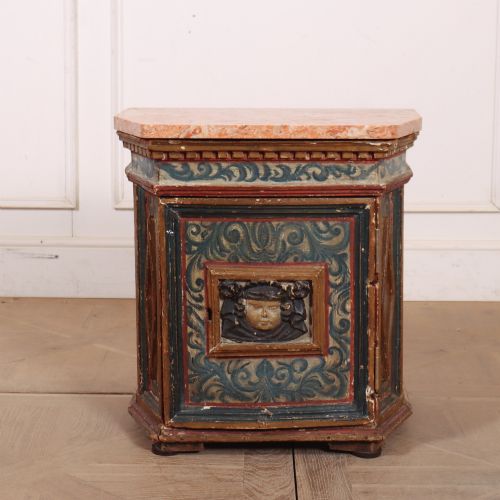
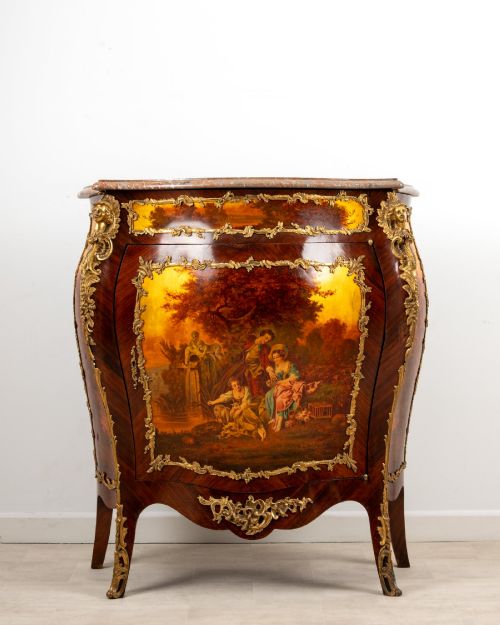
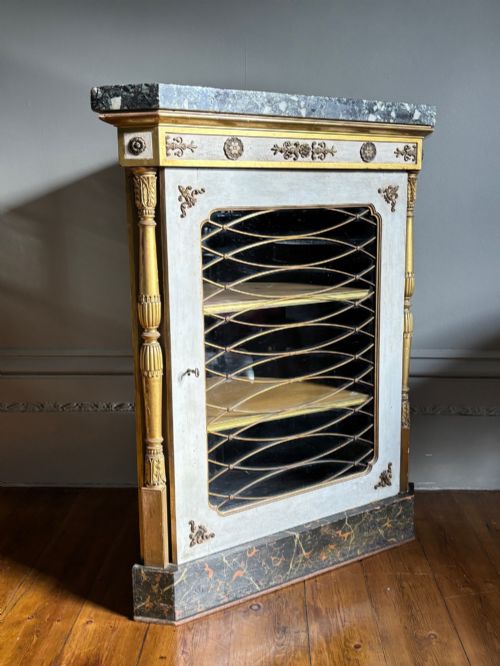
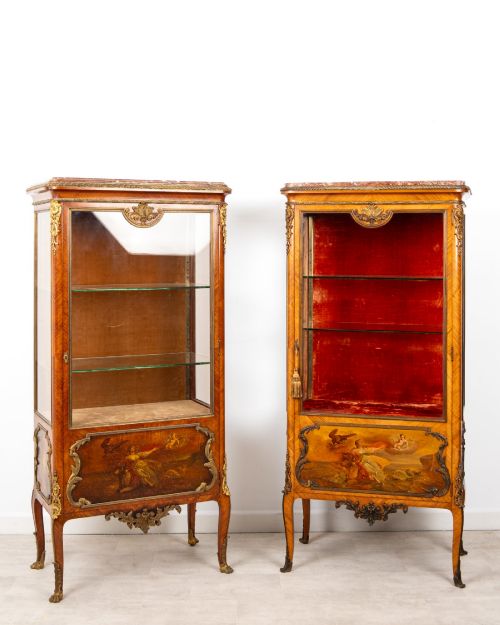
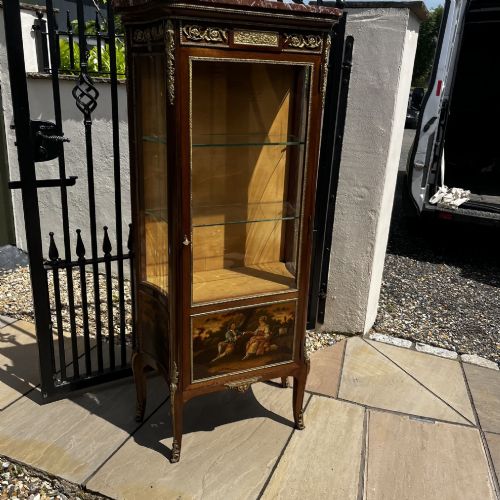
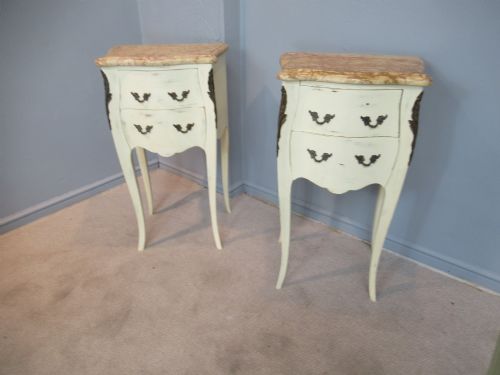
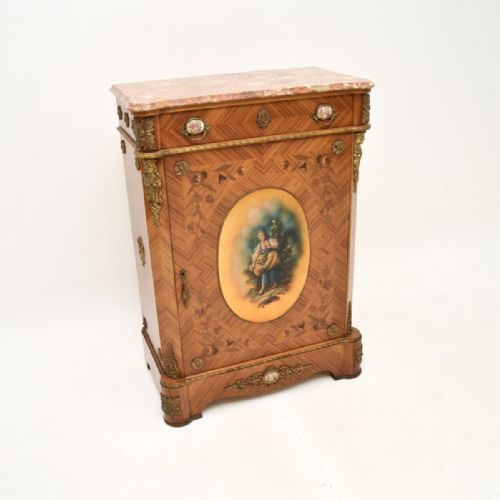
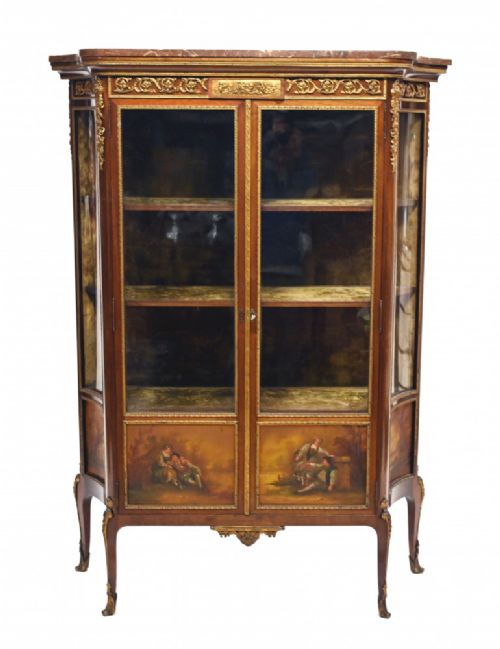
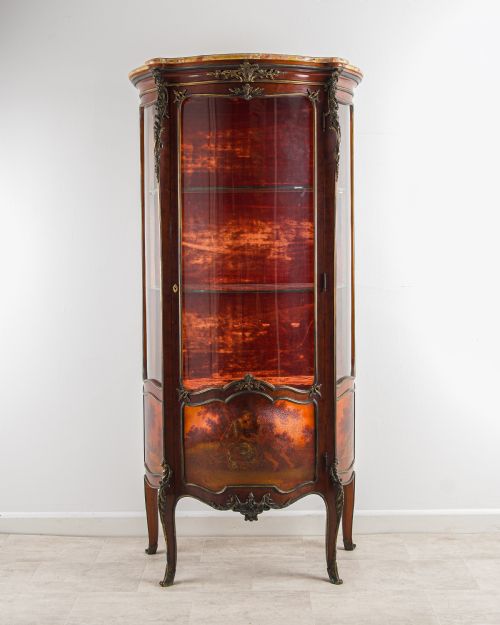
A marble top painted cabinet combines a durable stone slab with decorated timber woodwork, taking forms such as bedside tables, commodes, and vitrines. These pieces frequently appear in continental European styles, notably French Louis periods and nineteenth-century revivals.
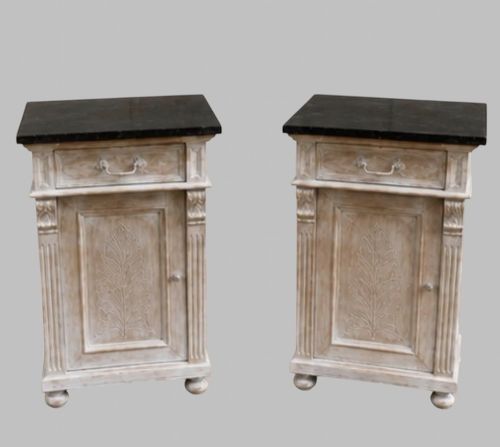
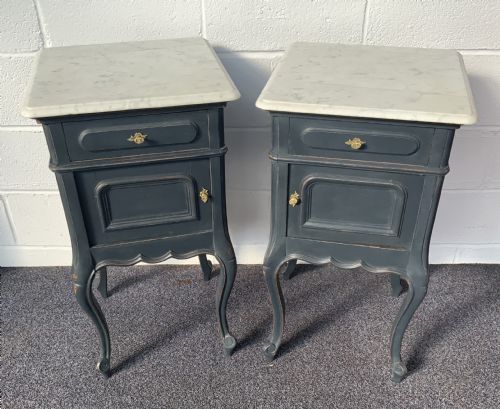
Bedside cabinets and smaller side cupboards dominate the selection, often found as matched pairs alongside larger display cabinets and commodes. The integration of stone and paint creates functional furniture intended for prominent placement in bedrooms and reception rooms.
Origins span across French, English, Italian, and Hungarian workshops, with nineteenth-century and early twentieth-century examples appearing most frequently. The combination of painted surfaces and heavy stone tops links domestic utility with decorative ambition across multiple periods.
How they were made
Makers built the foundational carcase from timbers such as pine, oak, or mahogany, sometimes applying veneers like kingwood over the core structure. Stone slabs, including white marble and black marble, were cut and polished to fit precisely onto the wooden upper surface.
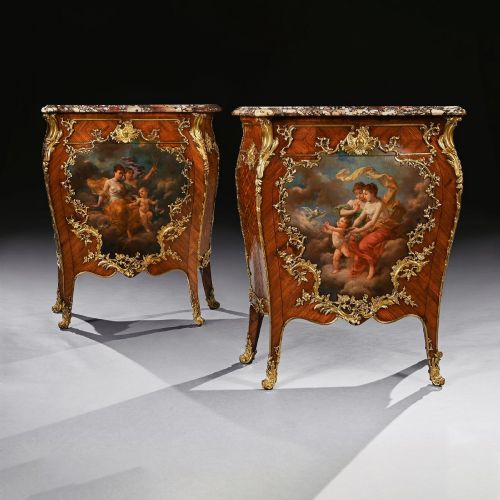
Decorators applied paint finishes directly to the wood or utilised Vernis Martin techniques to achieve lustrous, translucent layers over painted or gilt panels. Metal components such as ormolu, gilt bronze, and brass mounts were cast and secured to corners, frames, and handles.
One unexpected survivor bears hand-signwritten lettering naming the Rhone valley vineyards of Chateauneuf-du-Pape across its glazed display front.
What varies in quality
The sophistication of the painted decoration and the selection of the stone dictate the standing of the piece. Hand-painted panels with detailed scenes distinguish finer works from simpler monochrome or simulated finishes.
The integration of cast bronze or ormolu mounts rather than stamped brass indicates greater workshop investment. Heavier, well-fitted marble slabs with complementary veining distinguish superior construction from basic replacements.
The Marble Top Painted Cabinet Glossary
- Vernis Martin
- A simulated Japanese lacquer technique developed in eighteenth-century France, using successive layers of varnish to protect and enhance painted panels.
- Ormolu
- Gilt bronze mounts cast and chased to adorn furniture corners, feet, and friezes, providing metallic contrast to wood and stone.
- Commode
- A low chest of drawers or cabinet designed for domestic storage, often fitted with a stone top in continental rooms.
- Vitrine
- A glazed display cabinet used for showing porcelain and small objects, frequently elevated on slender legs.
- Demi-lune
- A half-moon or semicircular shape applied to tables and side cabinets to fit flush against walls.
Marble Top Painted Cabinet: Frequently Asked Questions
Where should I place a marble top painted cabinet?
These cabinets suit bedrooms as bedside tables or reception rooms where the stone surface withstands daily use. Their decorative finishes work well against neutral walls.
Smaller side cabinets also function as lamp tables or display surfaces in hallways and drawing rooms.
How do I care for the marble top?
Clean the stone surface with warm water and a soft cloth, avoiding acidic substances that etch polished marble. Use coasters to prevent liquid rings.
Periodic gentle dusting preserves the underlying polish without wearing down the natural crystalline structure of the stone.
Are these cabinets usually found in pairs?
Many bedside cabinets and smaller cupboards survive as original pairs, particularly those made for French and Hungarian bedrooms. Single pieces also appear frequently.
Matched pairs command particular interest for symmetrical placement beside a bed or flanking a fireplace.
What is Vernis Martin?
Vernis Martin is a decorative lacquer process that mimics Asian export lacquer through layered varnishes over painted designs. It creates a deep, glossy finish.
Cabinets featuring this technique often display pastoral scenes or floral motifs beneath the protective clear coating.