


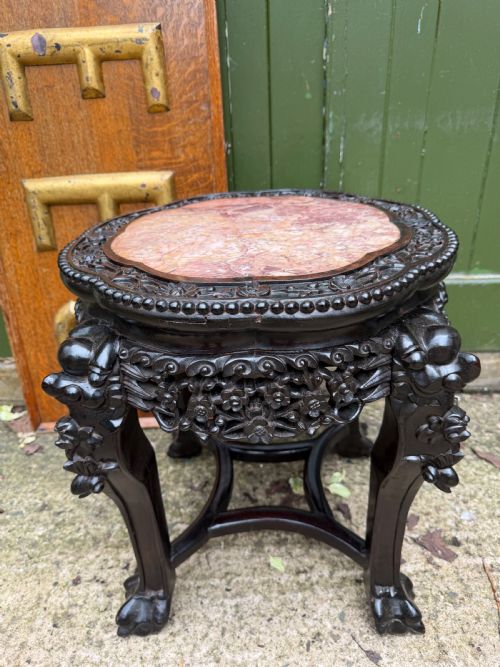


Marble Top Jardiniere Stand
A marble top jardiniere stand provides an elevated stage for heavy planters, turning botanical displays into sculptural furniture.
Marble Top Jardiniere Stand
A marble top jardiniere stand functions primarily as an elevated platform for heavy ceramic planters, urns, and decorative vases. These pieces appear most frequently in Chinese export forms alongside European manifestations from the nineteenth century.
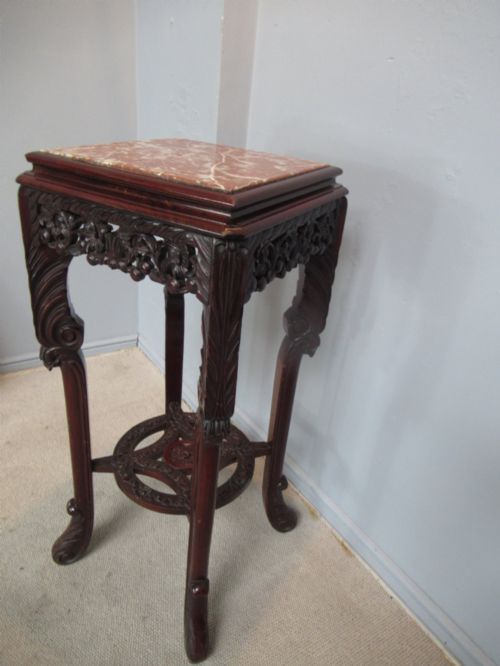
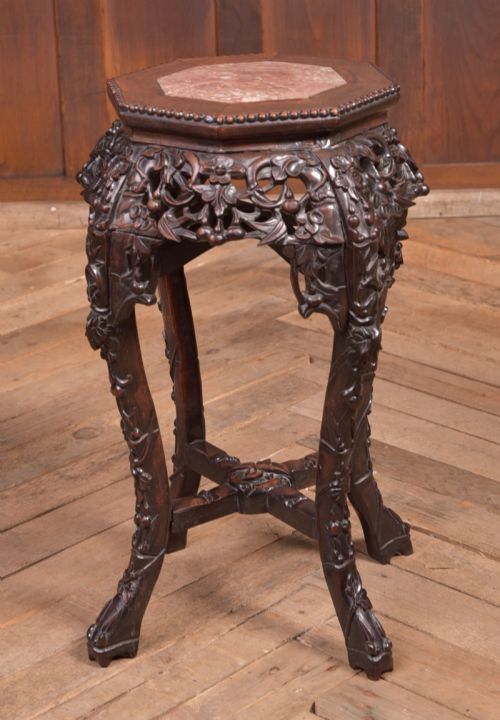
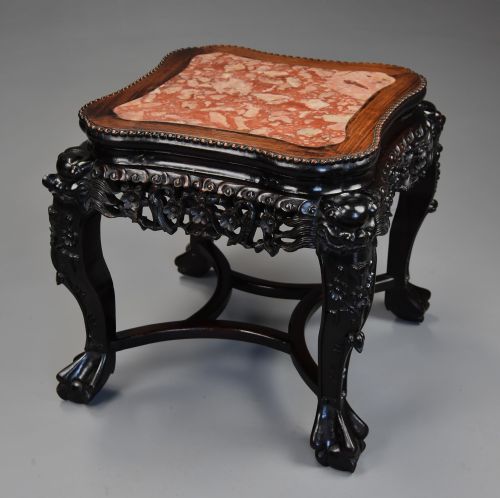
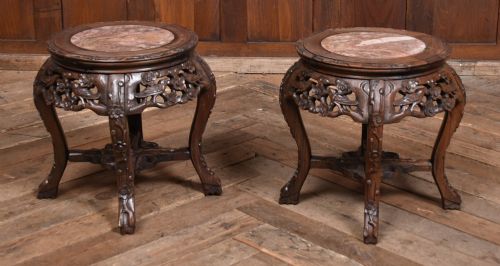
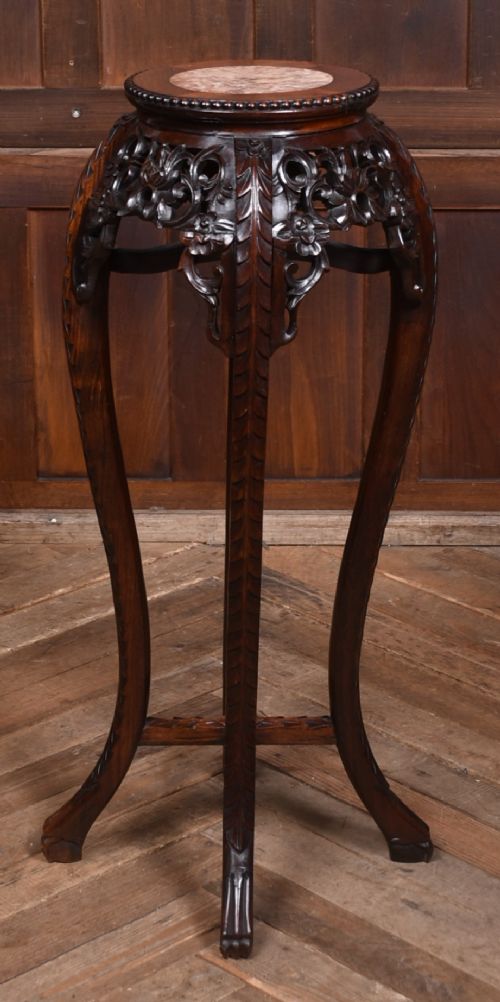
The dominant iteration on this page is the Chinese carved hardwood jardiniere stand featuring an inset marble panel. These low or tall pedestals often derive from the Qing Dynasty and utilise dense timbers like hongmu, padouk, and rosewood.
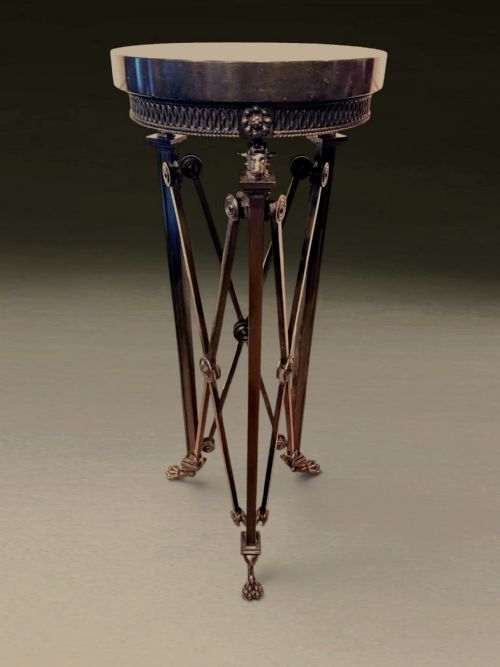
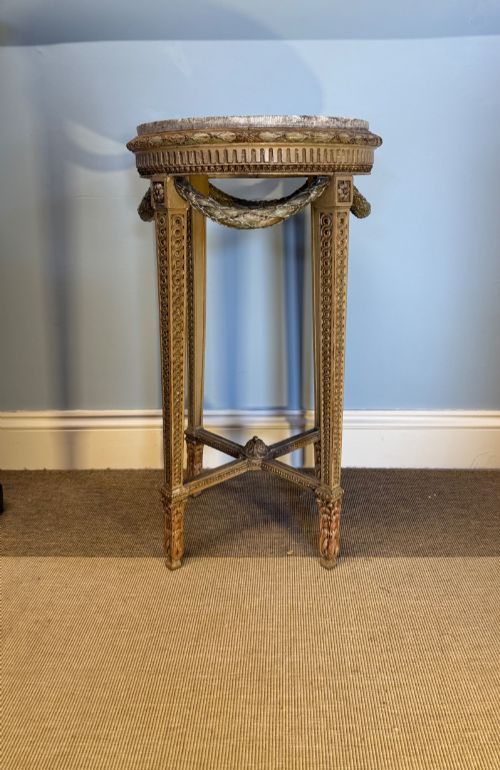
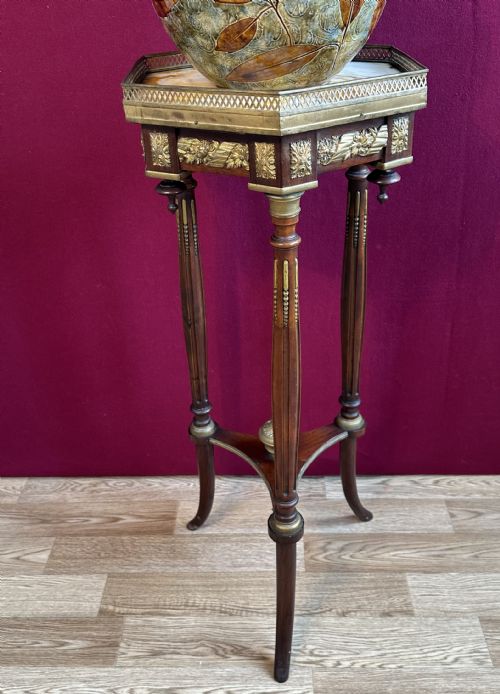
European workshops also produced plant tables and occasional stands utilising mahogany, walnut, brass, and cast iron. Their forms range from Regency pedestals to French gilt wood designs with inset stone surfaces.
Materials and construction methods
Makers built these stands using dense exotic hardwoods like padouk and hongmu, often deeply carved with botanical motifs. French and English examples incorporate mahogany, walnut, and ebonised timber alongside gilded wood elements.
The inset top utilises solid marble, frequently featuring variegated rouge or green figuring to resist moisture from potted plants. Brass, bronze, and cast iron appear in structural mounts, galleried rims, and column supports.
Mother-of-pearl inlay catches the conservatory light just enough to remind you that ferns deserve luxury too.
Distinguishing quality across the range
Quality reveals itself in the depth and crispness of the wood carving, where superior examples exhibit undercut relief rather than shallow surface incisions. Dense timbers like hongmu and heavy padouk hold intricate floral and zoomorphic details with greater precision over time.
The selection of the inset marble slab defines the upper tier of production, particularly when the stone possesses striking natural figuring like variegated rouge. Heavier gauge brass mounts and substantial hardwood frames separate ambitious artisan pieces from standard utilitarian plant holders.
The Marble Top Jardiniere Stand Glossary
- Jardiniere
- An ornamental pot or stand for holding plants or flowers. This vessel sits securely upon the inset stone surface of the pedestal.
- Hongmu
- A traditional Chinese term translating to red wood, used for dense and heavy exotic hardwoods. Objects made from this material often display rich natural grain.
- Padouk
- A heavy tropical hardwood valued for its durability and deep reddish-brown tone. Cabinet makers utilised this timber for robust carved plant stands.
- Pedestal
- An architectural support or base that elevates a vase, urn, or jardiniere above floor level. These structures bring botanical displays into the vertical space of a room.
- Regency
- An English design period spanning the early nineteenth century defined by classical restraint and bronze mounts. Stands from this era draw heavily on antique architectural forms.
Marble Top Jardiniere Stand: Frequently Asked Questions
What were marble top jardiniere stands used for?
These pieces served as dedicated platforms for heavy ceramic plant pots and indoor greenery in nineteenth-century drawing rooms and conservatories. The cool stone surface protected the surrounding wooden furniture from moisture and soil.
Beyond holding plants, homeowners utilised these versatile tables as display surfaces for lamps, wine vessels, and decorative vases. Their sturdy construction accommodated heavy porcelain urns without risk of tipping.
How do I identify a Chinese export stand?
Chinese export stands are typically constructed from dense hardwoods such as hongmu or padouk and feature deep, intricate floral or zoomorphic carvings. They often incorporate tight joinery designed to hold an inset marble panel without adhesives.
These pieces frequently date from the late nineteenth century during the Qing Dynasty. Their distinctive proportions and interlocking structural elements set them apart from contemporary European cabinet work.
Can these stands support heavy planters?
The dense hardwood frames and solid stone tops were engineered specifically to bear substantial weight. Nineteenth-century makers relied on robust timber joinery to ensure stability under heavy ceramic vessels.
While exceptionally sturdy, buyers should check that the internal support framing beneath the stone remains firm. Placing a heavy terracotta or porcelain pot directly onto the marble will cause no structural harm to the piece.
How do I style a jardiniere stand at home?
A tall pedestal works effectively in an empty corner to add vertical interest and display a trailing houseplant. Lower versions function well beside seating as occasional lamp tables or as display surfaces for ceramic bowls.
Allowing the carved woodwork and variegated marble top to remain visible enhances the decorative impact of the piece. Pairing the stand with simple modern ceramics creates a striking contrast against traditional timber and stone.